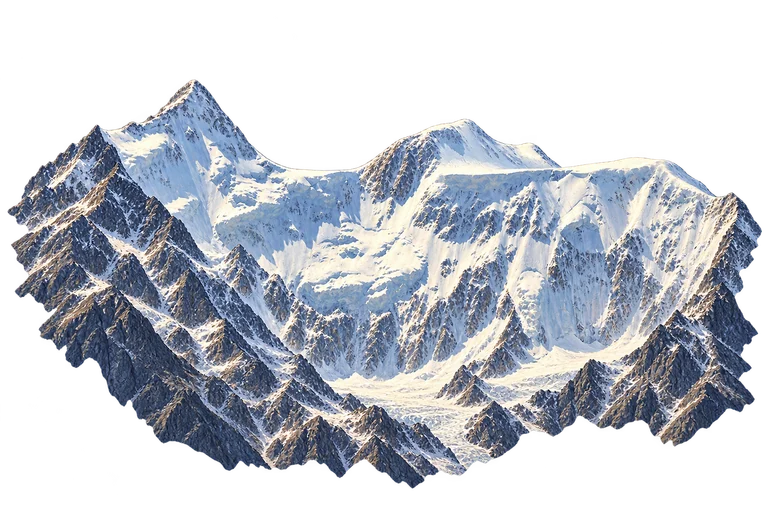
Belukha is a multi-peaked mountain group in the Altai, on the border between Russia and Kazakhstan. Its high summits and glaciers form part of the landscape associated with the Golden Mountains of Altai World Heritage property. Follow the ridges around the snowy headwall, then the dark rock ribs that break through the ice.
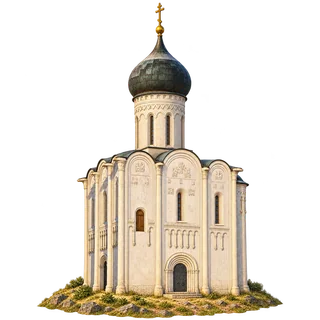
This twelfth-century church is one of the White Monuments of Vladimir and Suzdal. Its compact white-stone body rises through graceful wall divisions to a single drum and dome. Look for the curved gables, shallow arcading and small carved reliefs high on the walls. The surrounding meadow and water are part of its setting, but the miniature keeps attention on the building itself.
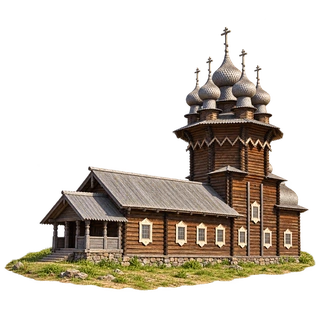
Kizhi Pogost stands on an island in Lake Onega, in Karelia. Its two eighteenth-century wooden churches and later wooden bell tower form a parish enclosure. The group shows how carpenters used timber to create ambitious religious buildings while keeping a close visual relationship with the surrounding lake landscape.
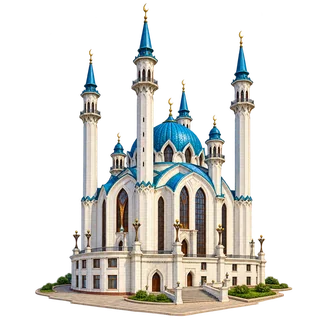
Kul Sharif Mosque stands within the Kazan Kremlin museum-reserve. The institution records its construction from 1996 to 2005. White marble walls, tall pointed windows and turquoise roofs give the building its distinctive appearance. Look for the four principal minarets around the main volume and the smaller decorative towers by the entrance. The mosque also houses a museum exploring Islamic culture and the heritage of the Tatar people.
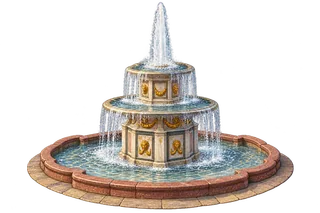
Peterhof’s paired Roman Fountains were inspired by the fountains of St Peter’s Square in Rome. First created in the eighteenth century, their stone forms combine marble, granite and gilded ornament. On the eastern fountain, look for the two levels of overflowing bowls and the decorated central pedestals. Water makes a moving curtain around the carved surfaces.
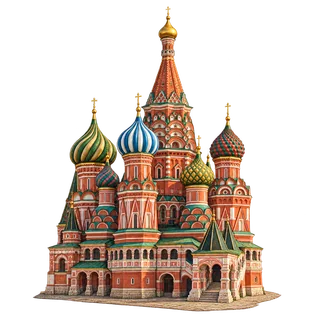
Saint Basil’s Cathedral stands at the southern end of Moscow’s Red Square. The State Historical Museum also calls it the Cathedral of the Intercession. Built in the sixteenth century, it brings several churches together in one connected group. Look for the contrast between the tall central tented tower and the surrounding patterned domes. Brickwork, white trim and covered galleries add detail below the colourful roofline.
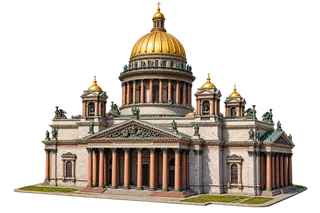
Saint Isaac’s Cathedral combines an enormous domed centre with monumental classical porticoes. Look from the granite columns to the sculpted pediments and the ring of columns around the dome. Small corner belfries and dark bronze figures add detail to the roofline. The building is now a museum as well as a landmark in Saint Petersburg’s cityscape.
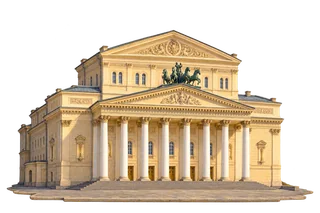
The Bolshoi Theatre is a major home of opera and ballet in Moscow. Its historic frontage faces Theatre Square, with a monumental columned portico and a bronze Apollo chariot group above. Look for the strong contrast between the tall pale columns and the shadowed entrance behind them. The building’s history includes rebuilding after fires, while its surviving portico remains a defining part of the exterior. Performances continue the theatre’s long artistic tradition.
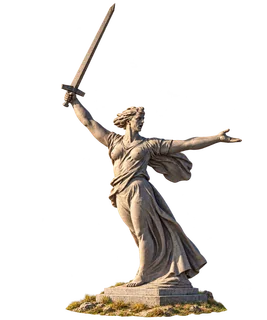
The Motherland Calls is the central sculpture of the memorial complex on Mamayev Kurgan in Volgograd. It commemorates the Battle of Stalingrad during the Second World War. Flowing drapery, an outstretched arm and the raised sword give the figure a strongly moving silhouette. Look for the contrast between the slender blade and the heavy folds of concrete cloth.
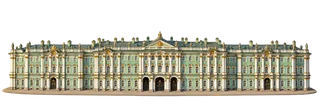
The Winter Palace is part of the State Hermitage Museum’s main complex in Saint Petersburg. The museum dates Rastrelli’s palace to 1754–1762 and records its restoration after the fire of 1837. From Palace Square, repeated white columns and window frames give the mint-green frontage a long rhythm. Look for the three central arched gateways and the sculptures along the roofline. This former imperial residence is now part of a museum of art and world cultures.
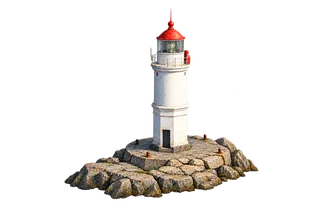
Tokarevsky Lighthouse has guided vessels near Vladivostok since 1913. Its white shaft and red lantern rise from a small artificial islet at the end of a rocky spit. The surrounding water and changing tides are part of its setting: the connecting route can be flooded. This compact view draws attention to the lighthouse itself rather than the whole causeway.
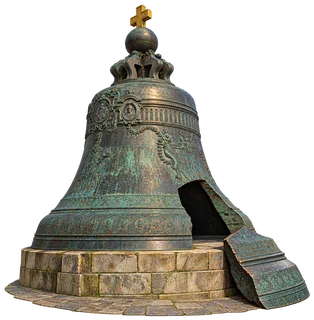
The Tsar Bell was cast in Moscow in the eighteenth century by Ivan and Mikhail Motorin. It is famous both for its scale and for the great broken section displayed beside it. Look at the cast reliefs and decorative bands, then compare the missing opening with the leaning fragment. The small cross and globe above the bell are part of its later display cap.