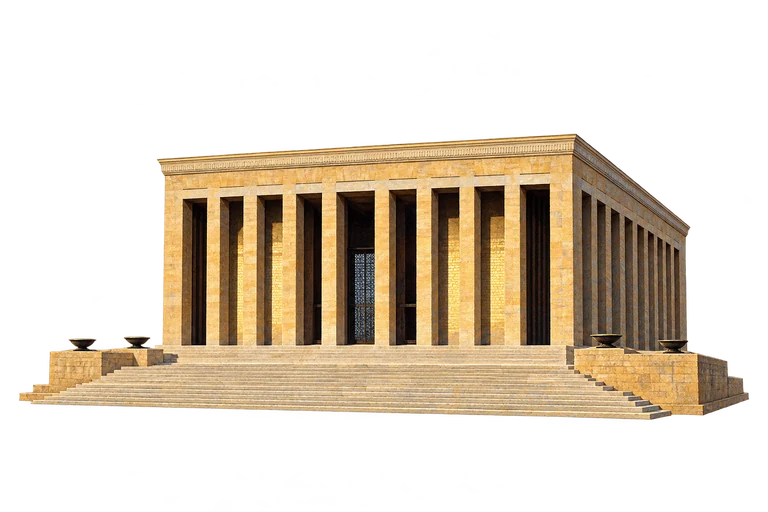
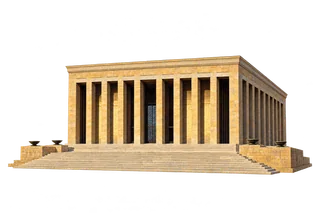
Anıtkabir in Ankara is the mausoleum of Mustafa Kemal Atatürk, founder of the Republic of Türkiye. The Hall of Honour uses strong rectangular forms, pale stone and a monumental colonnade. Its long stair approach leads the eye toward a dark central entrance. This restrained architecture forms the centrepiece of a larger memorial complex, which also contains a museum.
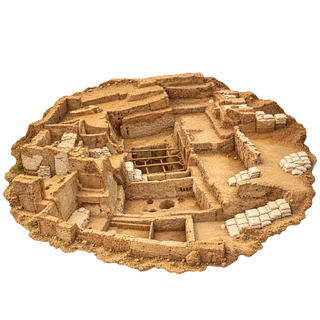
Çatalhöyük consists of two archaeological mounds on the Anatolian plateau. Its eastern mound preserves successive Neolithic occupation levels, including wall paintings and other symbolic objects. Houses were grouped closely together without streets between them, and people entered through their roofs. The remains offer evidence of changing social life in an early settled community.
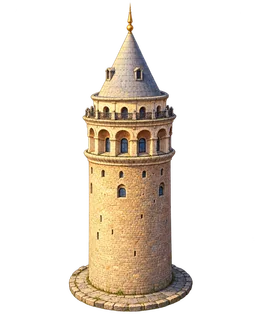
Galata Tower rises over a densely built neighbourhood on the northern side of the Golden Horn. Its familiar form developed during the Genoese period and changed through later repairs and uses. Look for the contrast between the plain stone shaft, the projecting upper balcony and the pointed roof. The tower has served different roles over time, including watching for fires across the city.
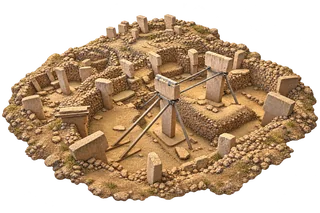
Göbekli Tepe preserves monumental buildings made by communities in the early Neolithic, long before the region’s later cities. T-shaped limestone pillars are its most distinctive forms. The archaeology is seen today beneath a modern protective shelter.
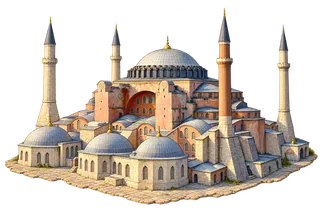
Hagia Sophia was built in the sixth century as a great church, later became an Ottoman mosque, and then served as a museum. It returned to mosque use in 2020. Its enormous dome, half-domes and heavy buttresses tell a long story of architectural ambition and adaptation. The building remains part of Istanbul's World Heritage historic areas, where successive periods meet in one skyline.
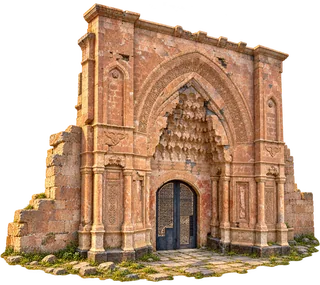
Near Doğubayazıt, İshak Paşa Palace combines Ottoman architecture with regional building traditions. Its monumental entrance rewards a close look: carved bands, columns and a deep recessed arch turn a doorway into a richly layered stone facade. The palace appears on Türkiye’s UNESCO Tentative List, which is a proposal stage rather than World Heritage inscription.
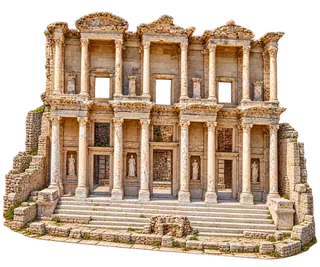
The Library of Celsus is one of the most recognisable monuments at Ephesus. Its striking two-storey facade combines columns, openings, niches and carved pediments. Behind that display once lay a room for storing and reading scrolls. The surviving site is a ruin, and the re-erected frontage helps visitors imagine the importance that architecture could give to a place of learning.
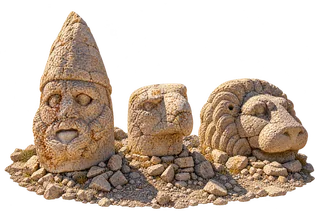
King Antiochus I of Commagene created a monumental sanctuary and tomb on Nemrut Dağ. Its statues combine Greek, Persian and Anatolian traditions. Their fallen heads now sit below the surviving seated bodies. This small group follows three photographed heads on the east terrace: a capped human figure and two guardian animals. Look for the different beak, muzzle and headdress shapes among the weathered stone.
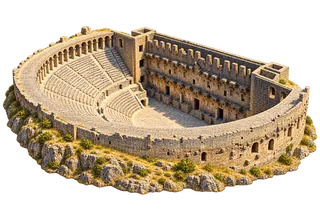
The Roman theatre is the best-known surviving building of ancient Aspendos. Its semicircular seating and tall stage building still make the arrangement of a performance space easy to read. Trace the radial stairs through the seats, then the arcaded gallery around the upper rim. The theatre belongs to a wider ancient city that also preserves an extraordinary aqueduct.
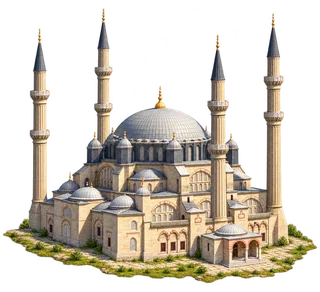
Sinan designed Selimiye for Sultan Selim II in the sixteenth century. The great dome and four minarets make the mosque a defining landmark of Edirne, a former Ottoman capital. Look at how the lower roofs and buttresses step upwards towards the central dome. The mosque is part of a larger social complex with educational and charitable buildings.
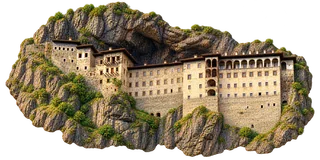
Sümela is a monastery dedicated to the Virgin Mary in the mountains south of Trabzon. Its buildings gather around a rock church beneath an enormous cliff. The surviving complex includes chapels, living quarters, a library and guest accommodation. Follow the rows of windows across the cliff front, then notice how natural rock becomes part of the architecture.
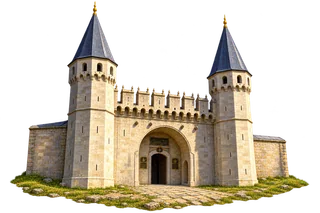
The Gate of Salutation marks a threshold within Topkapı Palace. Its paired stone towers and steep conical roofs make a striking contrast with the lower palace buildings beyond. Look for the crenellations above the great recessed arch and the smaller entrance sheltered inside it. Topkapı served the Ottoman court for centuries before becoming a museum in 1924.