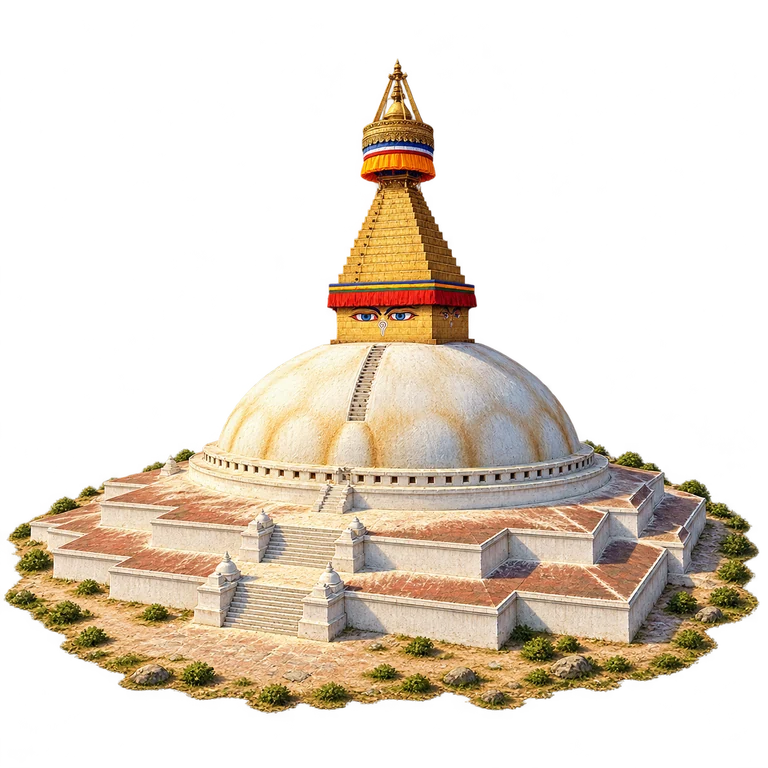
Boudhanath is a major centre of Himalayan Buddhism on Kathmandu’s eastern side. Its broad base and rounded white dome lead the eye upward to a square tower bearing painted eyes and a tapering golden spire. The stupa belongs to a living place of devotion, with monasteries and a community around it. Walking around its base is part of religious practice here. Its scale invites attention to both the monument and the people who continue to care for it.
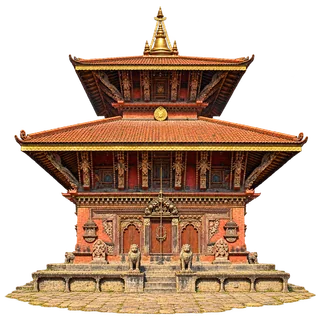
Changu Narayan near Bhaktapur is part of Nepal’s Lichhavi heritage. Its main temple combines layered roofs, carved timber and a decorated brick frontage on a low stone base.
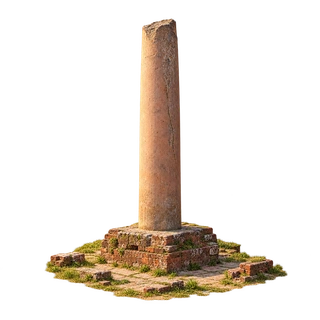
Lumbini is venerated as the birthplace of Siddhartha Gautama, the Buddha. Archaeological remains and a commemorative pillar erected by Emperor Ashoka record its long importance as a pilgrimage place. The site brings material evidence and continuing religious significance together in a carefully defined sacred landscape.
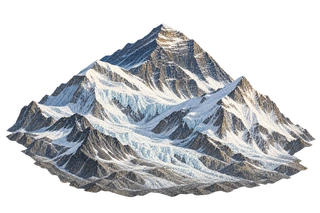
Mount Everest is known as Sagarmatha in Nepal and Qomolangma in China. The two countries share its summit. Their joint measurement announced in 2020 gives the snow-covered summit an elevation of 8,848.86 metres above sea level.
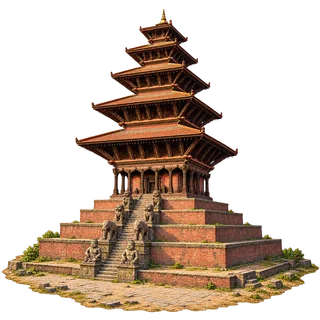
Nyatapola’s name refers to its five storeys, an identity made visible by five diminishing roof tiers. The temple is dedicated to Siddhi Lakshmi and rises above a high stepped base in Bhaktapur. Guardian figures flank the approach, turning the stair into a sequence of encounters before the building itself. Traditional accounts describe the guardians through increasing powers; those descriptions express belief and symbolism. The architecture’s strong upward rhythm comes from repeating roofs over an exceptionally grounded base.
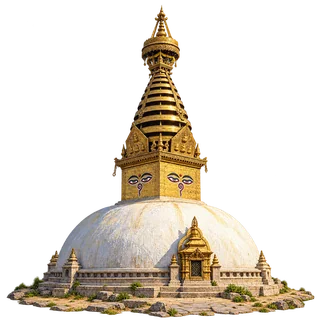
Swayambhunath brings Buddhist and Hindu shrines together on a hill above the Kathmandu Valley. The main stupa’s white dome supports a square eye-bearing tower and a tall golden spire. Around it, smaller shrines show how a sacred place can grow through many generations of care. The name is associated with the self-arisen in religious tradition. Stories of a lotus and an ancient lake belong to that tradition, rather than a dated account of the monument’s construction.