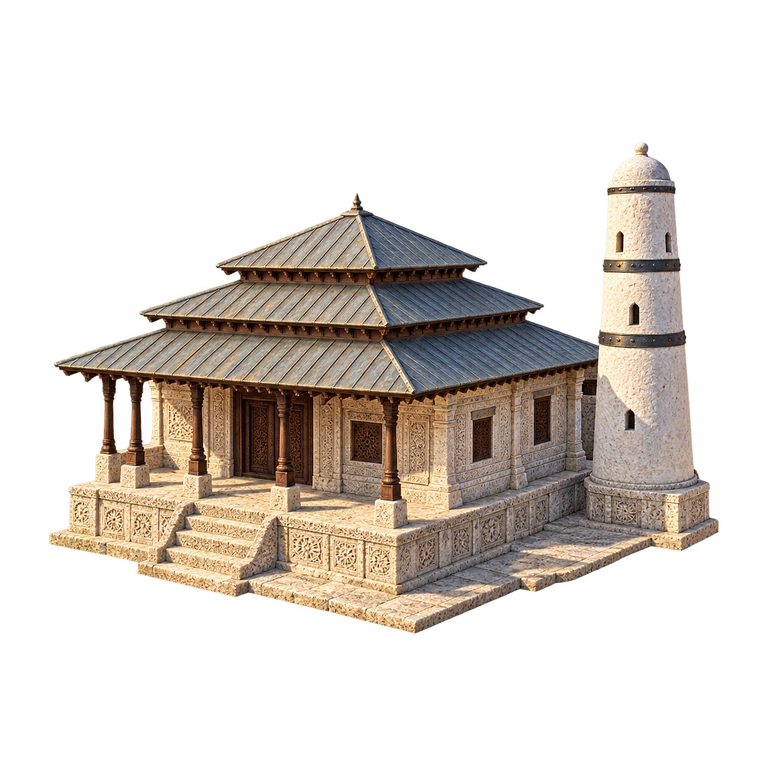
The present Malé Friday Mosque was completed in 1658 on the site of an earlier mosque. Its fabric includes decorated coral-stone walls and columns, a timber roof structure and detailed woodwork. The wider complex contains a minaret, wells and a cemetery, preserving evidence of Maldivian craftsmanship and continuing religious significance.
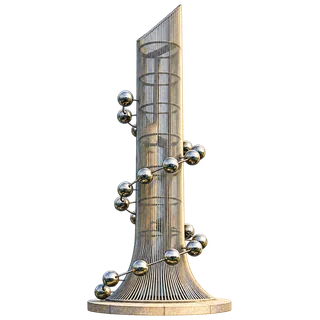
Malé’s Tsunami Monument is a place of remembrance for the devastating Indian Ocean tsunami of 2004. A tall bundle of slender rods rises from a flared base, while reflective spheres curve around its exterior. Look through the open structure rather than treating it as a solid tower. The Presidency recorded the inauguration of its memorial park in 2015 and a later reopening after renovation in 2026. The sculpture offers a quiet place to reflect on loss and the resilience of island communities.
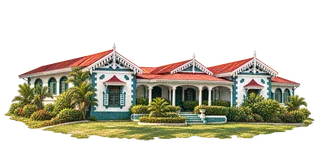
Muleeaage is a historic presidential residence in Malé. In marking its centenary, the Presidency described a building that has served several public roles, including presidential offices and other institutions. Its low red roofs, decorative white timberwork and shaded veranda create a distinctive frontage. Look for the small pointed gables above the entrance and the contrast between the pale walls and darker shutters. The house adds another chapter to the capital’s history beyond its coral-stone mosques.
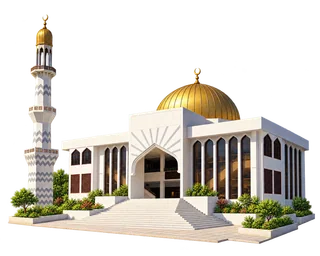
The modern Islamic Centre is one of Malé’s prominent architectural landmarks. Its Grand Friday Mosque is distinct from the older coral-stone Hukuru Miskiy nearby. A golden dome rises above a broad white frontage, while a slender minaret carries contrasting bands. Look for the tall pointed window bays and the wide staircase leading to the entrance. Together, these elements give the building a different silhouette from the capital’s earlier mosques.
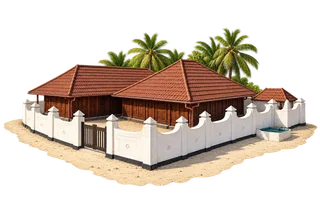
Utheemu Ganduvaru is the historic wooden residence associated with Mohamed Thakurufaanu, who grew up on Utheemu in the northern Maldives. The country’s tourism authority presents the site as an important part of Maldivian heritage. Look for the timber wall panels below the reddish tiled roofs, then the low white wall surrounding the compound. Its modest buildings tell a different architectural story from a palace of tall stone towers. The residence remains a place for learning about the island’s history and craftsmanship.