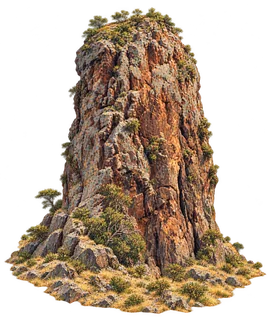
Fischer's Tower is one of the distinctive rock formations in Hell's Gate. Its steep, broken faces attract climbers, while shrubs find small footholds in the cracks. This compact outcrop is a different way to see the volcanic landscape of Kenya's Rift Valley.
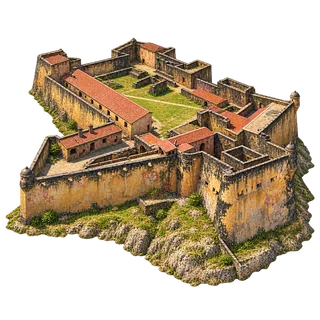
Built by the Portuguese in the late sixteenth century, Fort Jesus stands on a coral ridge beside Mombasa’s old port. Its walls record centuries of changing control around the western Indian Ocean.
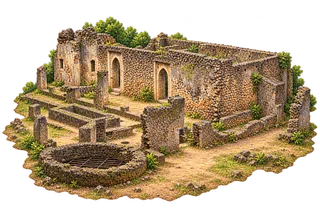
Gede was a Swahili settlement linked to Indian Ocean exchange. Its surviving mosques, houses and palace help reveal a town whose history extends across several centuries.
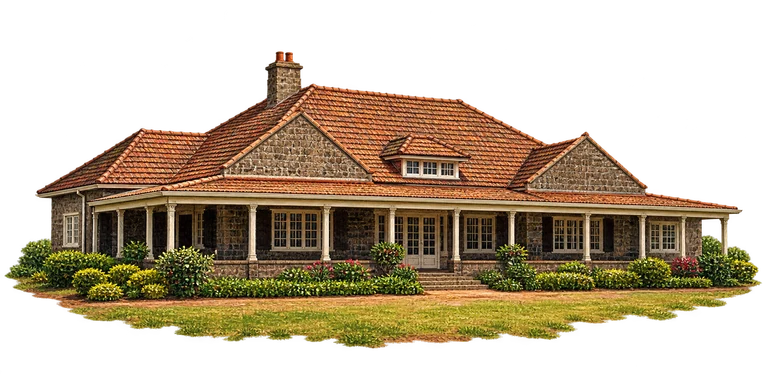
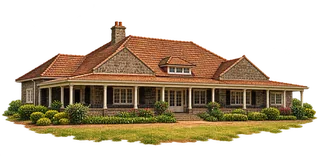
The house now preserved as the Karen Blixen Museum was part of a coffee farm near the Ngong Hills. Blixen lived here until leaving Kenya in 1931, later describing her experiences in Out of Africa. Today the museum's house, furnishings and farm equipment connect that literary story with the material history of the farm. The tiled roof and shaded veranda make the building’s domestic scale easy to recognise.
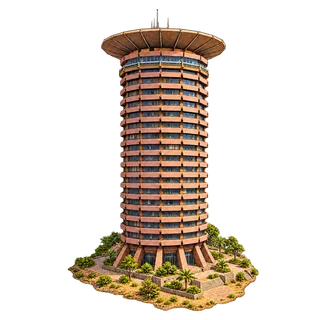
The Kenyatta International Convention Centre is a major meeting venue in central Nairobi. Its cylindrical tower and strongly banded exterior form a distinctive part of the city skyline.
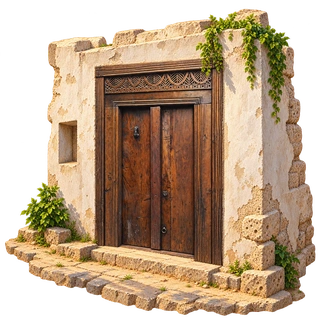
Lamu's historic buildings use coral stone and mangrove timber. Courtyards, verandas and elaborately carved wooden doors enrich their outwardly simple forms. The town's architecture and urban spaces reflect long cultural exchanges along the East African coast, while Lamu remains an important centre for Islamic and Swahili learning.
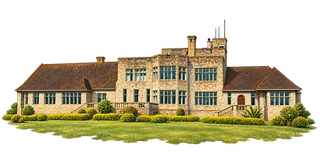
Near Nakuru, the house known as Lord Egerton Castle combines long pitched-roof wings with a taller central stone block. Its many-paned windows, projecting bays and balustrades give it the character of a substantial twentieth-century residence. Associated with Maurice Egerton and now listed among Egerton University's places of interest, it forms part of Kenya's colonial-era built heritage. Look for the central window bays and the lower wings extending across the garden-facing frontage.
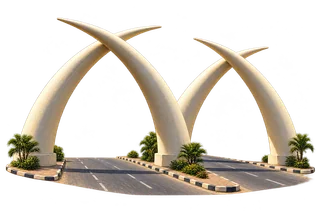
Mombasa's artificial tusks stand over the parallel carriageways of Moi Avenue. Each crossed pair creates an arch, making the monument a distinctive city landmark and meeting point. The sculptures evoke the shape of elephant tusks, but they are constructed objects rather than animal ivory. Their place in a working street is part of their identity: people encounter this civic symbol while moving through the city, not in an isolated sculpture park.
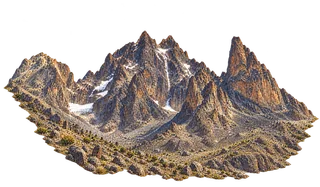
Batian and Nelion are Mount Kenya's highest summits. Their sharply eroded rock faces contrast with the broad volcanic landscapes below. The central peaks preserve the exposed heart of an ancient volcano, with scree and alpine plants around their lower slopes.
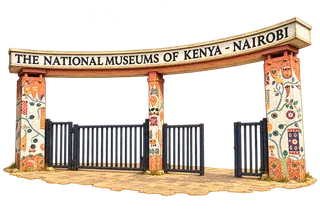
Nairobi National Museum explores Kenya's culture, history, art and natural heritage. Its entrance beam names the institution above piers covered in colourful nature-inspired decoration. Beyond the gate, the museum's galleries offer many ways to discover the country.
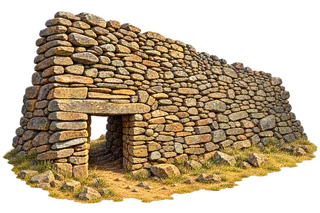
Thimlich Ohinga preserves a remarkable dry-stone settlement in western Kenya. Its massive walls were built by carefully stacking stones without mortar. The enclosures helped protect communities and livestock while also defining shared living spaces.