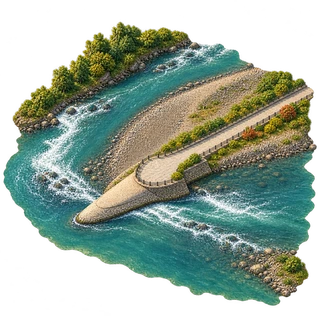
Work on the Dujiangyan system began in the third century BCE. Its structures regulate and divide water from the Minjiang River for the Chengdu plain. The site demonstrates a long tradition of using the river's flow to support agriculture.
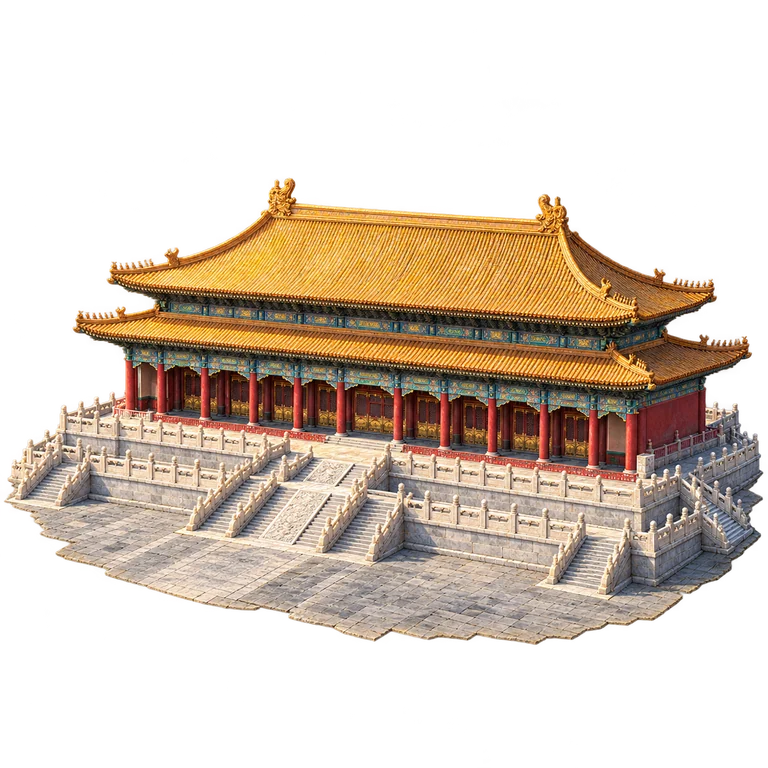
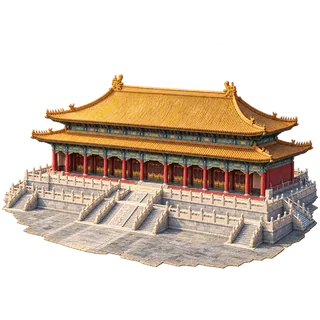
The Hall of Supreme Harmony is the largest hall in the Forbidden City. Earlier versions were damaged by fire; the building seen today was reconstructed during the Qing Kangxi era. Its position on the central axis and its raised marble platform made architecture part of imperial ceremonial hierarchy. The hall is now interpreted by the Palace Museum, where the material details can be considered alongside the history of the court that used it.
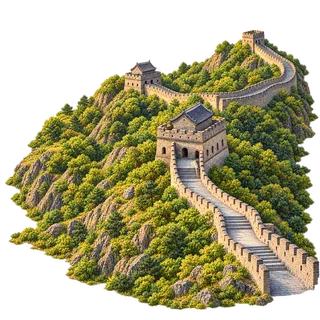
Mutianyu is a section of the Great Wall northeast of central Beijing. Its surviving Ming-period defences follow steep terrain rather than a straight line across flat ground. Closely spaced watchtowers and battlements on both sides distinguish this stretch. Look for how the climbing walkway, parapets and towers work together: the ridge shapes the route, while the masonry makes a connected defensive passage.
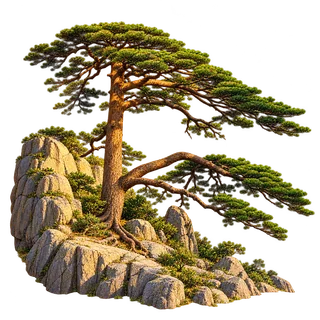
The Guest Greeting Pine stands by Lion Rock in front of Yuping Peak at Huangshan. Its flattened canopy and long outward-reaching branches gave the tree its welcoming name. The forestry authority describes it as a protected old tree, with dedicated guardians appointed since 1981. The familiar silhouette is therefore also a conservation story: watching the tree and its surroundings helps protect a living landmark, not just a view in a photograph.
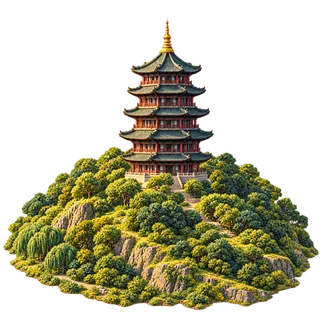
Leifeng Pagoda rises on a hill beside the southern part of Hangzhou’s West Lake. The old tower collapsed in 1924; the structure visible today was reconstructed in 2002. The site therefore brings two times together: archaeological remains below and a new interpretation of the historic silhouette above. Describing the current tower as an untouched ancient building would miss the conservation and design decisions that shaped what visitors now see.
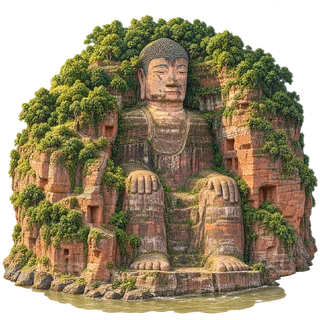
At Leshan in Sichuan, the cliff itself became the material for a monumental Buddhist sculpture. The Giant Buddha was carved in the eighth century and rises about 71 metres above its base near the meeting of three rivers. Its relationship with the hillside matters as much as its scale: this is a carving within a landscape, rather than a freestanding statue placed on a pedestal. It forms part of the World Heritage property shared with Mount Emei.
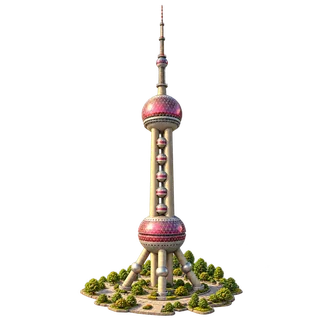
The Oriental Pearl Radio and TV Tower stands at Lujiazui on the eastern bank of Shanghai’s Huangpu River. It combines broadcasting with observation, exhibitions and other visitor uses. Opened in 1994, the tower reaches 468 metres including its antenna. The two large spheres, smaller pods, tall connecting columns and upper capsule give it a silhouette unlike an ordinary skyscraper. Its public viewing spaces connect the engineered structure with views across the river to the Bund.
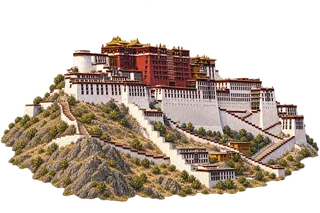
Follow the long hillside stairs upward and notice how the pale walls gather around a taller red centre. The White and Red Palace masses, with their restrained gold roof details, give this Tibetan palace-fort its unmistakable profile. The main palace rises above Lhasa; other monuments in the UNESCO ensemble, including Jokhang and Norbulingka, are separate places.
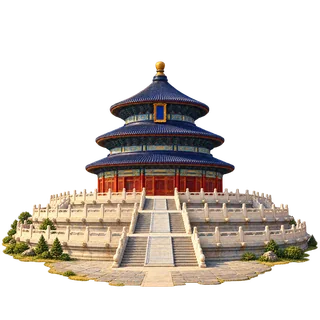
The Hall of Prayer for Good Harvests belongs to Beijing’s Temple of Heaven. Its predecessor, built in 1420, was rectangular. A rebuilding in 1545 introduced a circular hall with three roof tiers, then coloured blue, yellow and green. In 1751 all the roof tiles became blue and the hall received its present name. Its architecture records changes in the ceremonial place where emperors prayed for harvests.
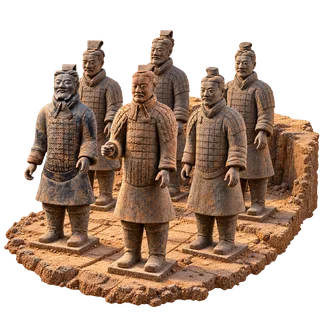
Fragments found during well-digging in 1974 led to investigation of the first terracotta-warrior pit near Xi’an. The museum records Pit One as about 230 metres long and 62 metres wide. Its estimated thousands of figures and horses are not a single sculpture enlarged many times: surviving armour, hair and facial details reveal work on individual objects. Excavation and conservation continue to shape what visitors can understand from the remains.
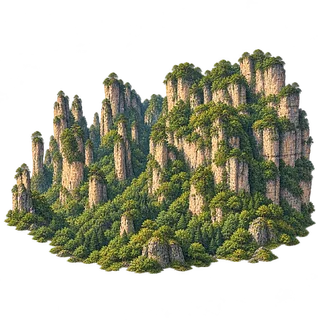
Wulingyuan in Hunan is known for thousands of narrow quartz-sandstone pillars. Many rise more than 200 metres, with ravines, forest and other landforms between them. The Ten-mile Gallery is one named local setting within this much larger landscape. A close view makes the contrast clear: isolated slender columns and connected walls of rock belong to the same forested terrain. The heritage value includes the living landscape as well as the striking rock forms.