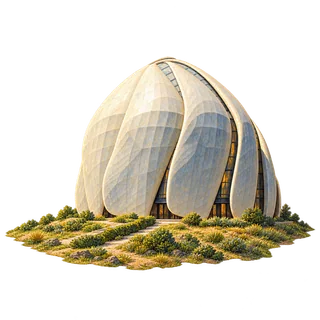
In Penalolen, the Baha'i Temple of South America uses nine sweeping wings of glass and translucent marble. Architect Siamak Hariri's design brings changing daylight into a shared space for prayer and contemplation. The surrounding gardens connect the building with the Andean foothills.
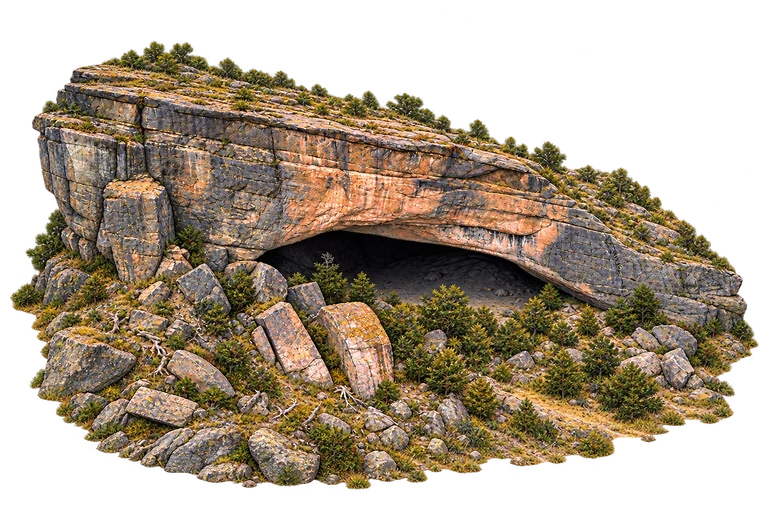
At Cueva del Milodon, near Puerto Natales, discoveries of skin and other remains helped scientists study the extinct ground sloth Mylodon darwini. The natural monument also preserves archaeological evidence of early people in Patagonia. Cueva Grande's wide opening lies beneath layered rock, with fallen blocks and low vegetation outside. The entrance brings together geology and the evidence of animals and people who once occupied this changing southern landscape.
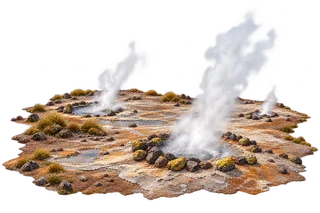
El Tatio is a geothermal field in northern Chile's high Andes. Hot water and steam emerge through vents in a mineral-stained plain, where low pools, stones and sparse tussock grasses share the ground. In the cold morning air the rising vapour becomes especially conspicuous. This close view represents a small group of vents within the named field; it does not suggest that every pool erupts in the same way or at the same time.
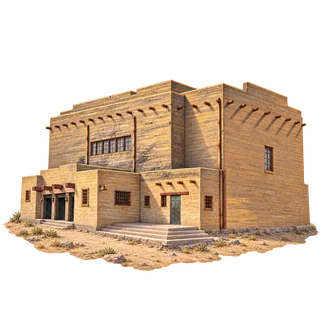
Built in 1935-1936, Humberstone's theatre brought performances and gatherings to the nitrate settlement. Its Oregon-pine construction and stepped Art Deco frontage give it a character very different from a stone opera house. Museo del Salitre's conservation work preserves that community landmark.
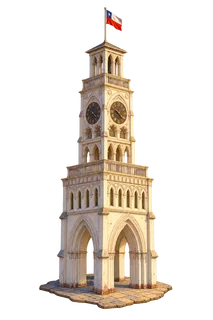
Pointed arches, open galleries and clock faces stack into a slender landmark in the heart of Iquique. The nineteenth-century tower is built largely from timber, despite the impression of a miniature stone monument. Follow its narrowing stages upwards from the little steps to the flagpole. It remains one of the most familiar sights of Plaza Prat.
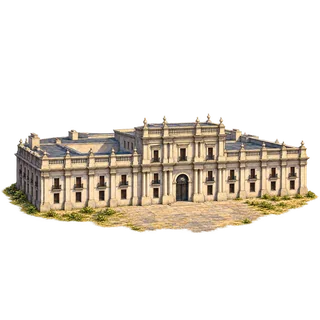
La Moneda began as Santiago's Royal Mint. Joaquin Toesca designed its restrained neoclassical architecture, and the building opened in 1805. In 1846 it became the seat of government, giving its long pale frontage a different role in the city.
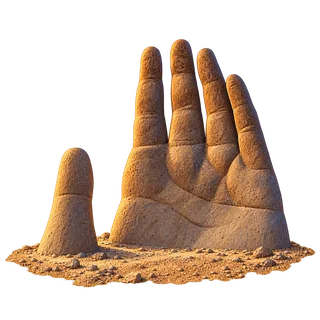
South of Antofagasta, Mario Irarrázabal’s sculpture turns a familiar human gesture into a startling desert landmark. Look for the low thumb beside four unequal fingers, then follow the creases down into the broad palm. The surrounding gravel gives the hand its enormous sense of scale. The sculpture was commissioned by Corporación ProAntofagasta, which continues to care for it.
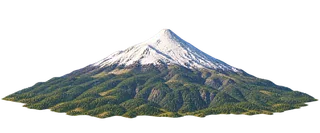
Osorno is a volcano in Chile's Los Lagos region, overlooking a landscape of lakes, forests and other volcanic peaks. Its broad lower slopes climb towards a snow-covered summit, giving it a remarkably clear cone-shaped profile. The mountain belongs to the scenery around Vicente Perez Rosales National Park. Snowfields and dark ridges make its volcanic form especially easy to recognise.
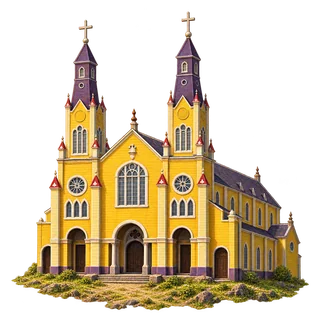
Castro's San Francisco Church belongs to Chiloe's distinctive timber-building tradition. Its yellow exterior and tall paired towers make it easy to pick out above the town. The national heritage record identifies it as a protected historic church.
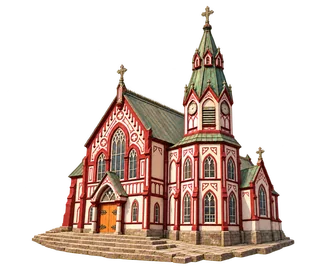
The cathedral’s iron framework was made in France and shipped to Arica in 1875, before assembly the following year. Its red structural lines make a delicate pattern across the pale panels. The front is strikingly uneven: a tall octagonal tower stands to one side of the entrance. Look from the steps to the clock, then up to the slender spire.
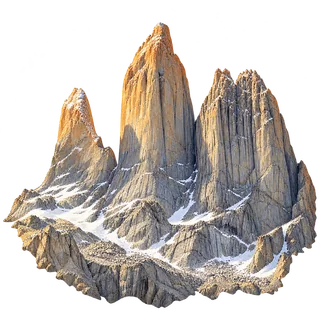
These steep rock forms give Torres del Paine its name. Their granite began as molten rock beneath the surface; later erosion and ice helped reveal and carve the dramatic walls. Each tower has a different silhouette. Look for the broad central mass and the narrow fluted faces beside it, with small traces of snow caught among the rock.
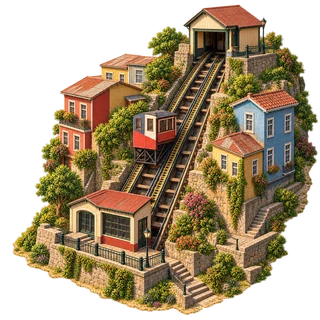
Valparaíso's historic quarter adapts its streets and buildings to an amphitheatre-like coastal setting. The regular layout of the lower plain gives way to hillside neighbourhoods and changing rooflines. Historic elevators preserve part of the industrial infrastructure that connected those different levels.