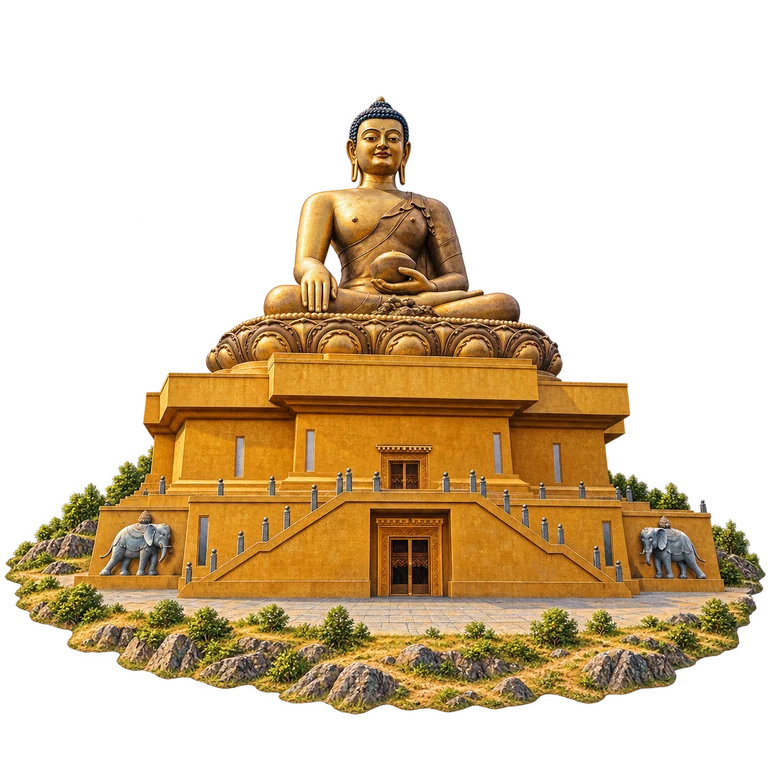
Buddha Dordenma is a large bronze representation of Shakyamuni Buddha in Thimphu. Bhutan’s culture department describes it through ideals of peace, prosperity and spiritual aspiration. The seated figure rests on a lotus above a substantial architectural base. Its right hand reaches down over the knee, while the left rests in the lap with a bowl. Looking closely at that posture connects the monument’s scale with the care given to its religious form.
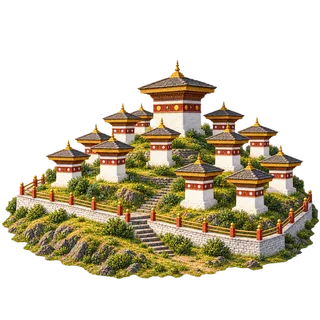
The Druk Wangyal Chortens at Dochula form a memorial group of 108 stupas. Bhutan’s culture department links them to soldiers who died during the 2003 military operation and to aspirations for peace. White bodies, red bands and golden spires repeat across the rising ground, giving individual structures a shared rhythm. Their setting on the pass makes remembrance part of a wider landscape. This is a place for thoughtful attention to loss, faith and collective memory.
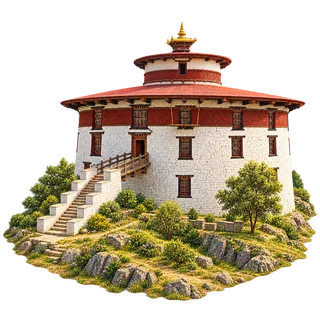
Ta Dzong was built above Paro’s Rinpung Dzong as a watchtower in 1649. Its unusual circular form uses substantial stone walls around several levels. In the twentieth century, the building was adapted to a new role: the National Museum opened to the general public in 1968. The round tower now connects defensive architecture with the preservation and interpretation of Bhutanese heritage. Its stacked drums and windows still make its earlier purpose visible.
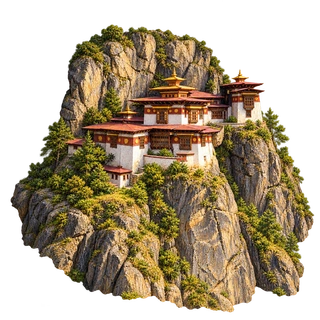
A sacred story connects this cliffside monastery with Guru Rinpoche, also known as Padmasambhava, arriving on a tigress. Pine-lined paths approach the buildings, whose pale walls stand out against the rugged rock.
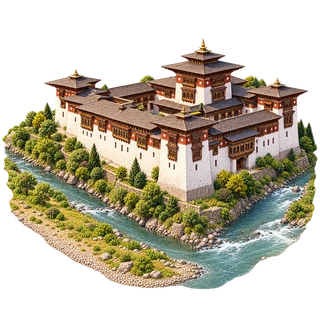
Punakha Dzong was built in 1637. The fortified complex became a principal seat of the Drukpa-Kagyud Buddhist school and accommodated government functions. It also hosted the enthronement of Bhutan's first king in 1907. Its history shows how religious and administrative authority could share the same architectural setting.
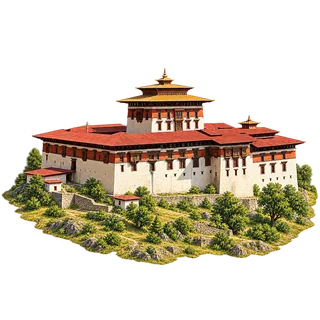
Rinpung Dzong is more than a fortress silhouette. Paro’s official account describes a place shared by the monastic Rabdey and public administration, including government offices and the court. Tall battered white walls support timber galleries and broad roofs, with a central tower rising above the surrounding ranges. The building’s changing heights make its enclosed character visible. Its continued institutional and religious roles connect the architecture with daily life in the valley.