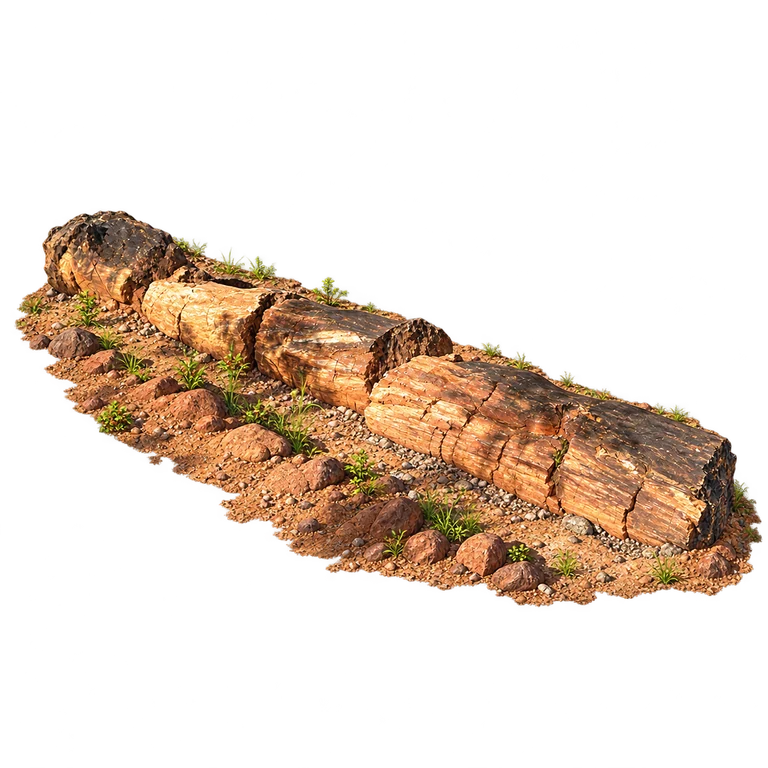
Chirundu Fossil Forest contains petrified wood associated with the Karoo geological succession. In the exposed remains, minerals preserve traces of trees that lived in a much older environment. Broken sections and grain-like structures can resemble recently fallen timber, but the material is stone. The site helps researchers compare ancient vegetation across southern Africa. A single visible trunk introduces that evidence without recreating an entire prehistoric forest or guessing the shape of missing branches.
The Freedom Statue is one of Zambia’s nationally significant public monuments in Lusaka. Its bronze figure lifts broken chains above the body, making the theme of liberation visible through pose and material. The monument is also associated with commemorating freedom fighters. Looking at the raised hands, separate chain ends and grounded stance reveals how public sculpture can communicate an idea without a long inscription. It is a monument, rather than a scene of a living person.
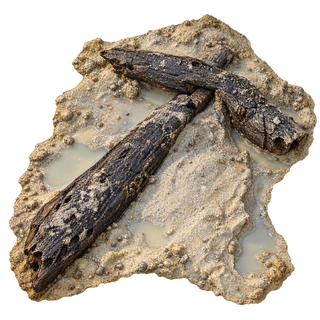
Excavations near Kalambo Falls uncovered two logs joined across one another using a deliberately cut notch. Researchers dated the surrounding deposits to at least about 476,000 years ago. Other wooden tools were also recovered. These unusual preservation conditions provide evidence of early technical skill that is usually missing when plant materials decay.
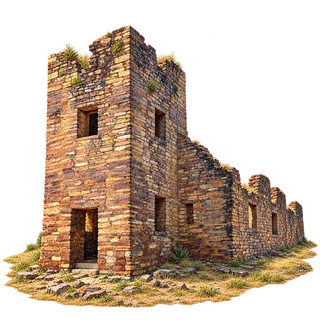
Niamkolo Church was built in the 1890s at a London Missionary Society station near Lake Tanganyika. Its surviving sandstone walls preserve a square entrance tower and the outline of a hall. The building ceased regular use when the community moved inland amid sleeping-sickness concerns in 1908. Today the ruined form records both a building tradition and changing settlement conditions. Empty openings and the missing roof help distinguish the remains from a complete reconstructed church.
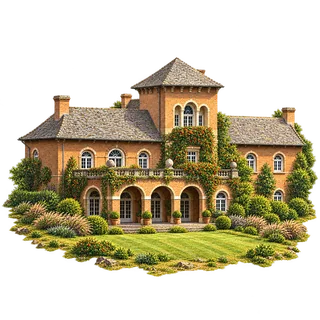
Shiwa House was built in the 1920s for Stewart Gore-Browne at the Shiwa Ngandu estate. Its brick walls, tiled roofs, arched openings and central tower bring a recognisable country-house form into Zambia’s architectural history. The garden frontage is only one part of the estate, whose past belongs to the colonial period and later changing uses. Looking at the building can open that history without treating the estate as an untouched or uncomplicated vision of the past.