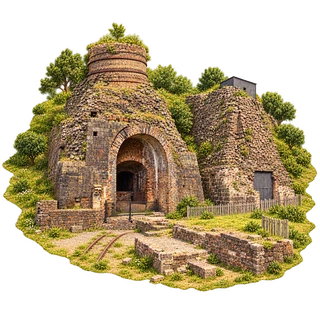
Blaenavon's surviving industrial landscape links ironworks, coal and ore workings, transport routes and housing. It records South Wales's importance in nineteenth-century iron and coal production. Looking beyond a single furnace reveals the wider network of materials, labour and community that supported industrialisation.
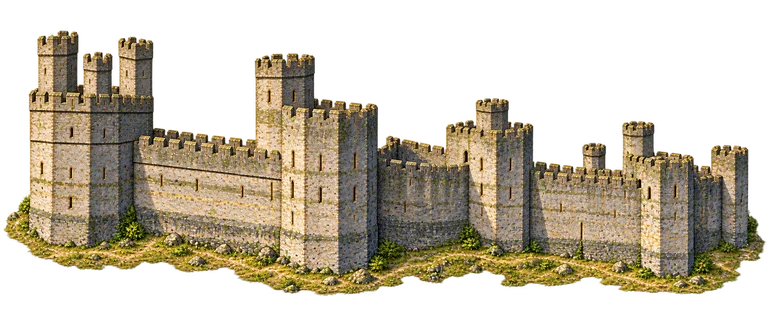
Look along the great curtain wall and its linked polygonal towers. Caernarfon Castle was built amid Edward I’s conquest of Wales, so its scale was an assertion of power as well as a defence. Cadw explains that its unusual towers and coloured masonry also evoked the architecture of imperial Rome. The Eagle Tower forms the striking western end of this wall group. Today the surviving stonework invites a closer look at both the craft of medieval building and the difficult history of conquest behind it.
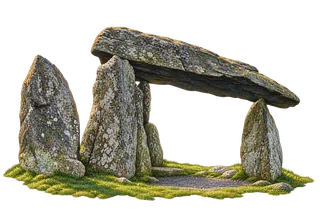
Pentre Ifan is a Neolithic chambered tomb more than five thousand years old. Its huge capstone is around five metres long, yet it appears to touch its supporting stones with remarkable delicacy. The open stone group seen today is only the surviving framework of a monument once covered by an earthen mound. Look for the separate pointed portal stone beside the chamber and the daylight beneath the capstone. The people who built it left a lasting feat of stone handling, even though much of their world remains unknown.
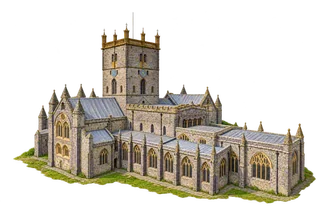
The present cathedral at St Davids was begun in 1181 under Bishop Peter de Leia. Its great square crossing tower rises above a much lower spread of chapels, aisles and lead-covered roofs. The building has weathered collapses, repairs and major restoration, including work associated with George Gilbert Scott in the nineteenth century. Look for the contrast between the tower’s simple mass and the delicate tracery of the windows below. This is still a living place of worship, with a long history carried in its changing stonework.
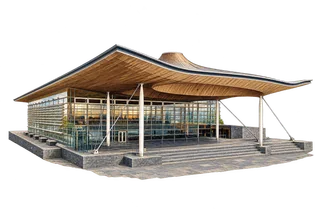
The Senedd opened on St David’s Day in 2006 beside Cardiff Bay. Designed by the Richard Rogers Partnership, it combines a broad undulating roof, transparent walls and a slate base. The roof’s central funnel brings natural light and ventilation into the building. Look beneath the eaves to see how a large public building can feel open and light rather than closed and imposing. The Senedd is the home of the Welsh Parliament, where elected members debate the decisions that shape Wales.