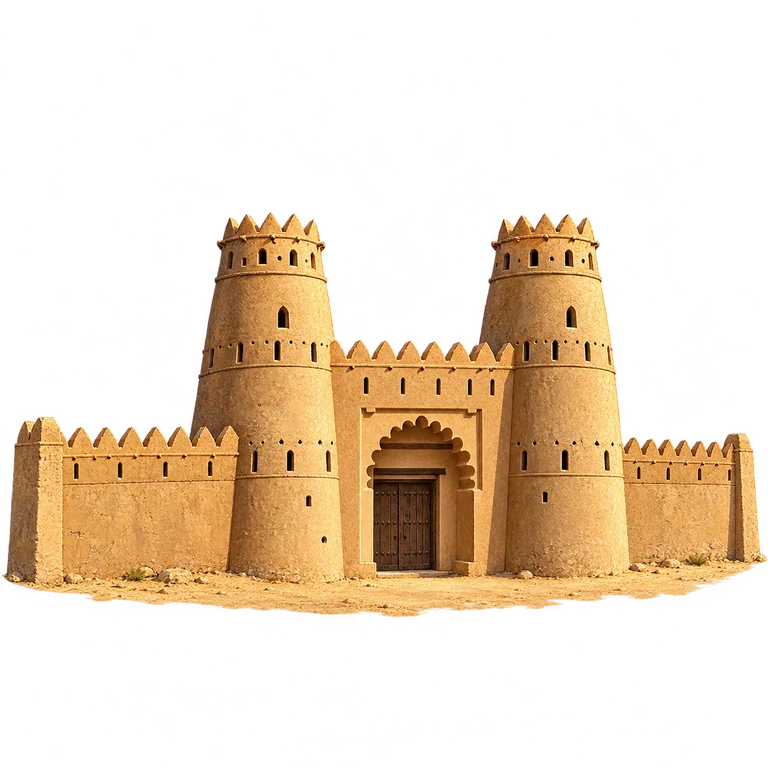
Al Jahili Fort belongs to Al Ain’s late nineteenth-century history. It was built as a fortified residence and later conserved as a cultural landmark. The main entrance pairs broad cylindrical towers with a recessed, scalloped arch. Pointed battlements repeat along the top of the walls. The fort also has a distinctive separate circular tower, but this entrance offers another way to recognise the site. Look for the thick tapered sides of the gate towers and the smaller openings above the door.
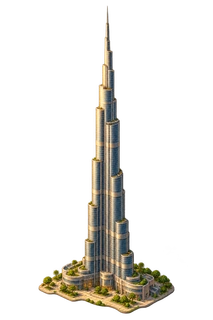
Burj Khalifa rises 828 metres above Dubai. Its architects and engineers at SOM designed a Y-shaped floor plan around a central core, with three wings that help support one another. As the tower rises, its sculpted volumes step back in an upward spiral. The central core continues into the narrow spire. Look for that changing outline: the tower becomes slimmer without losing the connection to its three-part base.
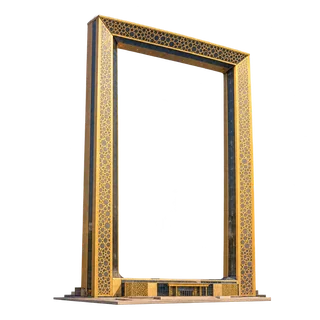
Dubai Frame is an architectural landmark in Zabeel Park. Dubai Municipality describes two towers joined by a bridge high above the ground, with views towards older and newer parts of the city. The open rectangle turns the surrounding skyline into part of the experience. Gold-coloured circular patterns cover the outside, while darker glazing marks the inside edges. Look for the contrast between the solid towers and the large empty space they frame.
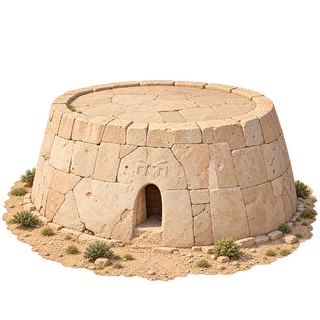
Hili forms part of Al Ain's wider cultural property, which preserves evidence of settled occupation since the Neolithic period. Circular stone tombs, wells and earthen buildings record different aspects of life in the region. The wider Hili area also contains early evidence of aflaj water engineering associated with later settlement.
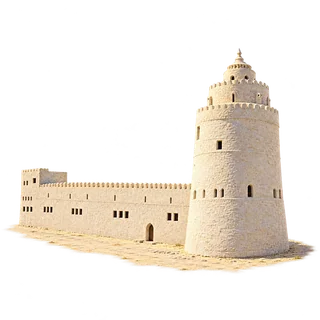
Qasr Al Hosn preserves part of Abu Dhabi’s story before the modern skyline. The historic complex grew around a watchtower and later served as a residence and centre of government. Today it is a place for learning about the city’s development. The white tower and low walls give the older architecture a very different outline from the high-rise buildings nearby. Look for the narrowing circular stages at the top and the small openings in the thick walls.
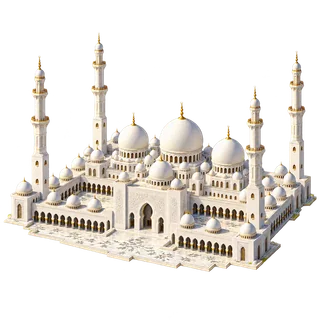
Sheikh Zayed Grand Mosque is one of Abu Dhabi’s best-known places of worship. White marble gives its domes, walls and minarets a shared brightness, while the shaded arcades create dark openings below. The mosque’s architecture draws on several Islamic traditions. Its own centre describes the domes as combining Moroccan and Mughal influences. Look from the three large prayer-hall domes towards the smaller domes and the four tall minarets around the courtyard.