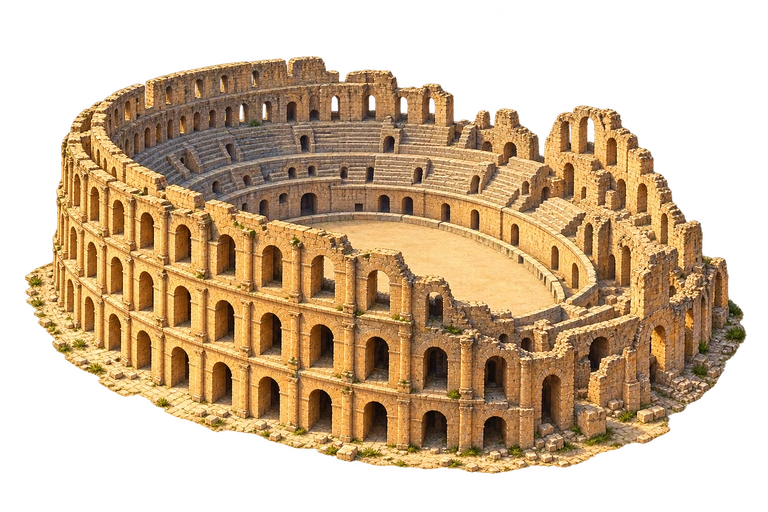
El Jem's great amphitheatre was built in the third century, when the town was known as Thysdrus. Its free-standing stone structure gathered spectators around an oval arena. Broken sections now reveal the tiers and passages within, making the building's enormous scale easier to read.
Before Roman annexation, Thugga was an important Libyco-Punic centre. It later flourished under Roman and Byzantine rule. The surviving ruins at Dougga overlook a fertile plain and make it possible to study how a smaller town functioned within wider political and cultural networks, beyond the best-known imperial capitals.
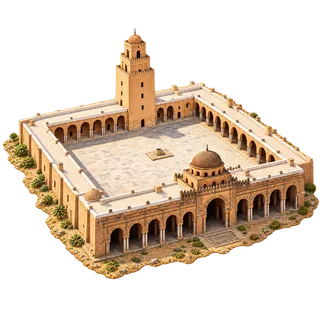
Founded in the seventh century and reshaped through later building campaigns, Kairouan’s Great Mosque became an influential example of Ifriqiyan religious architecture.
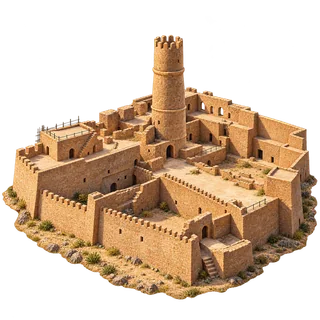
The Ribat of Monastir began in the late eighth century and was enlarged and altered over many later periods. Its courtyards and round watchtower remain defining features of the monument.
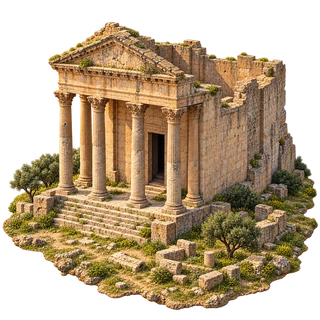
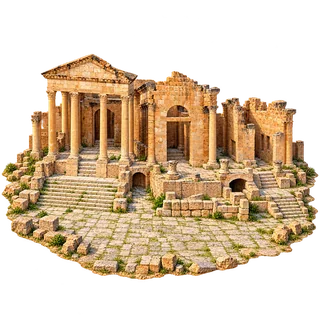
Sbeitla’s Roman site preserves an unusual group of three adjacent temples at its forum. They are commonly identified with the Capitoline triad, although the site’s UNESCO tentative-list description notes that this identification is not definitively confirmed.
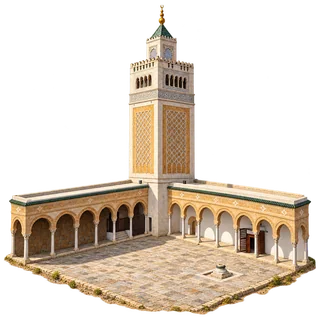
Zitouna Mosque is one of the major monuments within the Medina of Tunis. Its courtyard arcades and minaret form part of a long-lived centre of worship and learning.