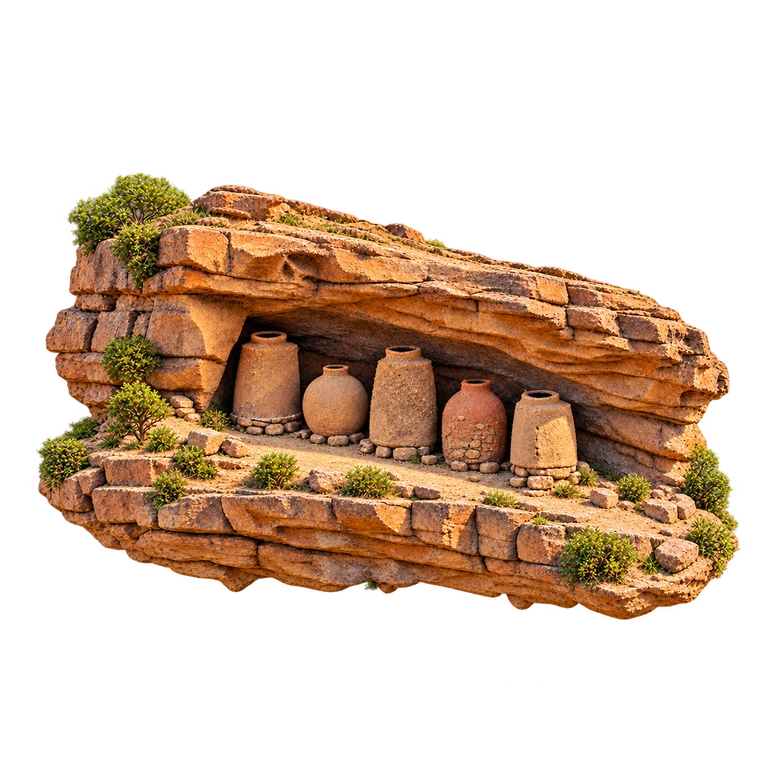
The caves of Nok belong to a group of northern Togolese cliff sites containing granaries. Builders used local stone, clay and straw to create storage structures inside difficult-to-reach shelters. These places helped communities retain supplies during periods of conflict and displacement. They also remain connected with living beliefs that require respectful interpretation.
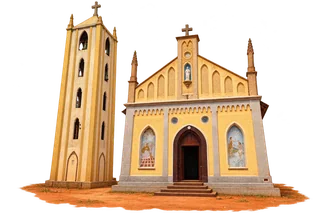
Notre-Dame du Lac Togo is a Marian sanctuary in Togoville. Pilgrims gather here on the northern side of Lake Togo. Notice how the detached bell tower differs from the church front, where pointed niches and painted panels surround the entrance.
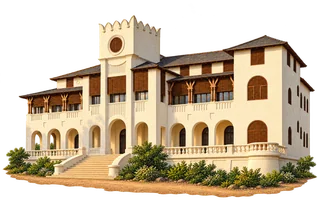
Completed in 1905, the former governors' palace was restored as an arts and culture centre. Its white arches and shaded wooden galleries reveal a building adapted to the coastal climate. The restoration brought archival research and local building skills together.
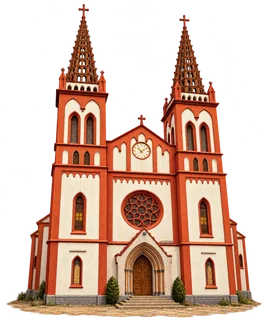
Sacred Heart Cathedral is a familiar landmark near Lome's market. Construction began in 1901. The front combines pointed arches, a large rose window and a clock beneath twin slender spires. Look through the tower openings to see how light makes the heavy facade appear delicate.
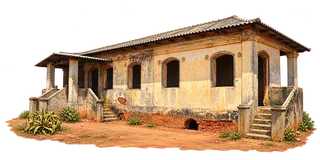
Woold Home is remembered as a place connected with the trafficking of enslaved people on Togo's coast. Its weathered walls and low openings remind us that places of great historical consequence can look unassuming. The building appears on Togo's UNESCO Tentative List; that is different from World Heritage inscription.