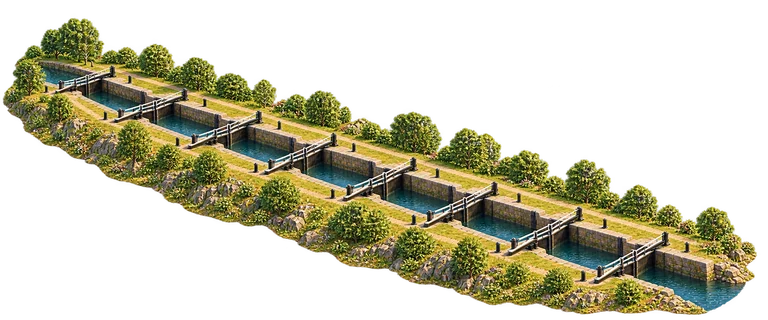
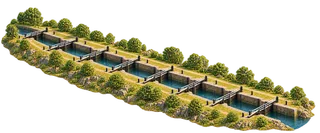
At Berg, the Carl Johan staircase joins seven locks into one continuous flight. Göta Canal’s operator gives a combined rise of 18.8 metres between Lake Roxen and the harbour above. Gate after gate divides the change in level into manageable steps. The flight was built in 1815–18 and forms only part of the larger lock complex at Berg.
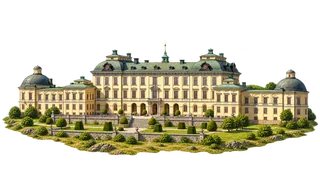
Queen Hedvig Eleonora commissioned the present Drottningholm Palace after an earlier palace burned in 1661. Building began the following year under Nicodemus Tessin the Elder and continued under his son. The broad Baroque composition turns many rooms and wings into a balanced frontage. The miniature concentrates on that main palace, its copper roof forms and immediate terrace. The celebrated gardens, theatre and Chinese Pavilion are separate parts of the wider royal site and are not being relabelled as this single building.
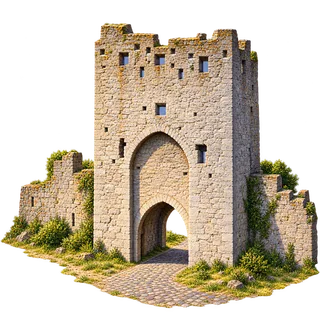
Österport is one of the gateways through Visby’s medieval city wall. Its plain limestone mass and small upper openings make a striking contrast with an ornamental palace or church. Gotland Museum preserves the original gate doors, which were removed in 1873. Today the open passage remains part of the living town rather than a reconstructed sealed fortress.
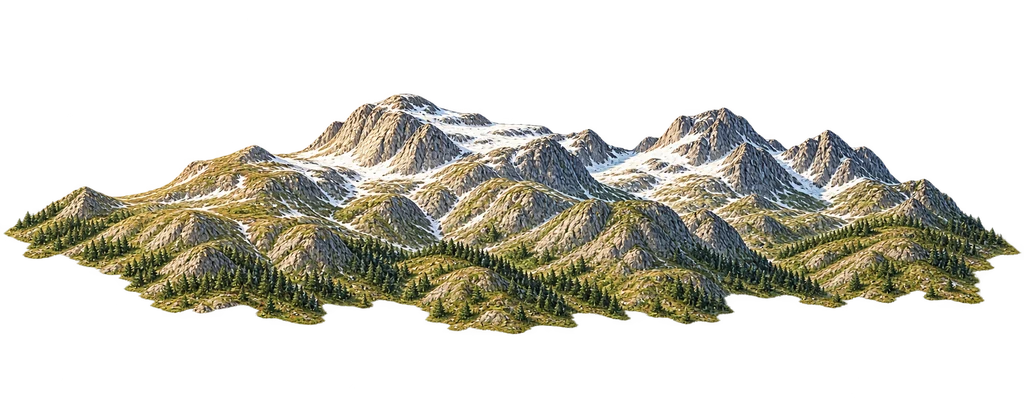
The Scandinavian Mountains extend along the western side of the Scandinavian Peninsula. The artwork uses northern rock, snow and broad highland shoulders.
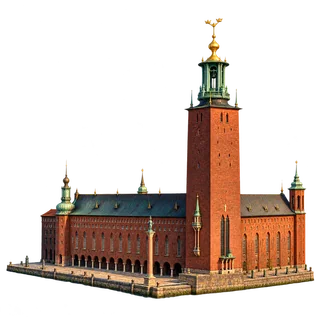
Architect Ragnar Östberg designed Stockholm City Hall. The building houses municipal council rooms and hosts the Nobel banquet, while the Three Crowns give its tower a memorable skyline.