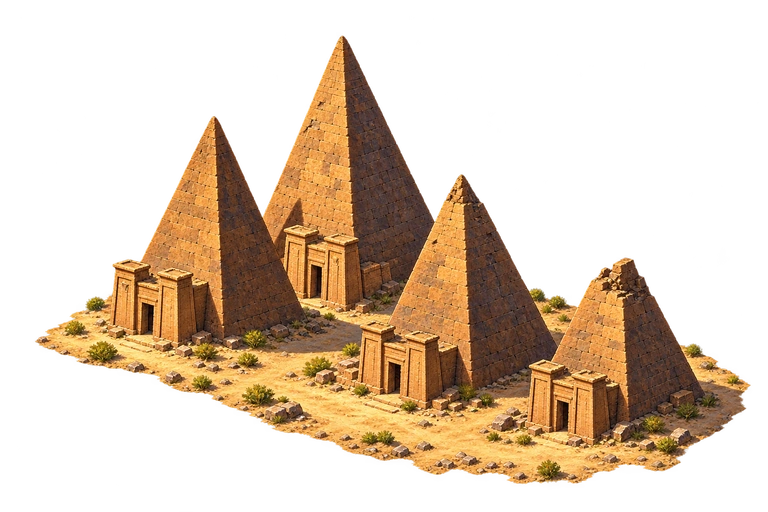
The royal cemeteries of Meroe preserve a distinctive tradition of pyramid building in ancient Sudan. Their narrow sandstone forms rise steeply above the desert, with small offering chapels beside the bases. Archaeologists from the German Archaeological Institute describe some of the original pyramids as reaching thirty metres high. The cemeteries contain the tombs of queens, kings and other members of Meroitic society.
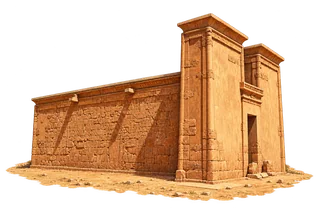
The Lion Temple at Musawwarat es-Sufra is associated with King Arnakhamani and the lion god Apedemak. Its reliefs offer evidence of Kushite kingship and religious life. The temple belongs to the wider archaeological property of the Island of Meroe, which also includes Naqa and the royal city of Meroe.
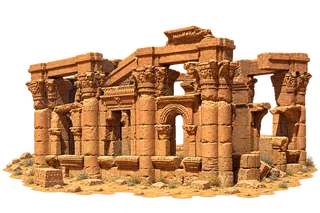
The small building often called the Roman kiosk stands near Naqa's Lion Temple. Its architectural details combine traditions associated with Kush, Egypt and the Mediterranean. It is also identified as a chapel of Hathor. The ruin is part of the archaeological landscape of the Island of Meroe.
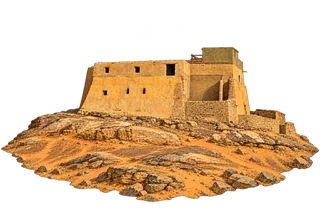
This monumental building in Old Dongola is commonly called the Throne Hall. Researchers describe its original role as a throne hall or church; it was converted into a mosque in 1317. The surviving structure brings together successive chapters of Makuria's history, and conservation work has sought to protect its fabric and wall paintings.
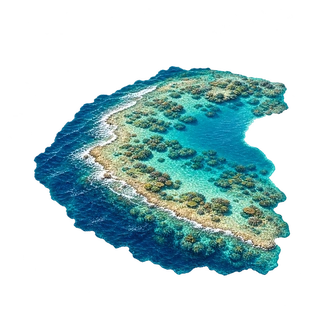
Sanganeb is an isolated coral-reef structure off Sudan's coast. It forms one component of a protected marine property whose other component includes Dungonab Bay and Mukkawar Island. The wider group connects reefs with mangroves and seagrass habitats, demonstrating the variety of environments found along this stretch of the Red Sea.
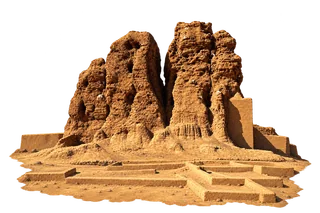
The Western Deffufa is one of the mud-brick monuments that gave Kerma its archaeological fame. Investigations by the Swiss archaeological mission have helped reveal the ancient city and its role in the Kingdom of Kush. Its thick, eroded walls look very different from the stone pyramids associated with later Nubian sites.