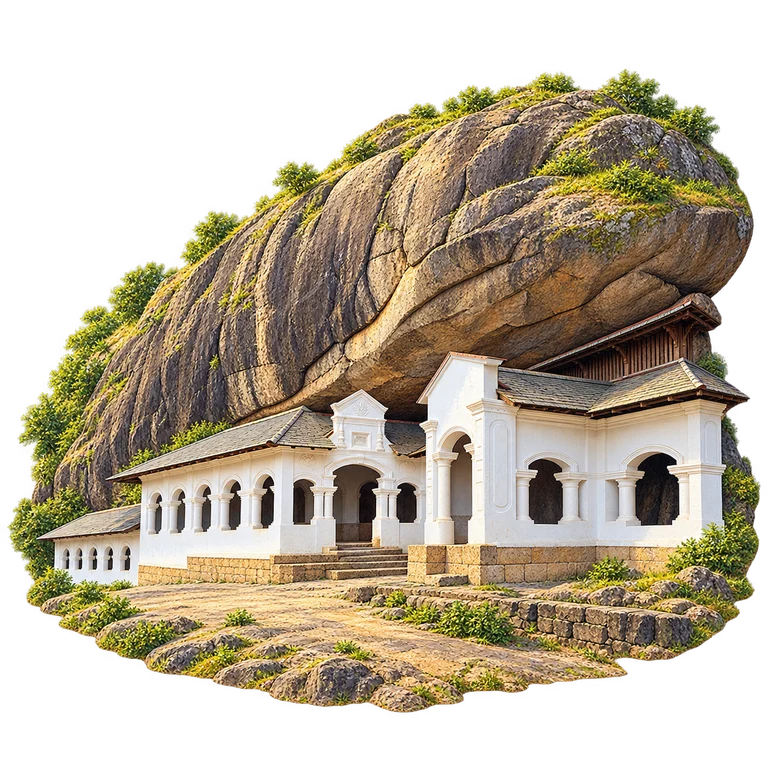
Dambulla’s cave temples bring architecture into close contact with the rock itself. The overhang shelters the entrances, and a carved drip line helps keep rain away from the cave interiors. Sri Lanka’s tourism account describes five caves within this living Buddhist place. White arches along the frontage contrast with the weathered stone above. Inside, religious paintings and sculpture belong to a much richer sacred setting than the exterior alone can reveal.
Galle Lighthouse, also called Pointe de Galle Light, belongs to the harbour landscape described by Sri Lanka’s Ports Authority. Its pale tower, dark lantern glazing and small adjoining buildings offer a clear landmark within the old fortified town. A lighthouse has a different purpose from the walls around it: it helps make a maritime approach legible. The contrast between the slender tower and the fort’s low, solid ground tells part of that relationship.
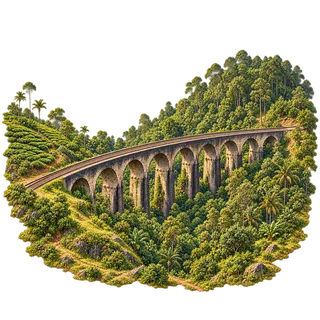
Near Ella, Nine Arch Bridge joins a railway curve to a steep green landscape. Its nine connected arches carry the line between substantial abutments, turning a valley crossing into a rhythm of openings and piers. Sri Lanka’s Central Cultural Fund includes the bridge among the country’s destinations. Looking beneath the track reveals how the structure answers the shape of the ravine: each arch belongs to a continuous working crossing, rather than a row of separate monuments.
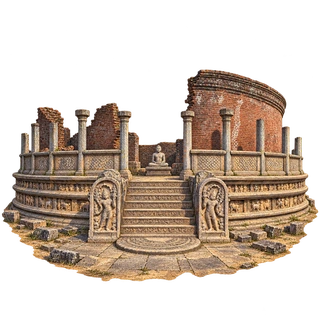
Polonnaruwa became Sri Lanka's second capital after the destruction of Anuradhapura in 993. Its remains include Brahmanic monuments associated with the Cholas and a later garden-city shaped under Parakramabahu I in the twelfth century. The archaeological landscape reflects these successive periods.
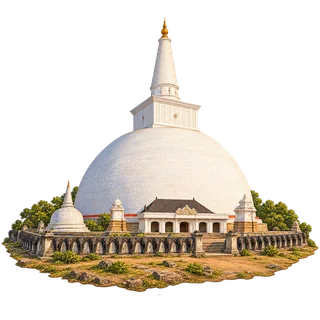
Ruwanwelisaya is one of the great Buddhist stupas within Anuradhapura’s sacred landscape. Its broad white dome carries a square upper stage and a slender spire, while an elephant-decorated boundary gives the approach a distinct rhythm. Anuradhapura’s monuments belong to a place of continuing religious importance, not simply an abandoned ancient city. Here, the contrast between the heavy dome and delicate summit makes the stupa’s scale especially striking.
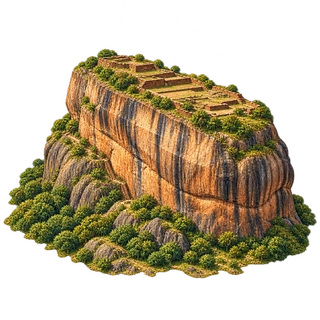
In the fifth century, King Kashyapa made Sigiriya the centre of his royal stronghold. Today, low foundations and terraces remain on the summit, while the surrounding rock and forest give Lion Rock its unforgettable silhouette.