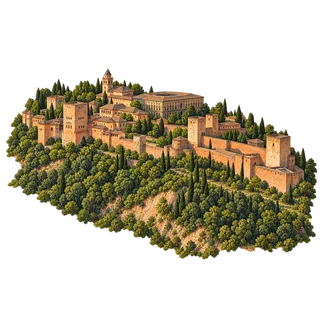
The Alhambra grew into the court of the Nasrid rulers of Granada. Its palaces reached a remarkable flowering under Yusuf I and Muhammad V in the fourteenth century. Later rulers added new buildings, including the Renaissance Palace of Charles V, whose round courtyard sits inside a square exterior.
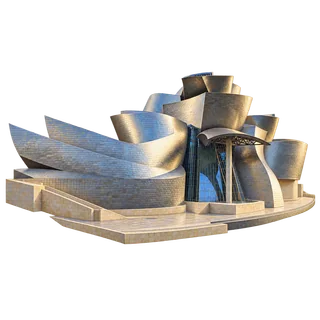
Frank Gehry designed the Guggenheim Museum Bilbao with a striking combination of titanium, limestone and glass. Galleries connect around a tall central atrium. Its changing curves make the building look different as visitors walk around it.
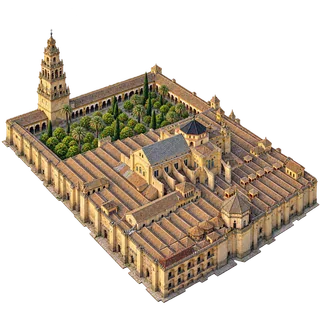
The building began as the great mosque of Córdoba and was enlarged by successive rulers. It became a Catholic cathedral in 1236. Later Christian building work rose within the earlier prayer hall, so the exterior still reveals several periods of history at once.
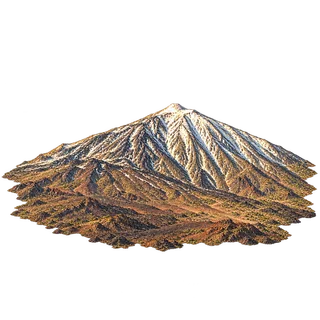
Teide is Spain’s highest mountain and stands on the island of Tenerife. It forms part of the Teide–Pico Viejo volcanic system within the national park. Lava, rock and changing light reveal the volcano’s shape; in colder weather, snow can brighten its upper slopes.
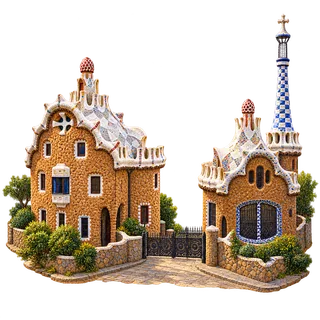
Antoni Gaudí designed the pavilions at Park Güell’s main entrance on Carrer d’Olot. Their rough stone walls meet curving ceramic roofs. Broken tile pieces form colourful mosaics, a technique known as trencadís. One pavilion served as the porter’s house.
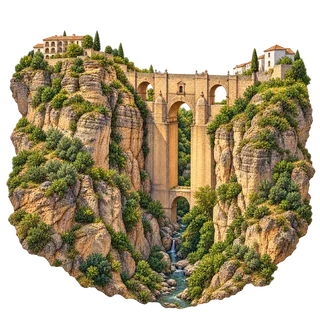
Puente Nuevo connects Ronda’s old town with the newer Mercadillo district. Completed in 1793, it rises around 98 metres above the gorge. Its tall masonry piers and central arch make the crossing part of the dramatic cliff landscape.
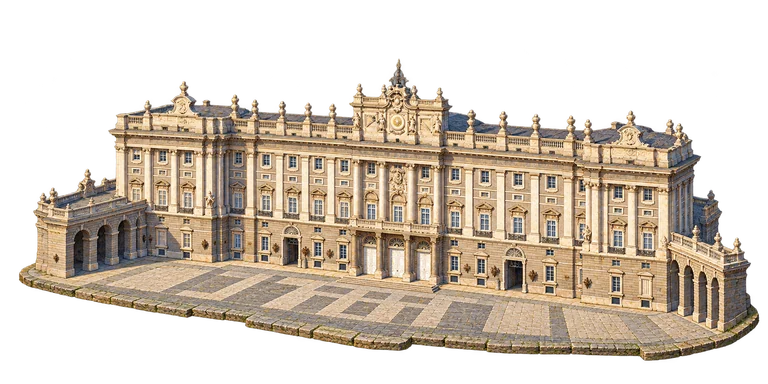
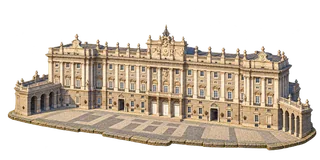
Stand before the south main façade facing the Plaza de la Armería. Rows of windows and pilasters spread outward from the central entrance, while roof sculpture draws the eye back toward the middle. The eighteenth-century palace occupies the site of the earlier Alcázar; its first stone was laid in 1738. This frontage is one face of the palace, rather than a view of every wing and courtyard.
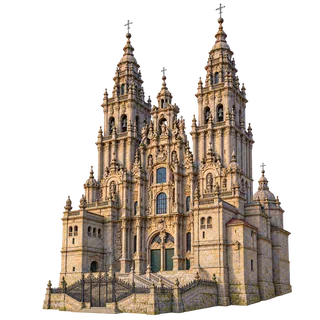
Santiago’s cathedral has a Romanesque heart, begun in the eleventh century. Its western Obradoiro façade was added much later in the Baroque style. The richly modelled front and twin towers create a grand entrance facing the square.
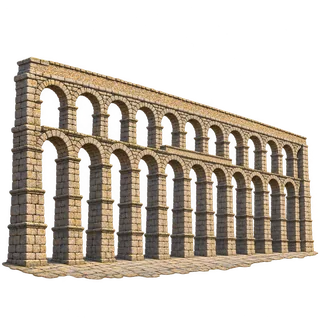
The Romans built Segovia’s aqueduct to bring water towards the city. Its monumental arcade crosses the low ground at Azoguejo, with carefully fitted granite blocks rising in two tiers. A gentle slope carried water along the channel above the arches.
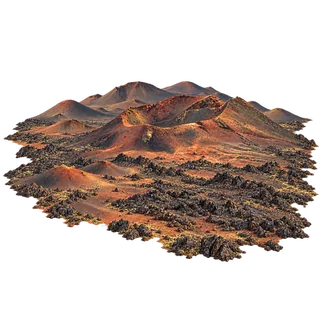
Eighteenth-century eruptions transformed this part of Lanzarote into a landscape of volcanic cones and lava fields. Timanfaya protects a remarkable part of that volcanic terrain. Its red, ochre and black surfaces show how varied a young lava landscape can be.