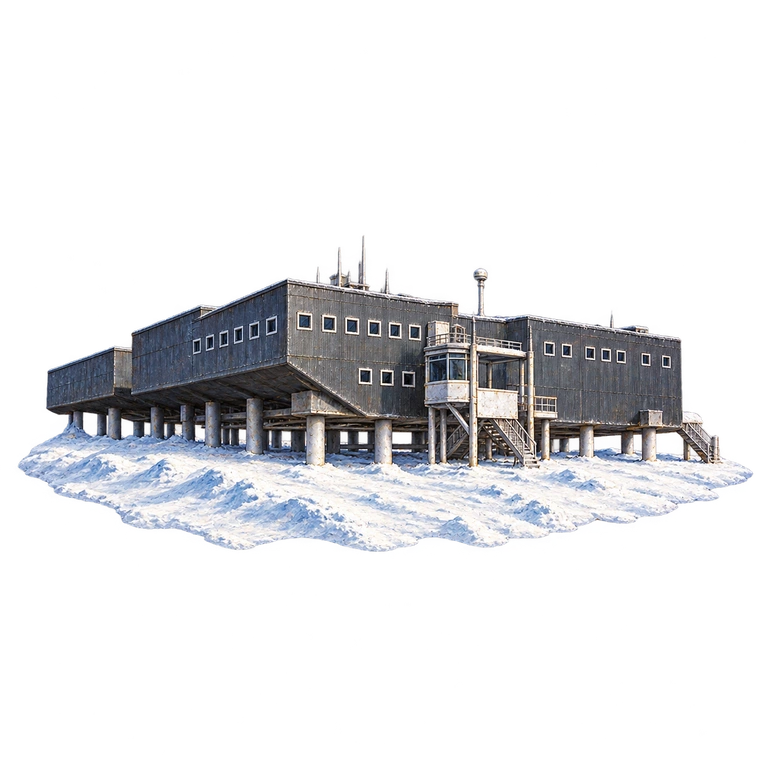
The South Pole station opened in 1956 to support scientific work around the International Geophysical Year. Its current elevated building was completed in 2008 to cope better with snow accumulation. Research includes astronomy, atmospheric studies and investigations using instruments within the ice, linking the station with several ways of observing Earth and space.
The IceCube Laboratory houses computers that collect and filter signals from light sensors frozen deep into Antarctic ice. Those signals help researchers investigate neutrinos, particles that rarely interact with matter. Raised on steel supports, the laboratory is the surface hub of a much larger observatory. The instruments below the snow do their work out of sight.
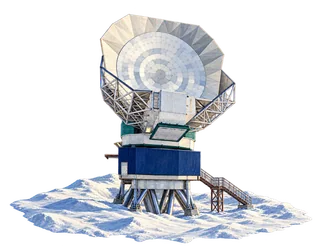
This telescope studies the sky at microwave and millimetre wavelengths rather than through an eyepiece. Its large mirror helps scientists map the cosmic microwave background, light left over from the early universe. The cold, dry South Pole atmosphere makes this a valuable observing site. A distinctive open steel structure carries the mirror above its blue lower enclosure.