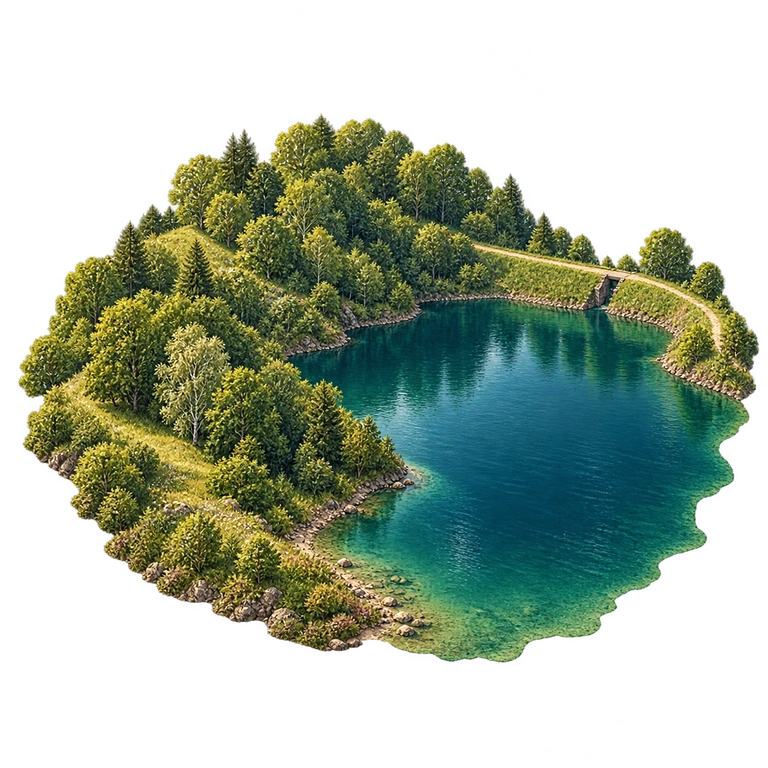
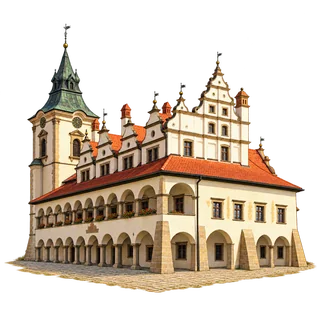
Banská Štiavnica grew through mining and metallurgy, especially involving gold and silver. Palaces, churches and squares developed alongside shafts, tunnels and other technical works. Artificial reservoirs and collecting ditches supplied the mining industry and the town, showing how engineering extended far beyond the underground workings.
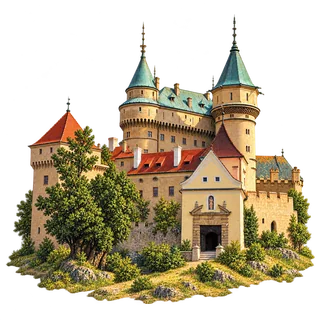
The castle at Bojnice stands on a travertine mound. Count Ján Pálffy’s late-nineteenth-century rebuilding gave it the romantic appearance associated with French Loire castles.
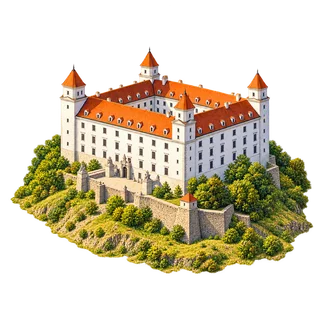
Bratislava Castle’s hill has a long history of fortified settlement and royal building. A fire in 1811 left the palace in ruins before its twentieth-century reconstruction.
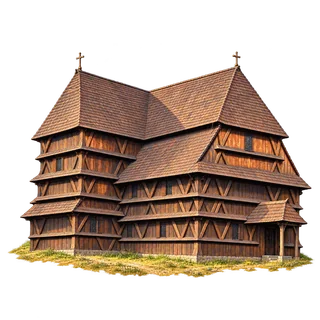
Hronsek’s wooden articular church was completed in 1726. Its cross-shaped plan and exposed timber construction distinguish it from the stone churches of nearby towns.