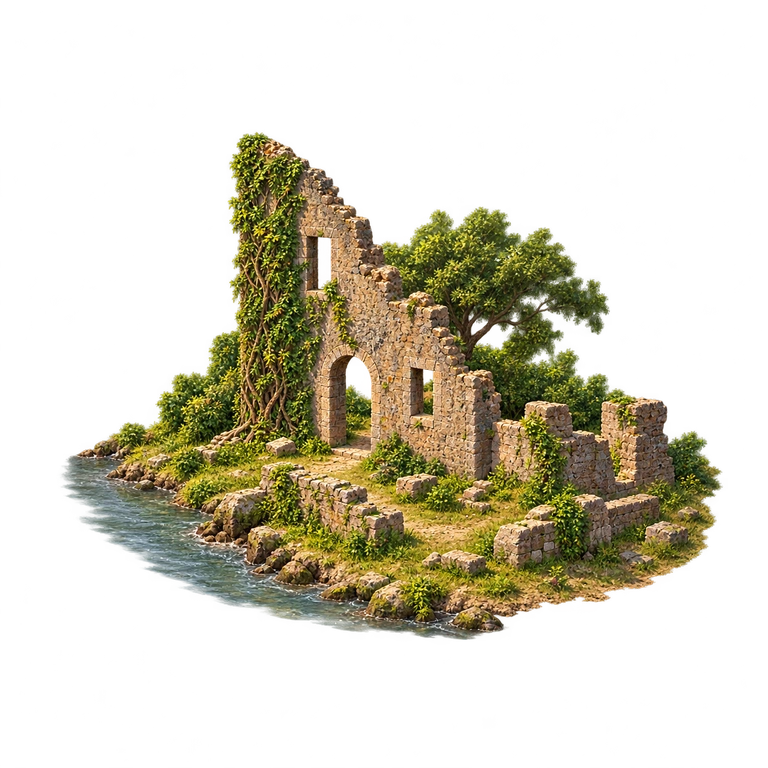
Bunce Island in the Sierra Leone River became a slave-trading station in 1670. Its remaining walls, stores, residential blocks and other features preserve material evidence of the people and institutions involved in that trade. The site also connects Sierra Leone with descendant communities in the Americas, making conservation inseparable from remembrance.
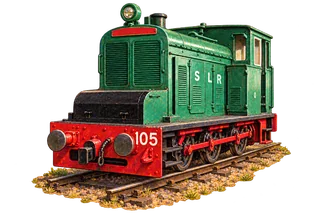
The Sierra Leone National Railway Museum preserves locomotives, carriages and railway records in Freetown. Diesel 105 belongs to a group built by Hudswell Clarke of Leeds. Its green body, red front beam and prominent number give it a lively character even as a preserved museum exhibit.
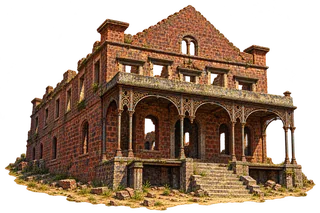
The original Fourah Bay College building is a landmark in Freetown's educational history. Laterite walls and ornate porch ironwork remain from a building that once housed classrooms and later served other public uses. The illustration shows the surviving ruins, rather than restoring a vanished roof.
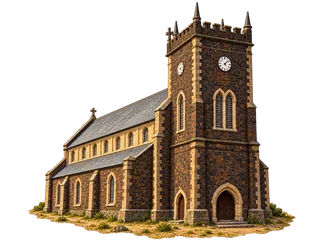
St George's Cathedral is one of Freetown's historic churches. Its square tower, pale stone details and arched windows make a recognisable city landmark. The long nave stretches back from the tower beneath a pitched roof.
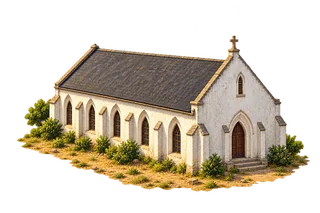
St John's Maroon Church is associated with the Maroon settlers who arrived in Freetown from Jamaica. Its restrained form stands apart from the city's larger church towers. The long pale walls and repeated arched windows make a quiet landmark within the busy city.