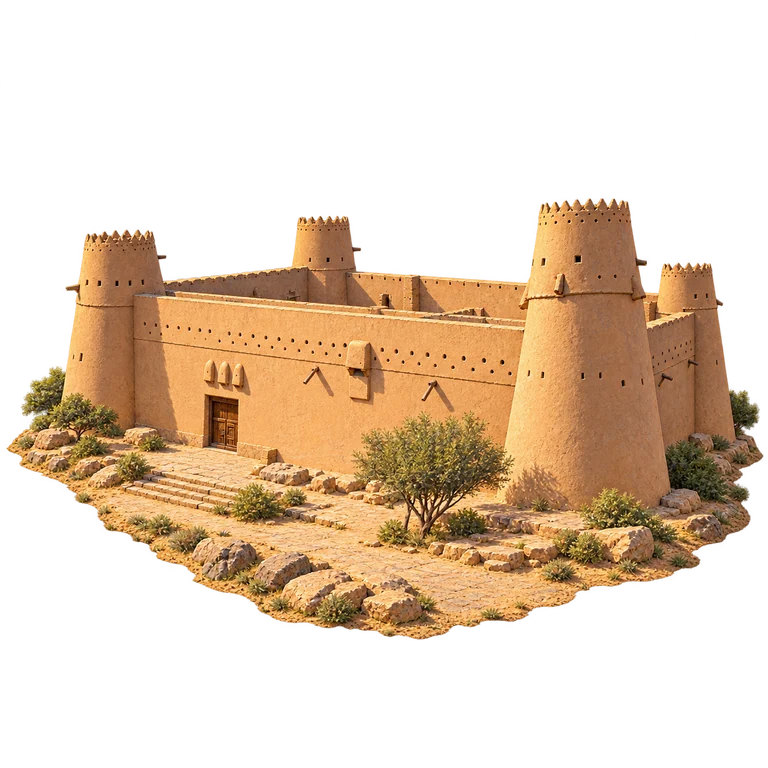
Al Masmak was built in 1865 as a fortified place in Riyadh. Its name is associated with the thickness of the building, a quality visible in the tall walls and four corner watchtowers. The fort is connected with the 1902 capture of Riyadh and later became a museum. That change in use adds another layer to the building’s history: a defensive structure now helps interpret the city’s past. Its plain outer surfaces contrast with the stories and rooms inside.
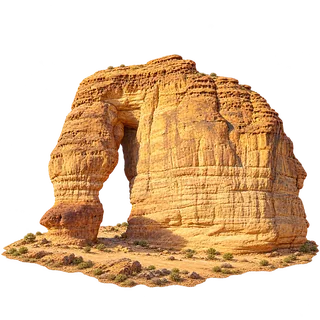
Elephant Rock, or Jabal AlFil, is a natural sandstone formation near AlUla. Rain, wind and sand have weathered the rock over a long period, leaving a broad mass connected above an opening to a narrower descending support. Its familiar animal-like outline comes from geology rather than carving. The Royal Commission for AlUla describes a height of about 52 metres. Looking at its layers and eroded surfaces reveals more than the resemblance that gave it a name.
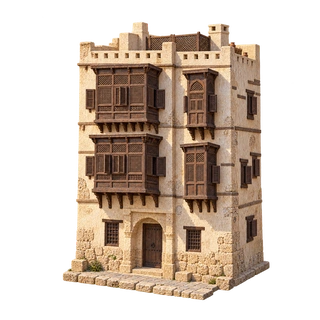
Historic Jeddah developed as a major port on the eastern Red Sea, connecting Indian Ocean trade routes with Makkah. It also received Muslim pilgrims arriving by sea. Its distinctive tower houses combine Red Sea coastal building traditions with crafts and influences carried along those routes.
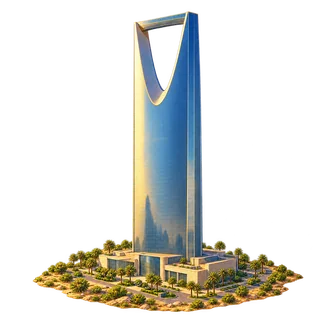
Kingdom Centre is recognised by the great opening near the summit of its glazed tower. A steel skybridge spans that opening about 300 metres above the ground. The operator describes a 65-metre-long bridge reached by lifts, turning the structure into a place from which to read the city. At street level, the tower belongs to a mixed-use complex. Its silhouette shows how a single structural feature can become a city landmark.
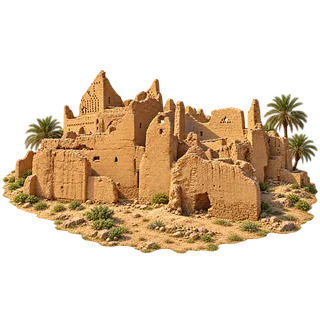
Salwa Palace stood within At-Turaif as a residence and administrative centre during the First Saudi State. Its units accommodated government, hospitality and domestic life. The remains reveal earthen construction through thick walls, buttresses, triangular vents and broken upper edges. Parts have been conserved or adapted for museum interpretation, while other spaces remain open ruins. Seeing both conditions together helps distinguish historical fabric from an imagined fully rebuilt palace.
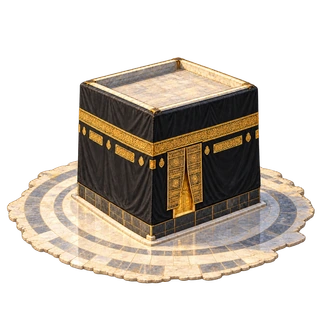
The Kaaba stands within Masjid al-Haram in Makkah, Saudi Arabia. Its black kiswa covering and gold ornament make the cuboid building instantly recognizable.