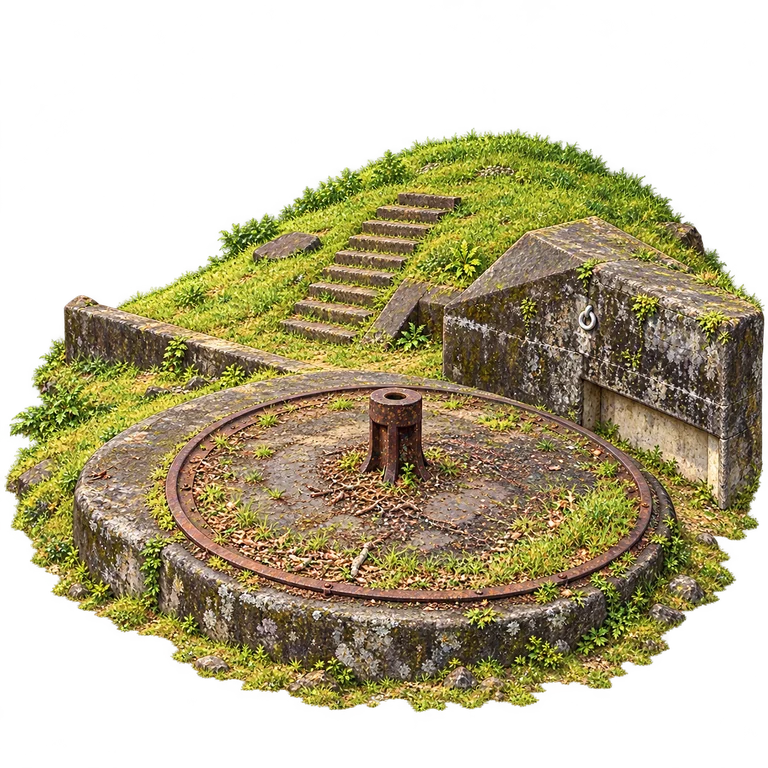
Apostles Battery, also known as Morne Battery, is one of the historic military sites around Morne Fortuné. The Saint Lucia National Trust describes its former artillery role and the later care of its guns and surviving structures. This view concentrates on an empty emplacement documented in the Trust’s photograph. Look for the circular rail, the central pivot and the steps rising into the grassy bank: traces of the machinery that once worked here.
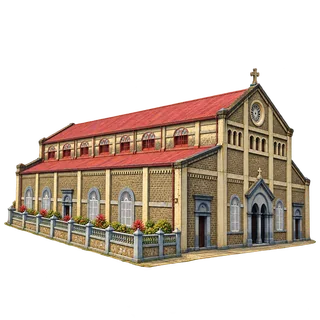
The Cathedral Basilica of the Immaculate Conception stands beside Derek Walcott Square in Castries. Saint Lucia’s tourism authority highlights its wooden architecture and colourful interior murals. Outside, a long red roof, pale vertical ribs and arched windows give the stone building a strong rhythm. Look for the rose window high in the gabled front, then the small projecting entrance porch below. Its long basilica form is quite different from a cathedral dominated by twin spires.
Diamond Falls stands within the botanical gardens of the Soufrière Estate. The gardens’ own account explains that minerals carried by the water colour the rock face, with the appearance changing as conditions vary. Look for the orange, yellow and darker bands behind the falling stream, then the green vegetation around them. The vivid cliff is part of the waterfall’s character, rather than a painted decoration added to the landscape.
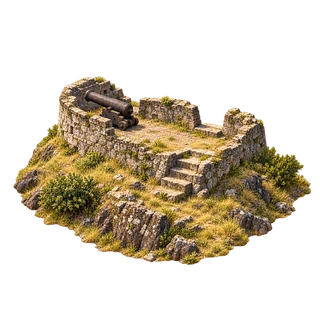
Pigeon Island preserves barracks, batteries and fortifications linked to Saint Lucia's colonial military history. Fort Rodney occupies a hilltop overlooking Rodney Bay and the Caribbean Sea. Together, the surviving structures show how elevated ground and harbour views influenced the placement of defences in this northern coastal landscape.
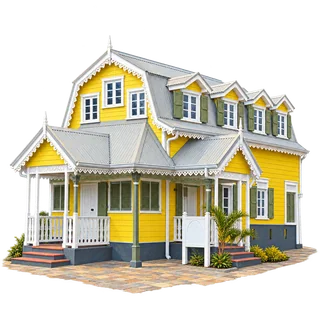
Walcott House preserves the memory of Derek and Roderick Walcott’s childhood in Castries. A government account describes the project to reconstruct the home as a museum and gallery. The restored building has yellow timber walls, white trim and small roof gables above its veranda. Look for the repeated dormer windows and the delicate edging beneath the eaves. The house connects everyday domestic spaces with Saint Lucia’s literary and theatrical history.