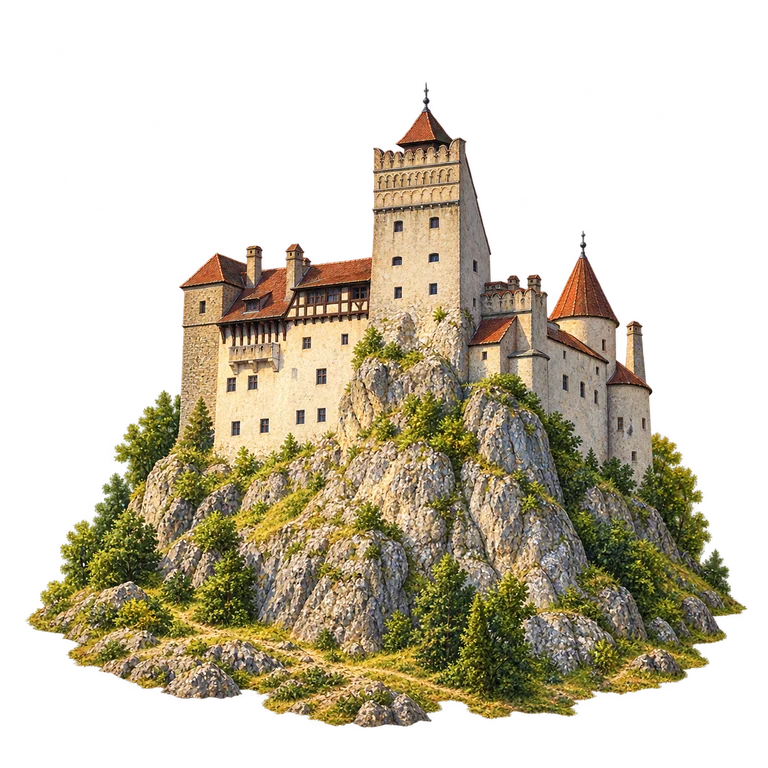
A royal document of 1377 authorised the Saxons of Brașov to build the castle at Bran. Completed in 1388, the fortress guarded a mountain passage and served a customs role. Its irregular rock and connected towers offer a more grounded story than the Dracula legends often attached to its name.
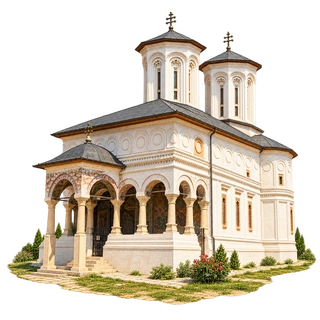
Prince Constantin Brâncoveanu founded Hurezi Monastery in 1690. Its architecture is associated with the Brâncovenesc style, combining carefully balanced forms, carved details and religious painting. A school of mural and icon painting developed there in the eighteenth century, extending the monastery's influence beyond the buildings themselves.
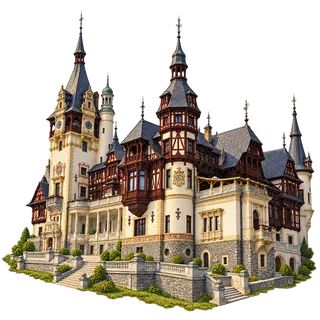
Carol I commissioned Peleș as a summer residence at Sinaia. Work began in the 1870s, the castle was inaugurated in 1883, and later extensions continued to shape its asymmetrical form. Timber-framed upper storeys, stone terraces and a tall clock tower make the building feel deliberately varied.
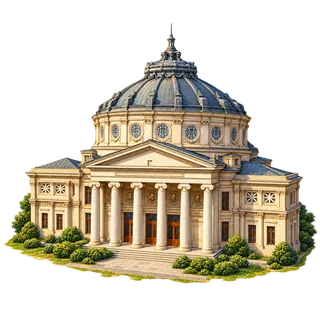
The Romanian Athenaeum was inaugurated in Bucharest in 1888. Its circular hall and classical portico became the home of the George Enescu Philharmonic. Public fundraising helped make the building possible, linking the concert hall’s history with the audiences who gathered around it.
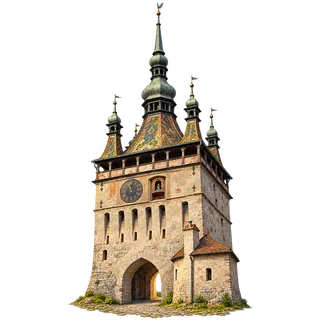
Sighișoara’s Clock Tower once housed the town hall and later became the home of the History Museum, opened in 1899. The roof was rebuilt after the great fire of 1676. Its colourful tiles, four corner turrets and slender central spire give this gateway a distinctive outline above the lanes.