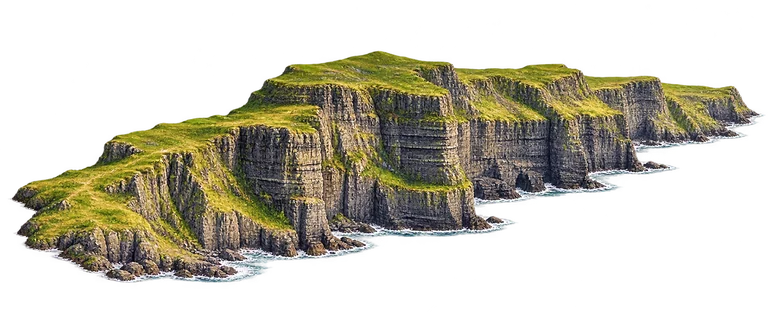
The Cliffs of Moher expose steep, horizontally layered rock along County Clare’s Atlantic edge. Near O’Brien’s Tower the cliffs reach their greatest height, about 214 metres. Viewed along the coast, projecting headlands reveal a succession of dark faces and grassy rims.
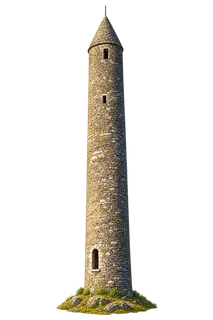
Glendalough’s round tower is one of the valley’s most recognisable medieval structures. Its small high openings, raised doorway and conical roof give the tower a remarkably spare outline. It belonged to a monastic settlement whose surviving churches and crosses still shape the site.
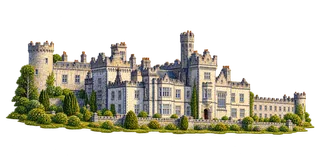
Kylemore began as a nineteenth-century castle, completed in 1868, and later became home to a Benedictine community. Its long façade combines battlements, towers and tall windows. The building’s changing use makes the same stone exterior part of both domestic and monastic history.
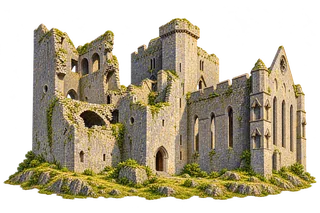
The Rock of Cashel holds a group of medieval ecclesiastical buildings above the surrounding plain. The Gothic cathedral’s high walls, arches and crossing tower survive without their original roof. Its ruined outline makes centuries of building and weathering visible at once.
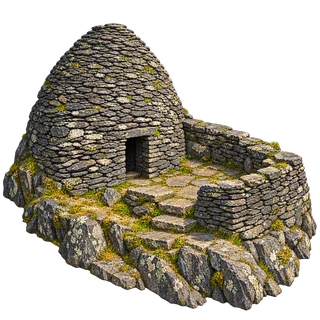
The monastic remains on Sceilg Mhichíl occupy a steep rocky island off Ireland. Cells, oratories, living areas and food-growing plots preserve the arrangement of a small religious community in an isolated setting. The surviving masonry also records the development of dry-stone construction, while the monastery's foundation date remains uncertain.