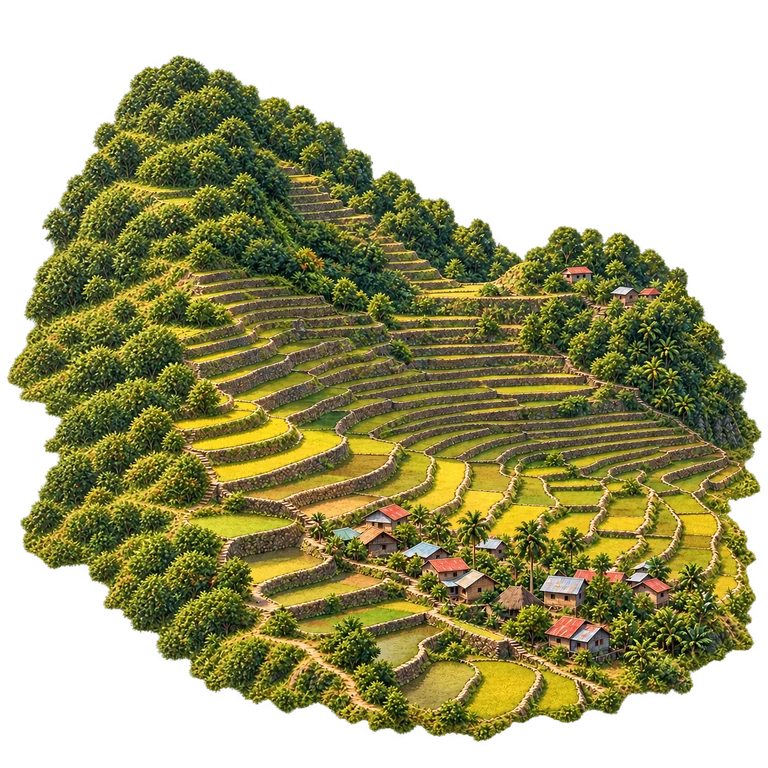
Batad is one of five distinct terrace clusters in the UNESCO Rice Terraces property. Its semicircular fields surround a village at the base of an amphitheatre-like slope. Stone or mud retaining walls and carefully managed irrigation connect farming with the forest and water above. These are living Ifugao agricultural landscapes, maintained through continuing community knowledge and work.
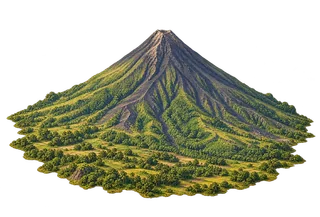
Mayon’s near-symmetrical cone is built by volcanic processes, not carved as a monument. The Philippines’ UNESCO tentative-list submission describes it as an active stratovolcano rising to 2,462 metres, within a landscape important to surrounding communities. Its regular outline is only one part of that story: an active volcano also shapes settlement, risk and care for the environment.
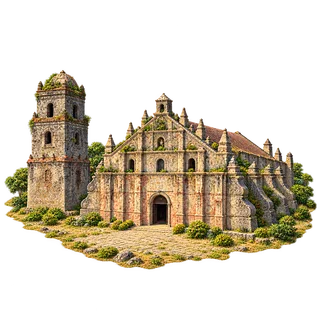
Paoay is one of four churches in the Philippines included in the UNESCO Baroque Churches property. Their architecture reworked European Baroque through the skills of Philippine and Chinese craftsmen. Here, the broad facade, massive side buttresses and detached bell tower give the church a particularly grounded appearance. Its form is part of a locally shaped architectural tradition.
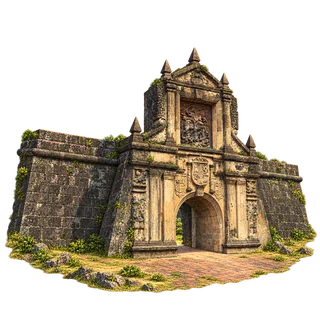
After Spanish forces took Maynila in 1571, a new wooden fort replaced an earlier palisade. Fort Santiago was rebuilt in stone between 1589 and 1592 and later served several foreign armies. The gate visible today also carries a history of destruction and restoration: it was ruined in the Second World War and restored by the Intramuros Administration in the 1980s.
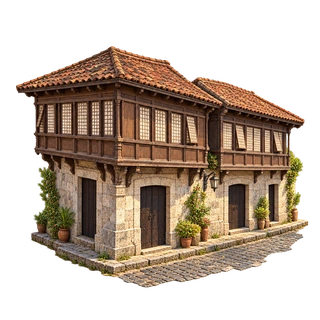
Established in the sixteenth century, Vigan developed as a Spanish colonial town in northern Luzon. Its buildings combine local Philippine construction traditions with influences from China and Europe. Streets and architecture together preserve the distinctive character of this historic trading settlement.