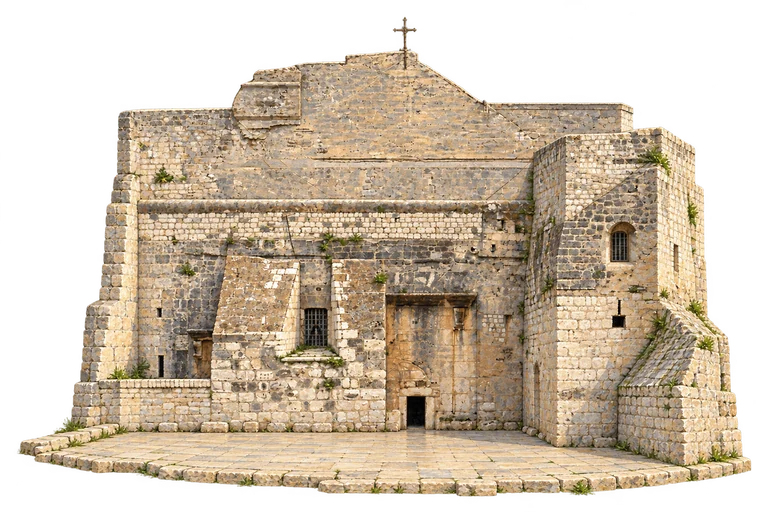
Bethlehem’s Church of the Nativity stands at a place associated in Christian tradition with the birth of Jesus. UNESCO describes a church first completed in 339, followed by the sixth-century building that replaced it after a fire. Its western entrance is strikingly modest: a small low doorway set within layers of older masonry. The surrounding basilica and convents preserve a long history of pilgrimage, rebuilding and shared care by several Christian communities.
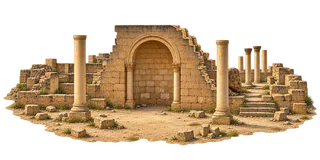
Khirbat al-Mafjar, commonly called Hisham’s Palace, lies north of Jericho. Palestine’s tentative-list submission to UNESCO describes an Umayyad complex with a palace, audience hall, baths, a mosque and richly decorated floors. The standing walls and columns offer glimpses of that larger place. They also carry a later history: excavations and conservation have included reconstruction using both recovered and modern materials. Reading the ruins means noticing those layers, rather than imagining every stone is untouched or every missing roof still stands.
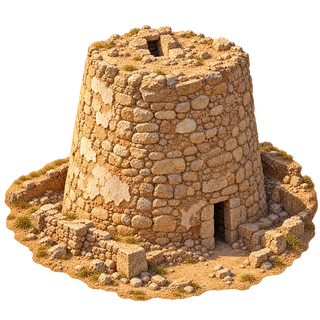
The archaeological mound, or tell, at Tell es-Sultan northwest of modern Jericho, preserves deposits accumulated through long human occupation. By the ninth to eighth millennium BCE, a substantial permanent settlement already included a wall, ditch and tower. Later remains record further changes in urban life, making the mound a layered source of evidence about settled communities.