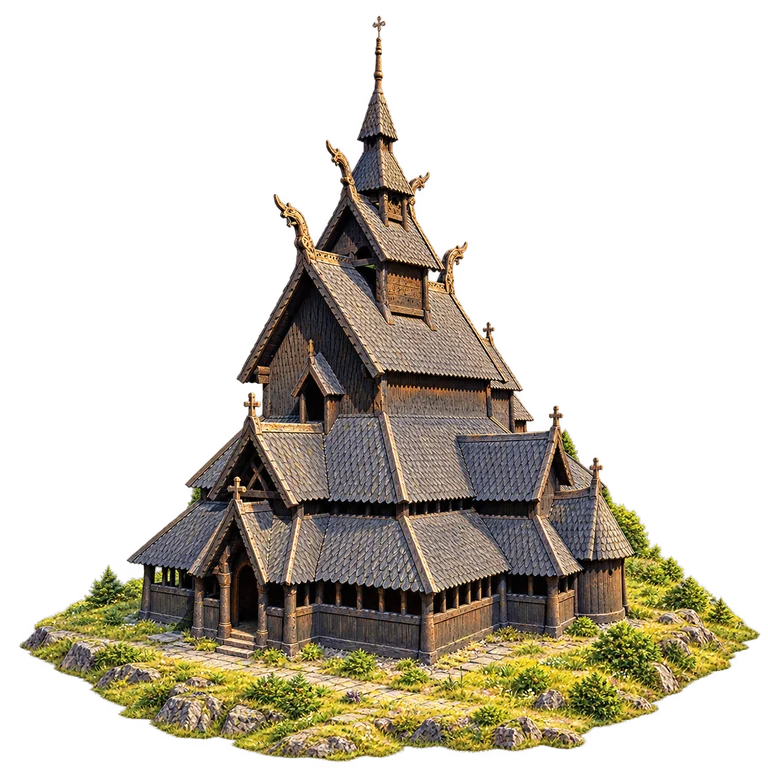
Borgund’s stave church was built around 1180 and dedicated to Saint Andrew. Vertical timber posts help explain the term stave church, while its layered shingled roofs and carved dragon-head gables create an especially recognisable exterior. The surrounding covered passage adds another low roof around the body of the building. This is surviving medieval craftsmanship maintained as heritage, not a fantasy longhouse. The miniature concentrates on the present church and a modest patch of ground, without reconstructing a historic congregation.
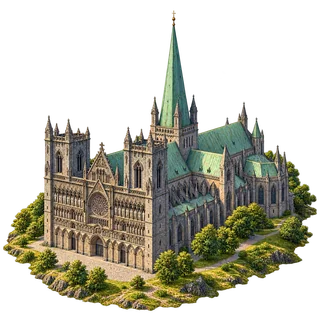
Work on Nidaros Cathedral began in 1070 and continued into the medieval period. Fires and neglect later left the building badly damaged. Restoration began in 1869 and has continued through successive generations of craftspeople. The present exterior therefore carries both medieval history and the history of its restoration. The miniature follows the current cruciform church, copper roofs, central spire and sculpted west front. Its tiny figures suggest carved niches rather than claiming to reproduce each saint or sculpture exactly.
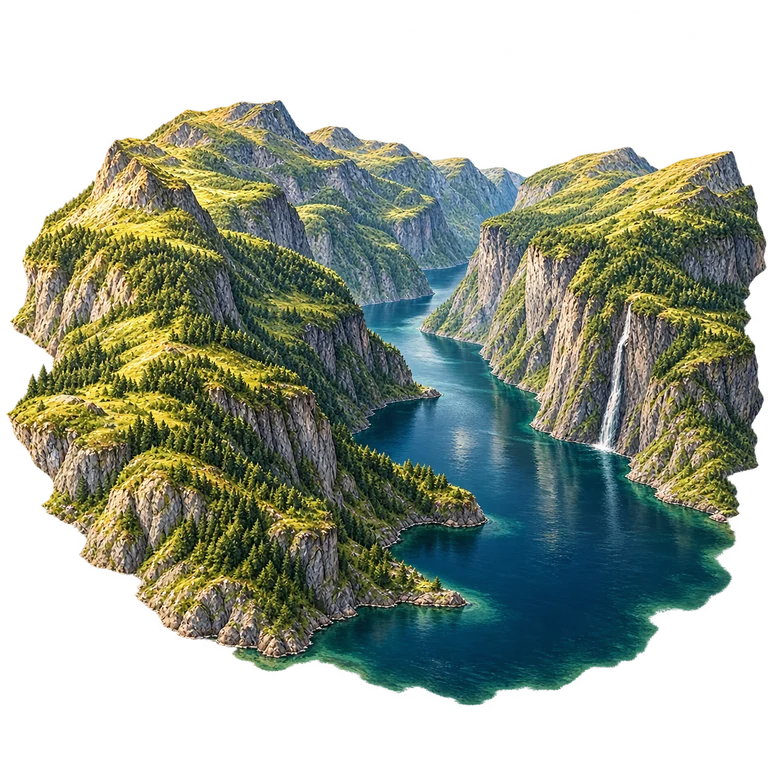
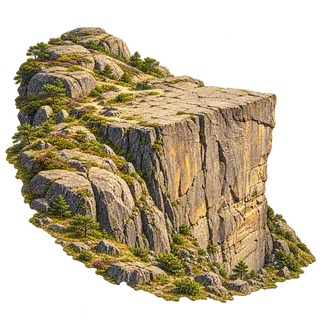
Preikestolen’s flat-topped rock platform stands 604 metres above Lysefjord. Its strong outline is made by a broad upper surface and steep fractured faces, connected to the rocky terrain behind. The destination’s geological account connects the form with changes around the end of the last ice age. The miniature isolates that recognisable upper ledge rather than trying to paint the whole drop and opposite shore. The distant water belongs to the wider fjord story, outside this individual terrestrial scene.
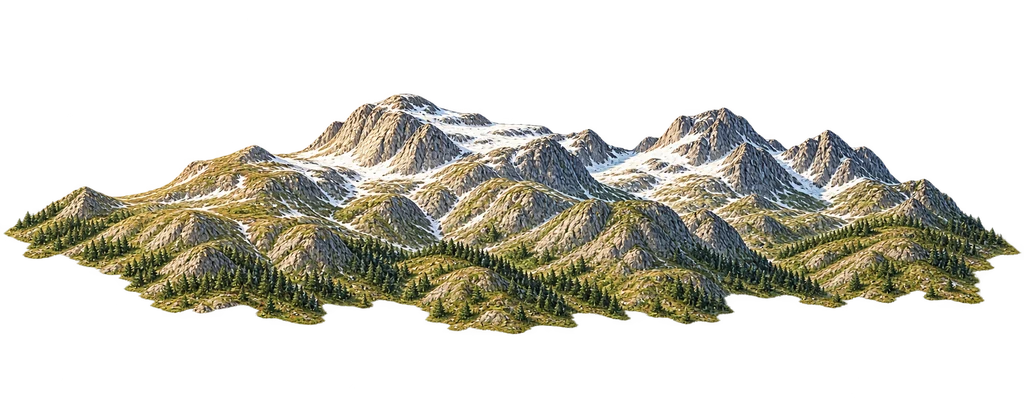
The Scandinavian Mountains extend along the western side of the Scandinavian Peninsula. The artwork uses northern rock, snow and broad highland shoulders.
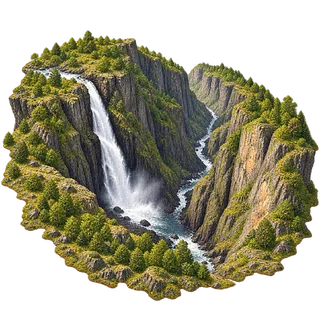
Vøringsfossen carries water from the Hardangervidda landscape down into Måbødalen. The Norwegian Scenic Routes account gives the waterfall a total height of 182 metres. Rock walls, spray and vegetation make its immediate gorge as important to the view as the falling ribbon itself. It leaves the modern viewing structures and the wider valley outside the composition, rather than inventing a complete visitor complex.