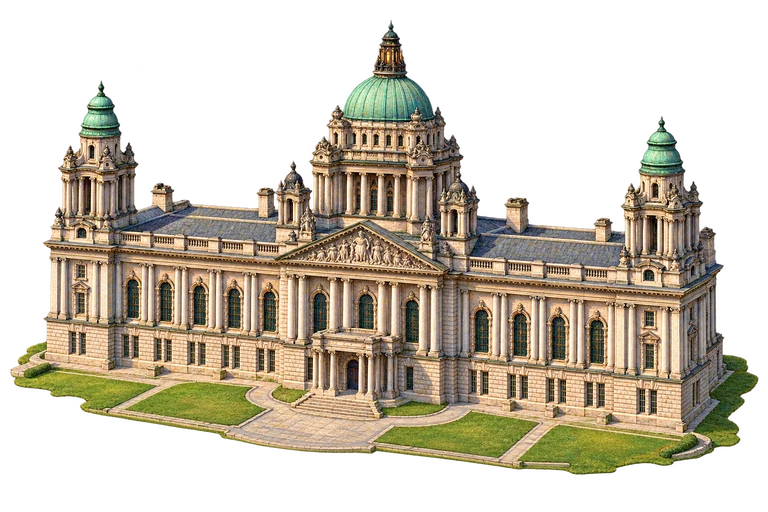
Belfast City Hall opened on 1 August 1906. Architect Alfred Brumwell Thomas designed it in the Baroque Revival style, using pale Portland stone and a strong central dome. The long frontage faces Donegall Square, with smaller domed pavilions balancing the larger central form. Look for the pediment, columns and rhythmic windows before following the roofline upwards. The building belongs to the story of Belfast’s growth as a city, and remains a working civic place as well as a landmark.
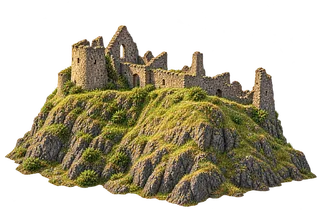
Dunluce Castle’s surviving walls rise above the north Antrim coast. The Department for Communities links its early history with the MacQuillan family around 1500 and its later development with the MacDonnells. Today it is a roofless ruin: empty window openings and broken wall tops reveal how much of a once-inhabited stronghold has disappeared. Look for the contrast between the compact stone enclosure and the steep grassy rock below. Its dramatic position is real, while stories attached to its ruined rooms need to be distinguished from the surviving evidence.
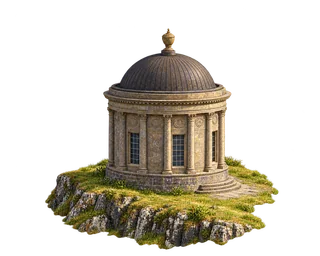
Completed in 1785, Mussenden Temple was built as a library for the Downhill estate. Its name suggests an ancient temple, but the tall windows and enclosed circular room served a very different purpose. Pilasters divide the stone drum, while a shallow dome and small finial complete the silhouette. Look at how this compact classical building contrasts with its exposed coastal setting. The National Trust now cares for the temple and the surrounding demesne, preserving both the architecture and the landscape around it.
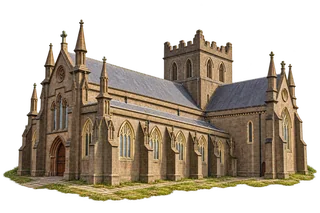
Armagh has two cathedrals dedicated to St Patrick. This is the Church of Ireland cathedral on the city’s historic hill, recognisable by its square central tower and long Gothic stone exterior. The cathedral’s own history records repeated rebuilding and restoration rather than a building unchanged through the centuries. A major nineteenth-century restoration began in 1834, and further work continued in modern times. Look for pointed windows, buttresses and pinnacled gables around the tower. Its living Anglican tradition is distinct from that of the nearby Roman Catholic cathedral.
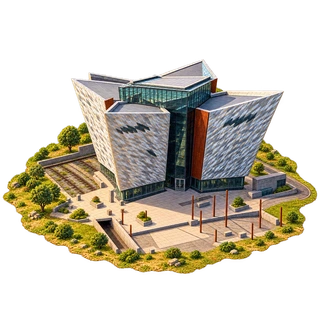
Titanic Belfast opened in 2012 beside the historic shipbuilding area. Its angular form draws on maritime references including ships' bows and water crystals. Nearby slipways and former drawing offices connect the building with Belfast's industrial history, giving the museum's architecture a direct relationship with the place it interprets.