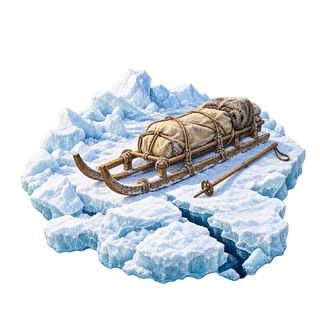
During the Fram expedition, Fridtjof Nansen and Hjalmar Johansen left the ship in 1895 with dog-drawn sledges to travel towards the North Pole. Moving pack ice forced them to turn back near 86°14′ north. Their route illustrates the challenge of navigating an environment whose surface was itself in motion.
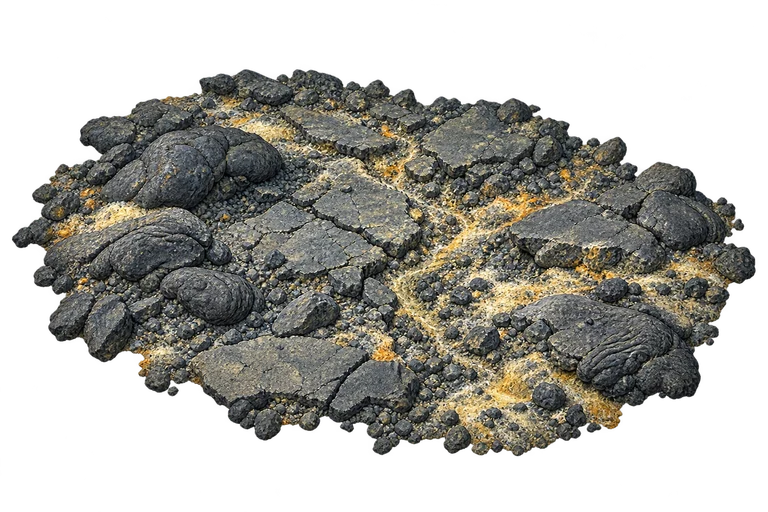
Researchers surveying the Gakkel Ridge found small clear-water vents, fractured basalt and patches of mineral deposits and microbial mats. These modest seafloor features contrast with the towering black smokers familiar from other vent fields. Chemical energy carried by the fluids can sustain microbial activity without sunlight. Polaris reveals an unexpectedly varied deep ocean far below the frozen surface.
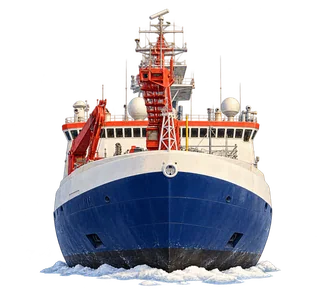
In 2019, the research icebreaker Polarstern moored to an Arctic ice floe for the MOSAiC expedition. Scientists set up instruments around the vessel to follow conditions as the ice drifted. This discovery marks the floe position reported for 6 October 2019; it is a historical reference, rather than a permanent harbour or the ship’s current location.