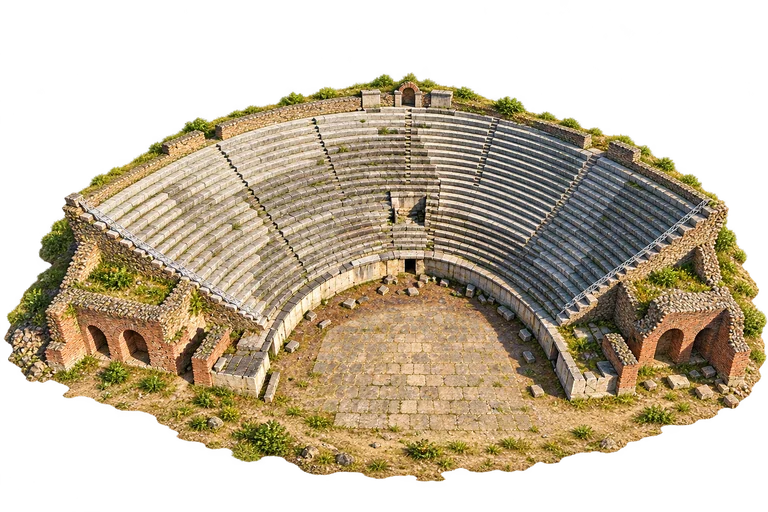
Stand before the theatre’s semicircle and the shape of an audience is still easy to imagine. Heraclea Lyncestis preserves buildings from several periods of the ancient city, including this Roman theatre. The Municipality of Bitola identifies it among the site’s second-century Roman structures, alongside baths and a court portico. Radial passages divide the seating, while the surviving masonry helps reveal how spectators reached their places.
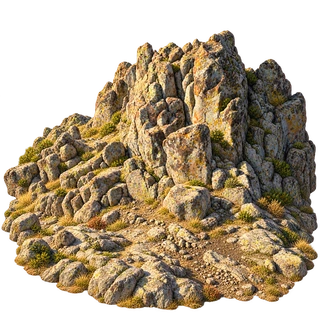
Kokino occupies the rocky summit of Tatichev Kamen in north-eastern North Macedonia. Its shaped stone seats and platforms are associated with Bronze Age activity. Researchers have interpreted rock openings as markers for observing the Sun and Moon. Those interpretations form part of the site's study, alongside the archaeological evidence for human use of the hill.
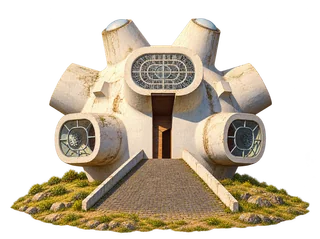
The Makedonium turns a memorial into an exploration of shape and light. Its rounded white body is interrupted by projecting openings, with coloured glass bringing another layer to the interior. Also known as the Ilinden Memorial, it commemorates the 1903 uprising and later resistance history. The monument opened in 1974 and was designed by Jordan and Iskra Grabul. Its unusual form sits within the wider memorial landscape on Gumenje hill.
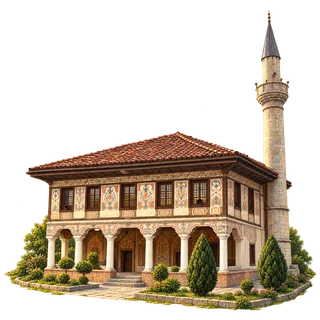
From a distance the roof and minaret provide a familiar silhouette; nearer the walls, colour takes over. Tetovo’s Painted Mosque is known for its richly decorated surfaces, with floral and geometric patterns filling panels around the building. Its present form dates to rebuilding in the first half of the nineteenth century under Abdurahman Pasha. Craftspeople from Debar helped create the decoration that makes this place so distinctive.
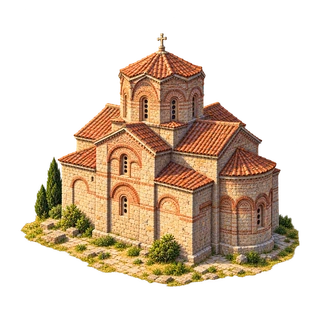
Saint John at Kaneo stands above Lake Ohrid, close to the old fishing settlement of Kaneo. The church is usually dated to the 13th century. Bands of brick and stone, arched openings and a compact group of tiled roofs lead the eye towards its central dome. It is dedicated to Saint John the Theologian.
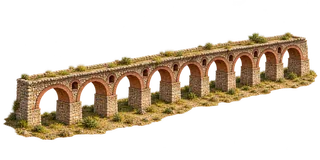
Follow the repeating arches and imagine water moving gently above the land. Skopje’s surviving aqueduct combines stone piers with brickwork, carrying a channel along its top. Its date remains debated: accounts connect it with either the Byzantine period or later Ottoman waterworks. That uncertainty is part of its story. The surviving structure offers a close look at the patient engineering needed to bring water towards a growing city.