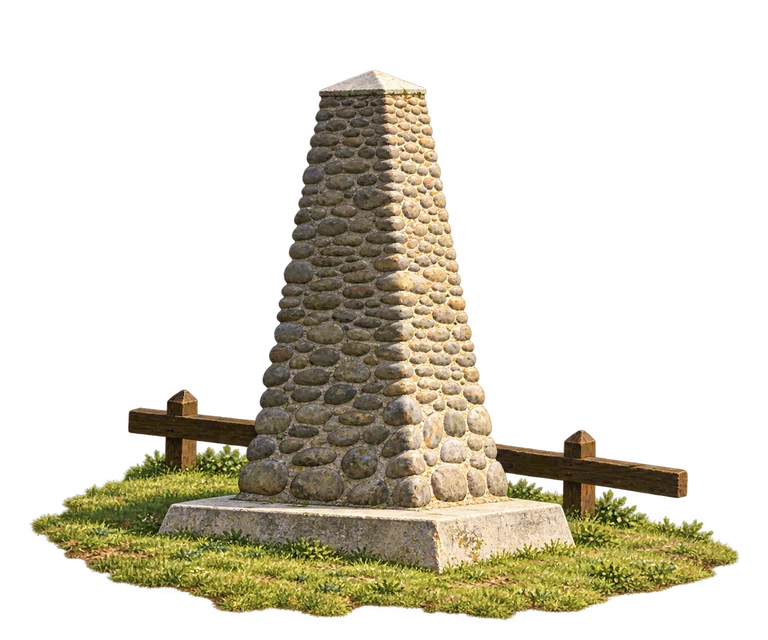
Near Norfolk Island’s northern coast, this stone monument commemorates the 1774 landing of James Cook and his officers. Its rough tapering sides stand on a low plinth above a grassy slope. That voyage was not the beginning of the island’s human story: Parks Australia records archaeological evidence of Polynesian seafarers living here between the thirteenth and fifteenth centuries. The cairn can be read as one marker within that longer history, rather than a claim that the island had no earlier people.
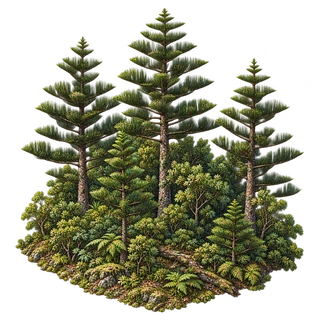
Norfolk Island pine, Araucaria heterophylla, is endemic to the Norfolk Island group. In the national park’s Mount Pitt section, pine stands form part of a wider native forest landscape. Remaining natural areas provide important refuges after the loss of much of the island’s former subtropical rainforest. Parks Australia manages invasive weeds and raises locally collected native seeds in its nursery to help rehabilitate forest.
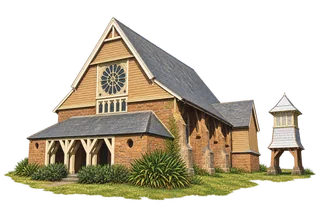
St Barnabas Chapel is one of Norfolk Island’s nineteenth-century mission buildings. Its steep roof, warm stone walls and timber front give the outside a distinctive outline. Norfolk Island Tourism describes a ship-like vaulted timber ceiling inside, alongside stained glass and mother-of-pearl inlays. The building offers a small, tangible way into the island’s mission history: craftsmanship, faith and the wider encounters between island communities all belong in that story.