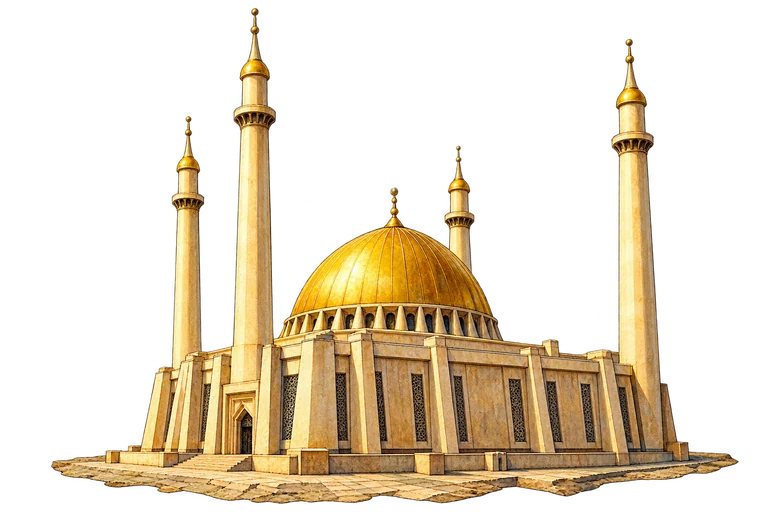
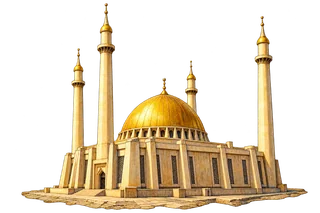
The National Mosque is a prominent place of worship in Nigeria's capital. Its broad prayer hall, golden dome and slender minarets create a distinctive outline in Abuja. The contrast between the dome's curved surface and the tall straight towers makes the building easy to recognise.
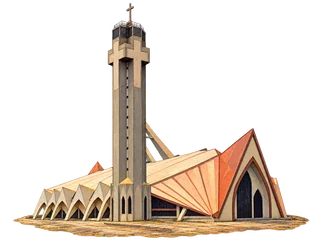
The National Christian Centre is a major Christian gathering place in Abuja. Its tall concrete tower contrasts with a low sequence of angular roofs and a steep entrance gable. The striking modern outline makes it different from older stone churches elsewhere in the world.
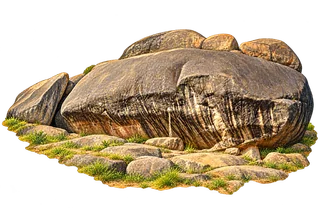
Olumo Rock is closely linked with the history of Abeokuta. Its granite outcrops provided shelter during conflicts in the 19th century and later became a well-known visitor destination. Rounded stone surfaces and deep weathering marks offer a close look at the rock itself.
Sukur's hilltop landscape combines terraced fields, stone-paved paths and the palace of the Hidi, the community's political and spiritual head. Remains of iron-smelting furnaces preserve another part of its history. Together, these features record connected systems of farming, skilled production and social life.
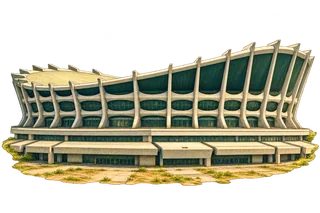
The National Theatre at Iganmu is a landmark of Nigeria's performing arts. Now named the Wole Soyinka Centre for Culture and the Creative Arts, it hosts performances, exhibitions and other cultural activity. Its sweeping roof and repeated exterior ribs make the building instantly recognisable.