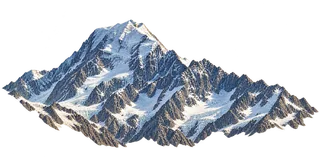
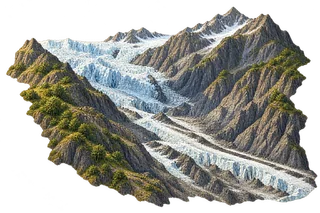
Aoraki / Mount Cook reaches 3,724 metres in the Southern Alps. Look for the broken crown of snow and rock rather than a perfectly smooth cone. Ice, steep ridges and changing mountain weather shape this high alpine landscape.
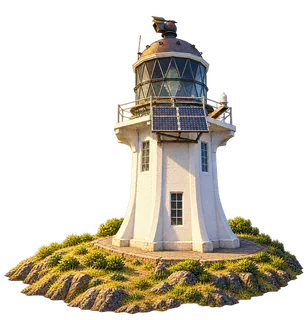
Cape Reinga's lighthouse first shone in 1941. The tower itself is about 10 metres high, while its light stands much higher above the sea on the headland. Look for the white tapered body, lantern and small gallery, not a giant tower rising directly from the ocean.
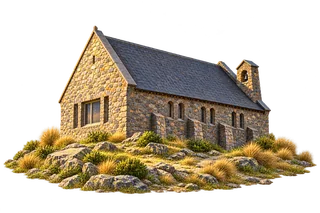
Built as a memorial to the Mackenzie country's pioneers, the Church of the Good Shepherd is still a place of worship. Its rough stone walls, steep roof and small bellcote give it a much quieter silhouette than a large cathedral.
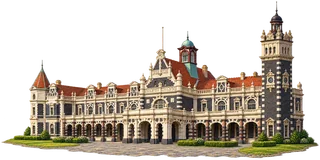
Dunedin railway station was built in 1906 and was designed by George Troup. Dark Central Otago bluestone contrasts with pale Oamaru limestone. Follow the long principal frontage to its entrance and clock tower: the station is much more elaborate than a simple platform shelter.
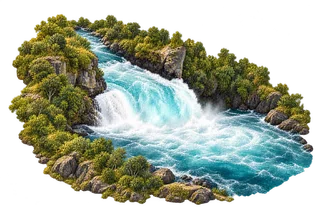
At Huka Falls, the Waikato River narrows sharply before dropping about 11 metres into the pool below. Follow the turquoise channel toward the single main outlet. Its force comes from the constricted river, not from a very tall cliff or a staircase of separate waterfalls.
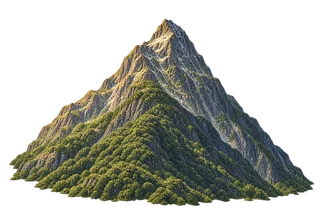
Follow the sharply ridged mountain above the fiord. Mitre Peak is one of the best-known forms in Fiordland, with wooded lower slopes and exposed rock above. The miniature isolates the mountain rather than turning the whole sound into a small island.
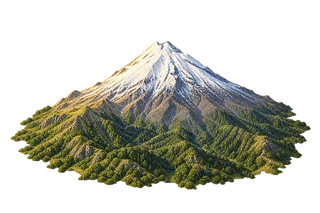
Taranaki Maunga is the dominant mountain of Te Papa-Kura-o-Taranaki. Snow highlights its upper gullies while forest covers the lower landscape. Compare its single cone with the broken high ridges of Aoraki: these are different mountain forms in different parts of New Zealand.
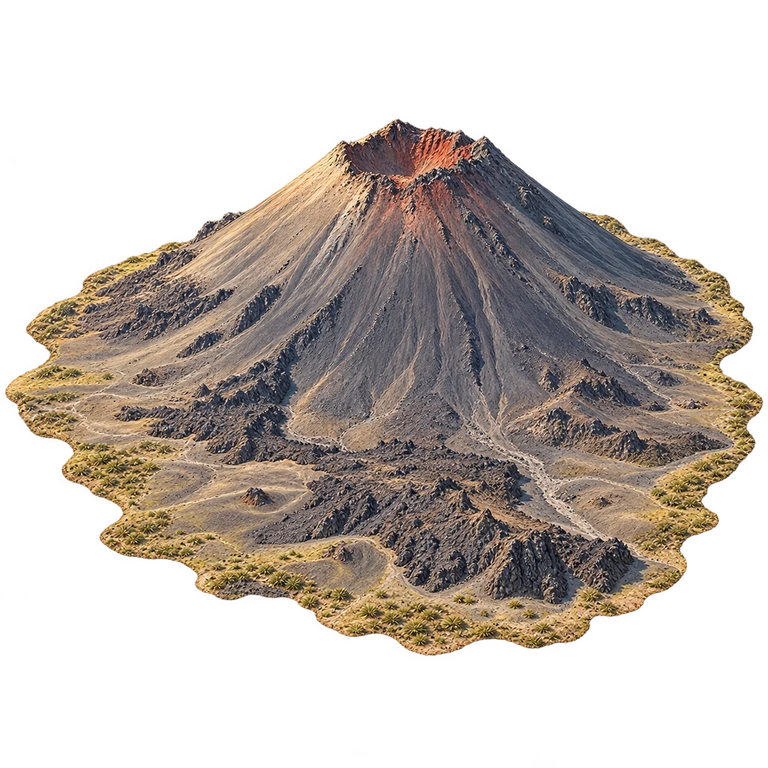
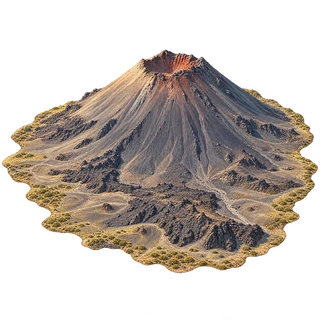
The mountains at the heart of Tongariro National Park have deep cultural and religious significance for Māori communities. Active and extinct volcanoes occur within a landscape containing varied ecosystems. Understanding the park therefore involves both the physical history of volcanic landforms and the continuing relationships between people and their environment.
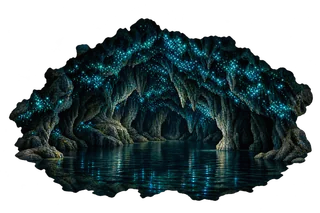
The Waitomo Glowworm Caves are known for a grotto illuminated by glowworms. Look up through the darkness to the points of light, then down to their reflections on the water. The scene is a painted interior fragment, not an exterior cliff or an entrance building.