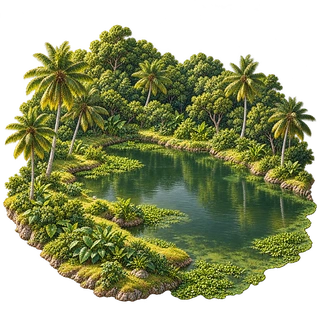
Buada Lagoon lies within Nauru rather than on its narrow coastal strip. The area around it is one of the island's limited settings suitable for agriculture. Coconut palms and pandanus trees grow nearby, giving this inland place a different character from the mined plateau and from the reef-fringed shore.
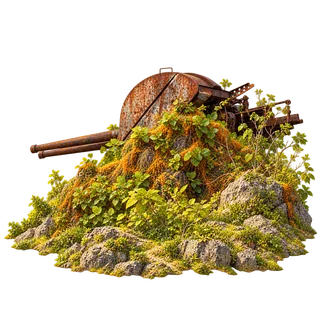
Nauru Airlines documented this remnant of the Japanese occupation during the Second World War. Its curved metal housing and projecting tubes survive among the ridge’s vegetation, a quiet reminder of that period.
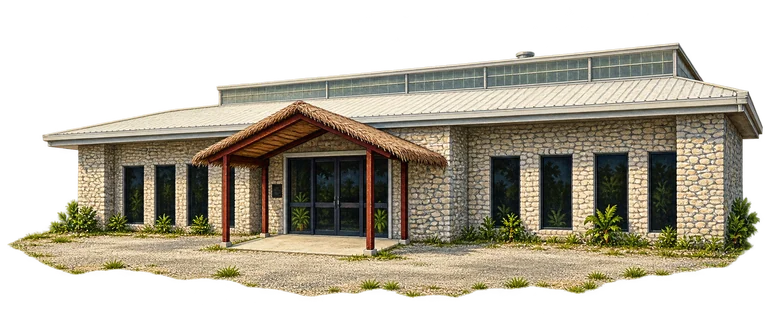
Naoero Museum gathers objects and photographs that help tell Nauru’s history. A government bulletin describes the return of more than fifty restored photographs from the period of German colonial rule, adding to the museum’s visual record of island life. Such collections can bring difficult as well as familiar stories into view. The museum’s modest entrance offers a starting point for discovering the people and changes behind them.
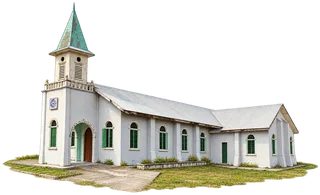
Orro Congregational Church is a place of worship and community gathering in Aiwo. Nauru’s government records national commemorative services there, including the opening service for Independence Day in 2021. The church’s square tower, narrow green spire and arched windows make it readily recognisable. Its long nave gives room for a congregation whose shared occasions connect everyday faith with the island’s public life.
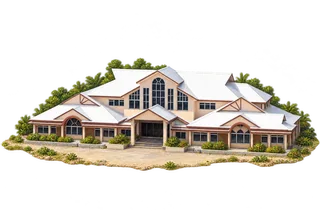
Parliament House stands in Yaren, where the island’s national debates take place. The parliament’s own guide describes a public gallery beside the chamber, separated by a glass wall so that people can follow proceedings. That connection between a small country and its public institutions gives the building meaning beyond its size. Its pale walls, bright roofs and central gable make a distinctive civic landmark.