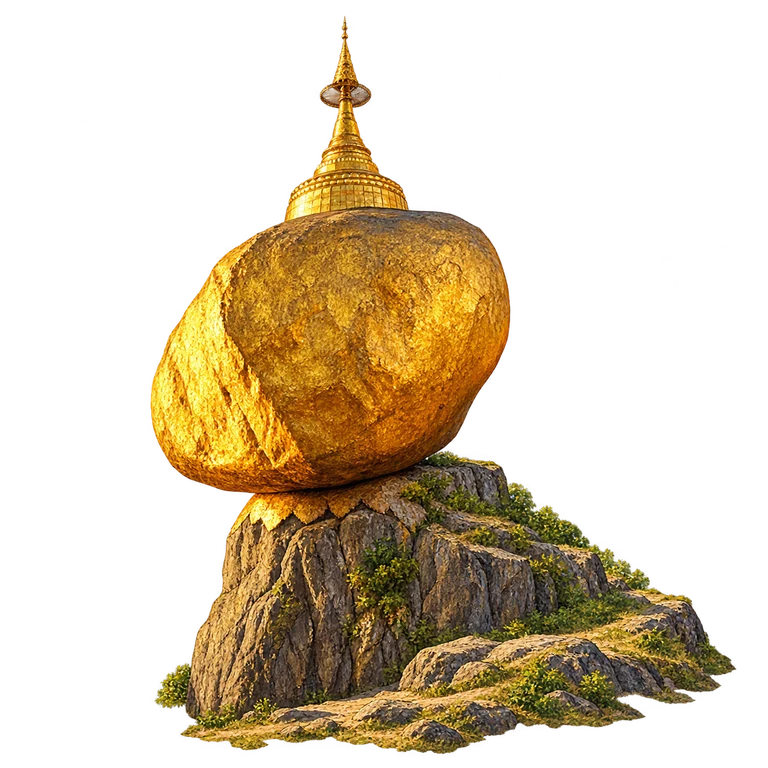
Kyaiktiyo’s Golden Rock combines a natural boulder with a sacred structure above it. The gilded stone rests at the edge of a rocky ledge, with a small stupa rising from its top. Myanmar’s official account describes the place as a significant Buddhist pilgrimage site. Look for the narrow contact beneath the boulder and the contrast between its golden surface and the rougher supporting rock. Traditions explaining its balance belong to the site’s religious heritage; the illustration does not turn those traditions into a scientific explanation.
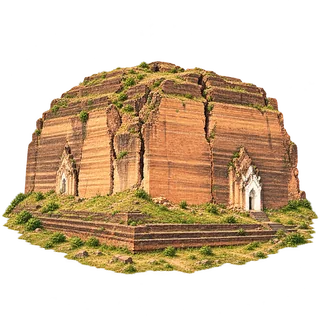
Mingun Pahtodawgyi makes its unfinished condition unmistakable. Myanmar’s national portal describes the enormous stupa project and the damage left by earthquakes. Rather than a completed spire, a broad brick mass survives, its faces split by deep fissures. Smaller ornate entrances seem almost tiny against it. Look at the horizontal brick courses, then the cracks cutting through them. The contrast reveals both the ambition of the original project and the very different monument that remains in the documented view.
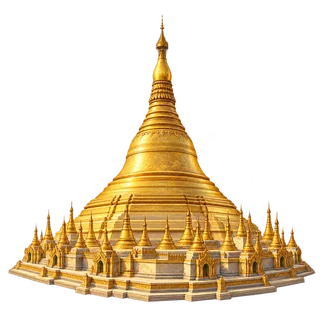
Shwedagon is one of Yangon’s best-known sacred landmarks. Its own pagoda account describes a long history of devotion, rebuilding and care. The main stupa rises from broad stepped terraces through a curving bell-shaped body towards a slender finial. Smaller shrine forms gather around its base. Look for the way the horizontal rings become closer and narrower as they climb. For many Buddhists the site has deep religious significance; its founding traditions are part of that living heritage, rather than a claim demonstrated by the illustration.
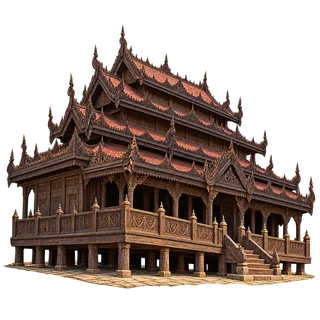
Shwenandaw Monastery is known for its richly carved teak architecture. Myanmar’s tourism ministry describes motifs and mythical creatures worked into the wood, and notes that the exterior has weathered while gold survives inside. The raised hall, veranda and layered roof give the building a strong horizontal rhythm beneath its pointed decorative outlines. Look for the carved panels and the way the roof tiers step upwards. The craftsmanship offers a different architectural experience from the great masonry stupas found elsewhere in the country.
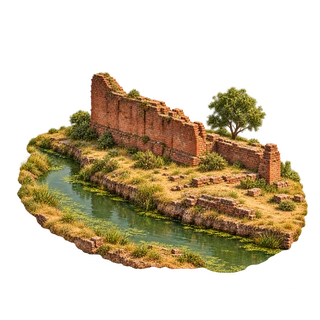
Sri Ksetra is one of three Pyu ancient cities protected together in Myanmar. Brick walls, moats and water-management remains accompanied palaces, production areas and Buddhist monuments. These partly excavated places show how urban communities organized agriculture and settlement during the Pyu kingdoms, long before the later temple landscape at Bagan.