The Nativity Cathedral is one of the landmarks of central Chișinău. The city’s tourism account describes a nineteenth-century church built in a neoclassical style, using forms drawn from ancient Greek architecture. Its central body is framed by columned porticoes, while a dark dome rises above a pale drum. Look for the contrast between the straight rows of columns and the curved roof above. The separate bell tower belongs to the wider ensemble, but this view concentrates on the cathedral itself.
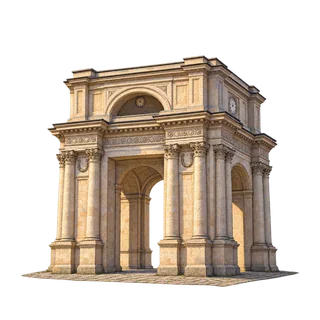
Chișinău’s Triumphal Arch stands on the axis of the cathedral ensemble in the city centre. The municipal tourism account links the monument with large bells cast for the cathedral and with the commemorative politics of the nineteenth century. Its upper stage also carries a clock. Look for the heavy piers, carved capitals and layered cornice above the passages, then the quieter rectangular upper level. It is a small civic landmark with several overlapping roles: entrance, bell structure and public timepiece.
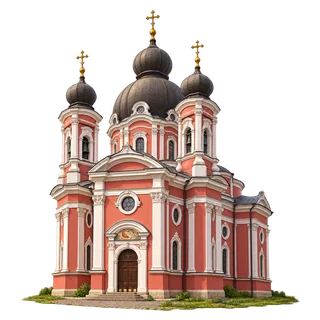
The Church of the Nativity of the Mother of God is the main church of Curchi Monastery. The monastery’s own history describes its nineteenth-century construction, wartime damage and later restoration. The present frontage combines salmon-coloured walls with white pilasters, curved cornices and dark cupolas. Look for the small circular window above the doorway, then follow the white architectural lines upwards towards the central dome. The church is one part of a larger monastic complex, with a history of disruption and renewal.
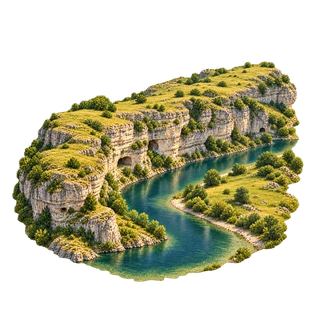
Orheiul Vechi lies along the lower Răut River in Moldova. Its natural defensive setting and connections toward the Dniester attracted settlement over long periods. Archaeological remains near Trebujeni and Butuceni record changing communities, trade and political authority, showing how the same terrain could be used differently across successive eras.
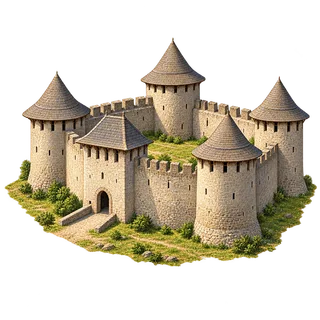
Soroca Fortress preserves a distinctive circular design on the bank of the Dniester. Moldova’s National Tourism Office traces its development from a wooden fortification under Stephen the Great to the stone stronghold rebuilt under Petru Rareș in the sixteenth century. Five towers break up the outer wall, combining round defensive forms with the entrance tower. Look for the way the walls curve between them, making the entire building feel like a single enclosure rather than a scattered group of towers.