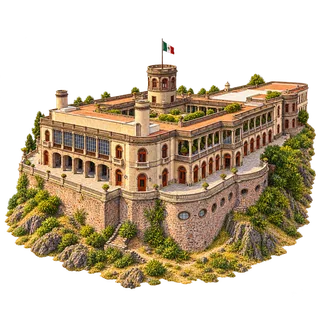
Construction at Chapultepec began in 1785. The building later served as a military school and imperial residence before becoming the home of the National Museum of History. Its Alcázar, arcaded terrace and circular Caballero Alto tower preserve a layered story of changing uses.
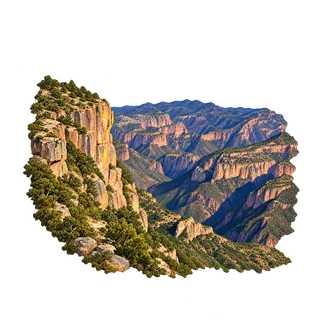
Divisadero is a stop on the Chepe railway in Chihuahua. The railway operator describes views towards the Urique, Tararecua and del Cobre canyons. Layered cliffs and vegetated ravines show why this is one of the route’s memorable viewpoints.
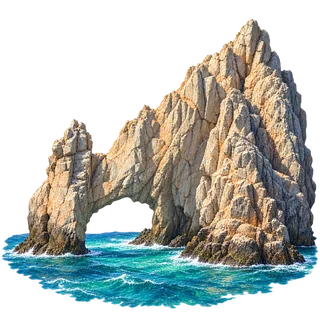
El Arco is a natural granite formation at Cabo San Lucas. Erosion shaped an opening through the rock at Land’s End. Its feet stand in the water, making the arch’s coastal setting part of the landmark itself.
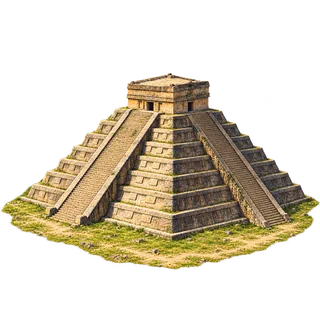
El Castillo has a square base, nine stepped bodies and stairways on four sides. A temple crowns the pyramid. Its north stairway is associated with the celebrated light-and-shadow serpent effect, interpreted in relation to Kukulkán.
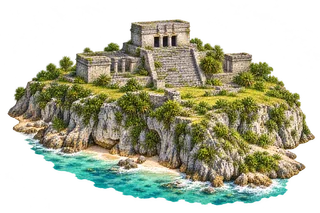
El Castillo is Tulum’s most prominent structure, standing above the Caribbean on a rocky cliff. Its summit building has three entrances and vaulted rooms. The sea-facing setting distinguishes it from the much larger inland pyramids.
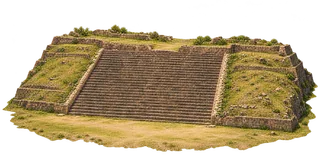
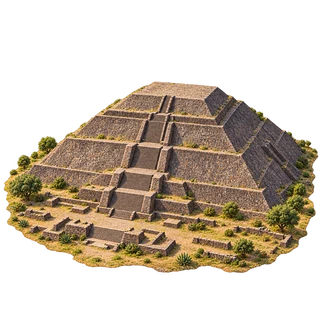
The South Platform closes one end of Monte Albán’s great plaza. A broad stairway climbs its north side, and small ceremonial mounds stand above. The ancient Zapotec city occupied flattened hilltops overlooking the Oaxaca valleys.
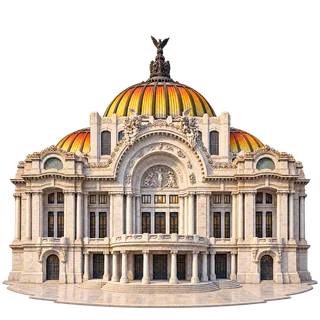
Work on the new national theatre began in 1904 under Adamo Boari. The long project was completed by Federico Mariscal in 1934 as the Palacio de Bellas Artes. Its pale marble front and coloured dome have become a distinctive part of the city beside the Alameda.
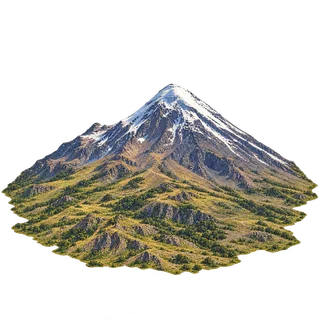
Citlaltépetl, also called Pico de Orizaba, is Mexico’s highest mountain. Its national park lies between Puebla and Veracruz. Snow can highlight the upper cone while dark gullies and greener lower slopes reveal the mountain’s broad shape.
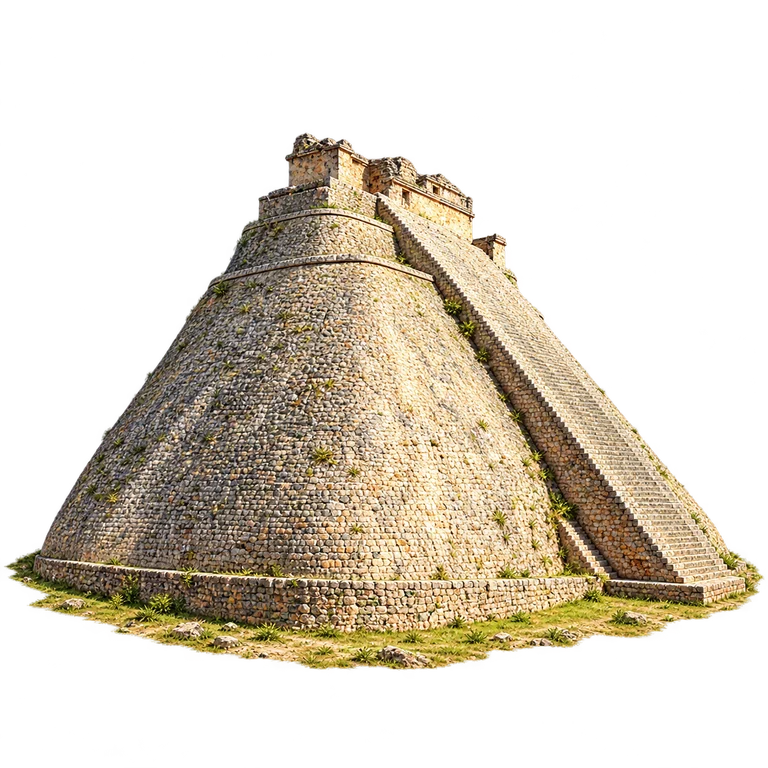
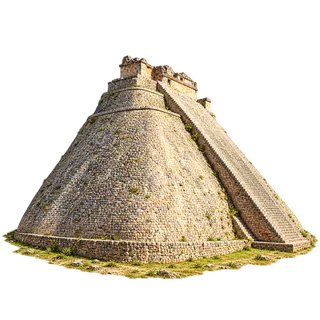
The Pyramid of the Magician has an unusually rounded outline, with a steep staircase climbing toward surviving summit rooms. Its name is tied to the legend of a dwarf, rather than a literal account of overnight construction. At Uxmal, shape and storytelling offer different ways to approach the same monument.
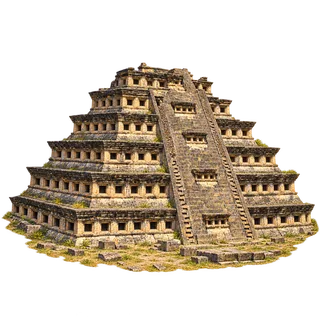
At El Tajín in Veracruz, projecting cornices frame row after row of recessed niches. The central stair interrupts their rhythm as it climbs the pyramid. Archaeologists study the building’s stone and surviving surface finishes. Weathered summit masonry records an incomplete upper structure.
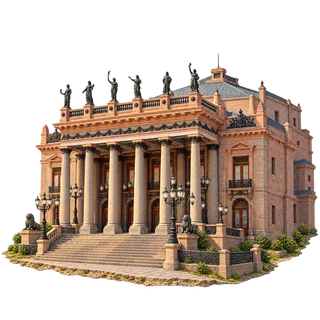
Work on Teatro Juárez began in 1873, and it opened in 1903. Its classical entrance portico makes a striking neighbour to Guanajuato’s other architectural styles. Beyond the columns, the theatre combines different historic influences rather than following a single ancient model.
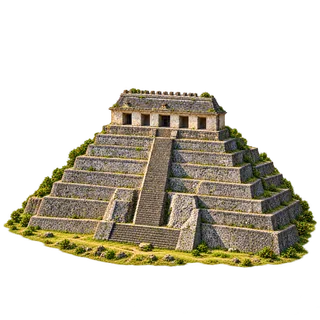
The Temple of the Inscriptions is one of Palenque’s distinctive buildings. Its broad summit temple has five front entrances, above a steep central stairway. In 1952, Alberto Ruz Lhuillier’s investigation revealed the tomb of the ruler Pakal beneath the building.
Teotihuacan developed north-east of present-day Mexico City between the first and seventh centuries CE. The Pyramids of the Sun and Moon and the Temple of Quetzalcoatl form part of a vast, geometrically organised urban landscape. Its cultural and artistic influence extended widely across Mesoamerica.
Xochimilco’s canals are part of a long-lived lake and chinampa landscape in Mexico City. At Nuevo Nativitas, colourful trajineras gather at the landing. Their floral decorations and flat wooden hulls are a familiar part of the waterways.