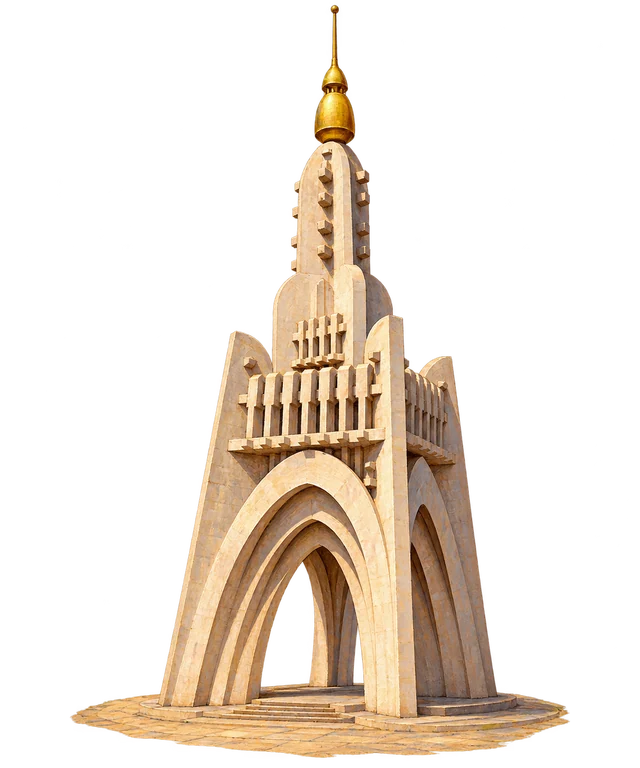
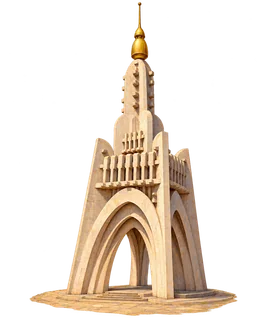
Bamako's Independence Monument was inaugurated on 22 September 1995, the thirty-fifth anniversary of Mali's independence. Its open arch and stepped vertical details draw on Sudano-Sahelian architectural forms. The monument is a place of national commemoration in the capital.
Djenné developed as a market centre linked with the trans-Saharan gold trade. Its traditional houses were built on raised hillocks to help protect them from seasonal floods. The town's earthen architecture records both long-distance connections and the practical knowledge used to inhabit a changing river landscape.
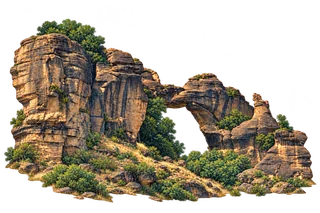
Kamandjan Arch is a landmark of the Mandingue hills near Siby. The rock bridge joins weathered shoulders above an open gap, with shrubs growing in the sheltered cracks. It is one of the named sights highlighted by Siby's tourism organisation.
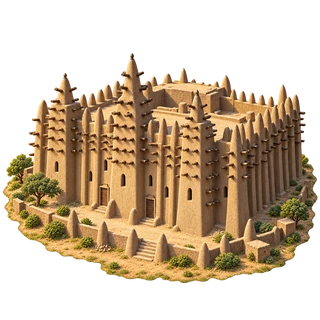
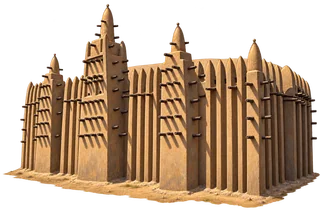
The Grand Mosque of Mopti, also called Komoguel Mosque, is a major example of Mali's earthen architecture. Its projecting timbers and thick walls are maintained through specialist building traditions. The Aga Khan Trust for Culture worked with Malian partners on its restoration, completed in 2006.
The Mamelon is one of Sikasso's named historic places. The hill belongs to the heritage landscape of the former Kenedougou capital and appears in the city's current cultural visits.