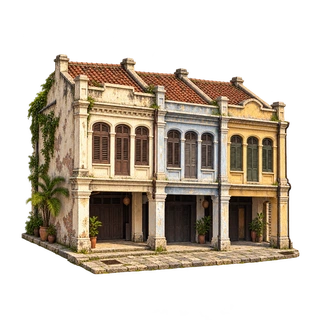
George Town is part of a World Heritage property shared with Melaka. Its residential and commercial buildings record the British colonial period from the late eighteenth century, alongside wider Asian and European exchanges through the Straits of Malacca. That history helped shape its distinctive multicultural townscape.
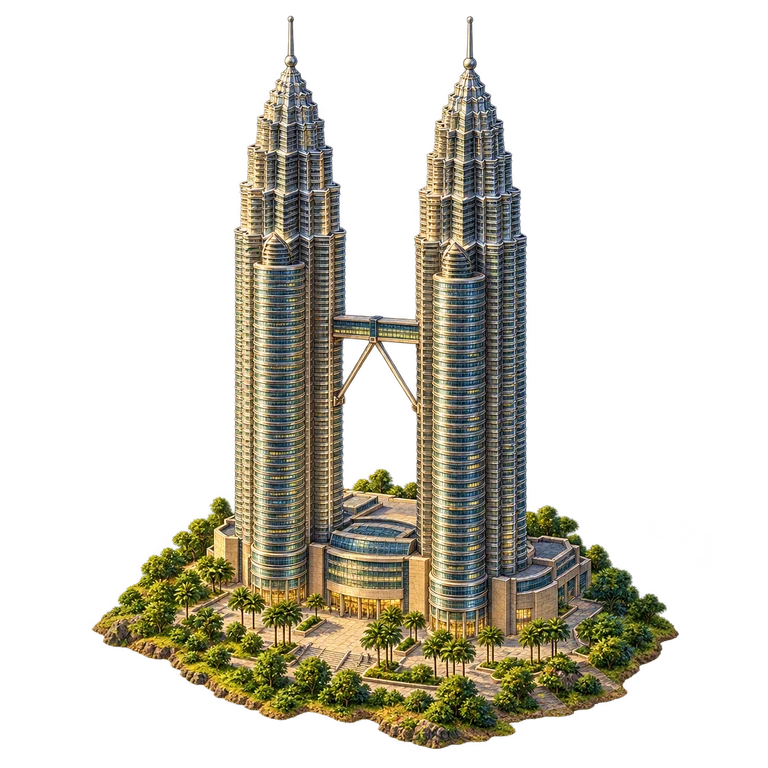
César Pelli’s twin towers combine modern high-rise engineering with geometric forms associated with Islamic design. Their floor plans develop an eight-pointed star from two interlocking squares, with added curves. Each tower rises through 88 storeys. The double-deck skybridge connects levels 41 and 42, with connections designed to accommodate small movements between the buildings.
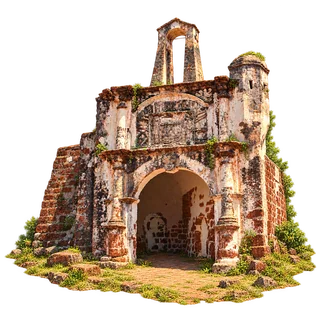
Porta de Santiago recalls the conquest of Melaka by Portuguese forces in 1511 and the fortifications that followed. Later Dutch rebuilding left another layer of history, including the emblem and date panel above the arch. The surviving entrance is only a fragment of the old defensive complex. Its modest scale makes that loss visible: this is a gate, not an intact fortress.
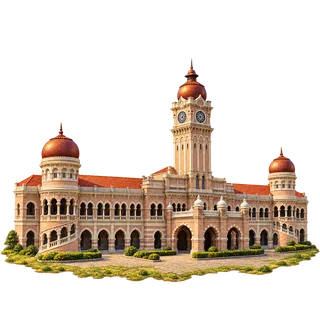
Completed in 1897, the Sultan Abdul Samad Building housed government administration during British colonial rule. Its long brick frontage combines horseshoe-shaped arches, domed pavilions and a clock tower about 41 metres high. Those forms made an official institution highly visible in the city. The present exterior also invites a reading of colonial power, rather than a simple celebration of ornament.
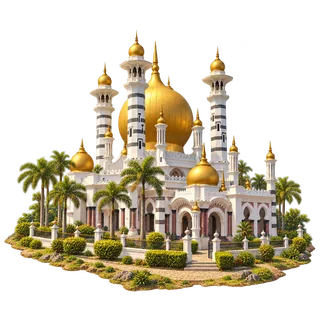
Ubudiah Mosque stands beside the royal burial area at Bukit Chandan in Kuala Kangsar. Sultan Idris laid its foundation stone in 1913. Construction was delayed, and the mosque was formally opened in 1917 under his successor, Sultan Abdul Jalil. Its golden dome and striped minarets form a distinctive exterior.