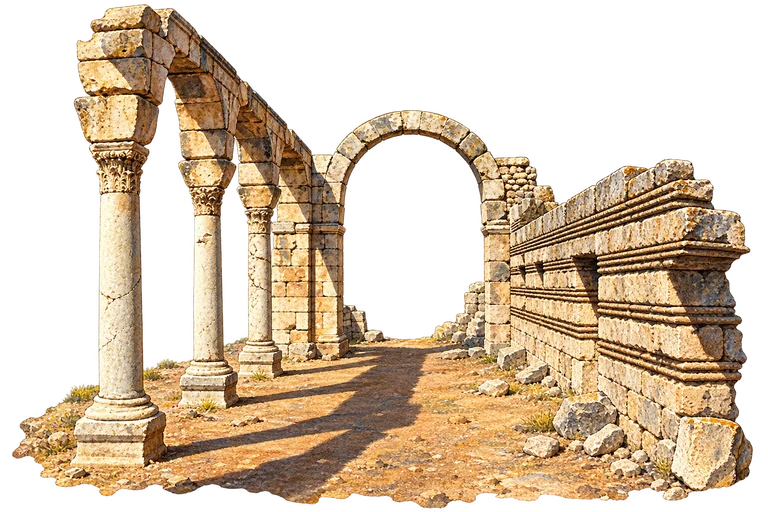
Anjar preserves the remains of an Umayyad city laid out in the 8th century. Its palace walls and colonnades reveal architectural ideas inherited from earlier traditions. Surviving and restored fragments help visitors imagine the buildings that once lined this carefully planned settlement.
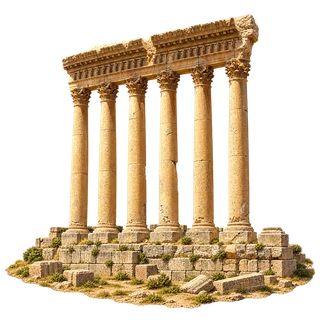
Baalbek was known as Heliopolis in the Hellenistic period and remained an important sanctuary under Roman rule. Its monumental temple complex expresses the scale and craftsmanship of Imperial Roman architecture. Earlier local religious traditions and later building phases are part of the site's long history.
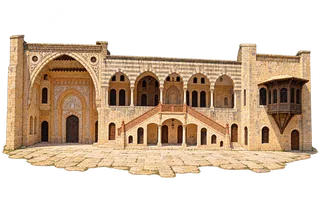
Beiteddine Palace is known for its courtyards, carved gateways and arcades. Built for Emir Bashir II, it brings together pale stone, decorative doorways and intricate woodwork. The double staircase and upper gallery create one of the palace's distinctive courtyard views.
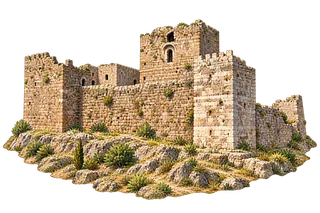
Byblos preserves many layers of Lebanon's history, including a medieval castle. Its heavy stone walls and central keep form a strong contrast with the older archaeological remains around it. The castle is one part of a town whose surviving monuments span many different periods.
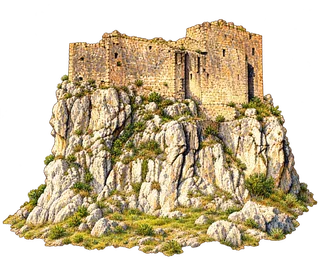
Mseilha Fort occupies a striking rocky perch in northern Lebanon. Its plain stone walls follow the narrow outcrop above the surrounding route. The contrast between the jagged limestone and the built masonry makes this compact fort especially distinctive.