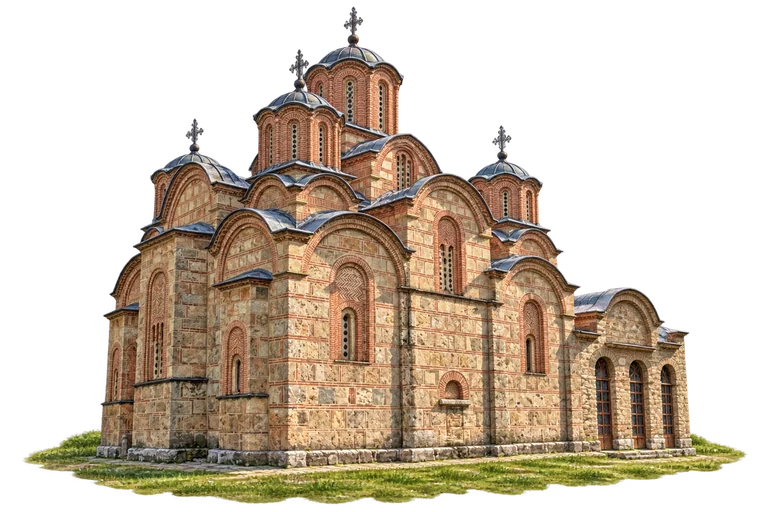
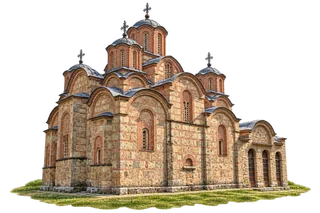
At Gračanica, red brick outlines arches and narrow windows across a compact stone church. Its domes step upwards around a taller centre. The monastery is one of the four components of Medieval Monuments in Kosovo, recognised for architecture and wall painting. The exterior offers a different expression of that shared heritage from Dečani’s long, banded church.
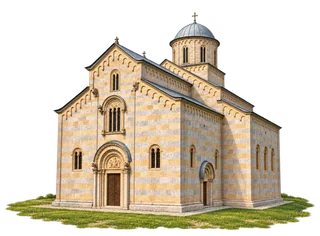
Carved arches and striped masonry give this church a character of its own. Built for Stefan Dečanski in the fourteenth century, it also became his mausoleum. Dečani belongs to the serial World Heritage property Medieval Monuments in Kosovo. Its architecture brings eastern and western traditions into the same building.
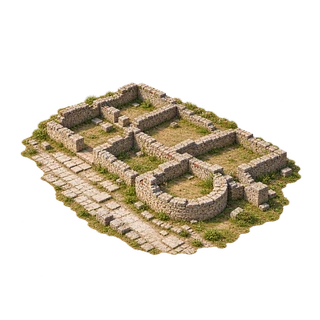
Ulpiana grew into an important urban centre in ancient Dardania. Archaeological work has uncovered parts of streets, defensive structures, religious buildings and burial grounds. In the sixth century the settlement was rebuilt under Justinian and renamed Justiniana Secunda. The remains reveal several functions of a city rather than a single isolated monument.