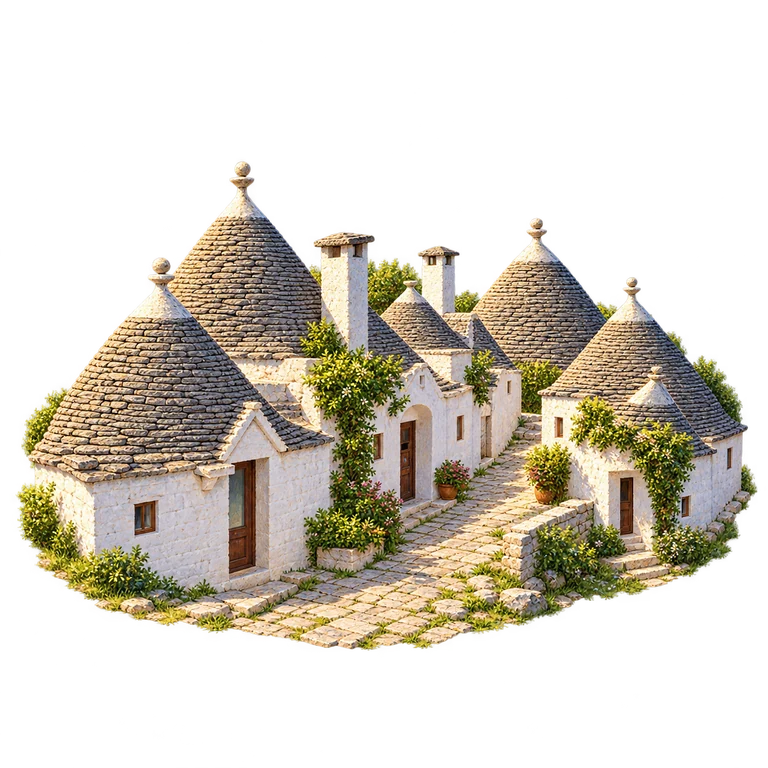
Alberobello’s trulli show a local way of building with limestone. Their dry-stone construction uses no mortar, and overlapping corbelled slabs form the characteristic conical roofs. Rione Monti and Aia Piccola preserve groups of these dwellings. This remains a living settlement as well as a heritage place, so the houses are more than picturesque shapes: they carry a craft tradition and everyday uses.
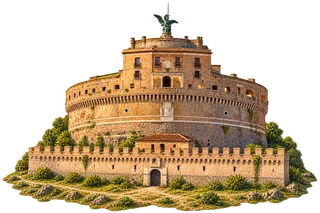
Read the building from its broad, round base upward. Castel Sant’Angelo began as the mausoleum of Emperor Hadrian, then acquired new layers as its role changed over time. The upper rooms and rooftop angel belong to the monument’s later story. Its surviving exterior brings these different periods into one striking silhouette beside the Tiber.
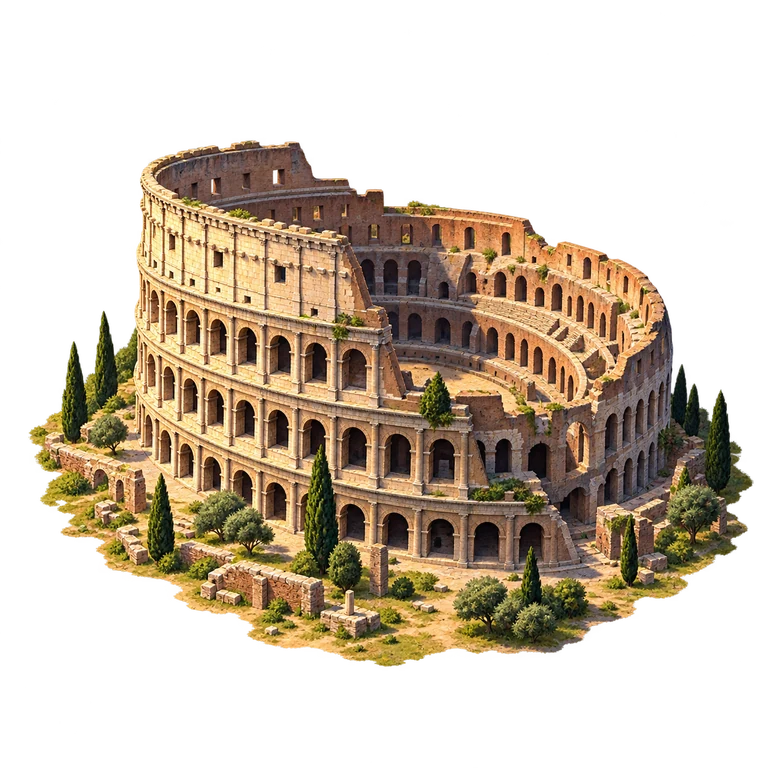
The Colosseum is the great ancient amphitheatre in the centre of Rome. Its ring of arches is separate from the dome of St Peter’s in neighbouring Vatican City.
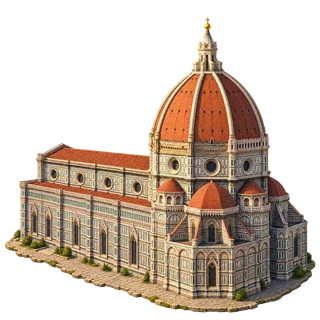
Brunelleschi’s dome crowns Santa Maria del Fiore. Its inner and outer shells are connected by ribs, while the brickwork uses a herringbone arrangement. The construction also depended on specially designed machinery for lifting heavy materials. The achievement is both architectural and practical: a huge masonry roof assembled through carefully organised work high above the cathedral.
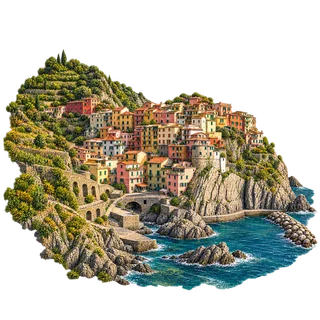
Manarola is one of the Cinque Terre villages, with closely packed houses above a narrow harbour. Its history is tied not only to the sea but also to cultivated slopes: vines and olives supported the production and trade of wine and oil. The relationship between buildings, terraces and rock makes the village legible as a working coastal landscape rather than simply a row of colourful façades.
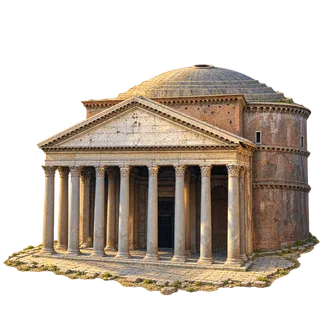
The Pantheon’s present form belongs to the age of Hadrian, built after an earlier structure associated with Agrippa. A deep portico fronts the round hall and its concrete dome. The oculus, the opening at the dome’s crown, admits daylight. Since 609 the building has been a church, Santa Maria ad Martyres, giving an ancient structure a continuing religious use.
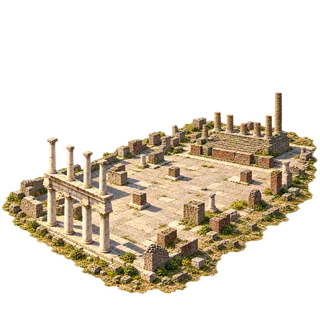
Pompeii’s Civil Forum gathered many parts of daily public life: administration, justice, business, markets and worship. Its porticoes framed an open square, with the Temple of Jupiter aligned on the main axis. Excavation of the Forum began in 1813. The surviving fragments invite a different kind of looking: column bases, paving and ruined podiums reveal how a public space was organised without reconstructing every lost building.
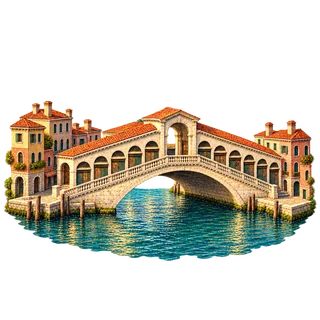
The Rialto Bridge is a crossing and a small commercial street at once. Designed by Antonio da Ponte in the late 1500s, its single stone arch carries a wide humped deck. Three pedestrian routes run between the shop rows and along the outer edges. The familiar silhouette comes from this combination of canal engineering, steep approaches and a roofed line of shops.
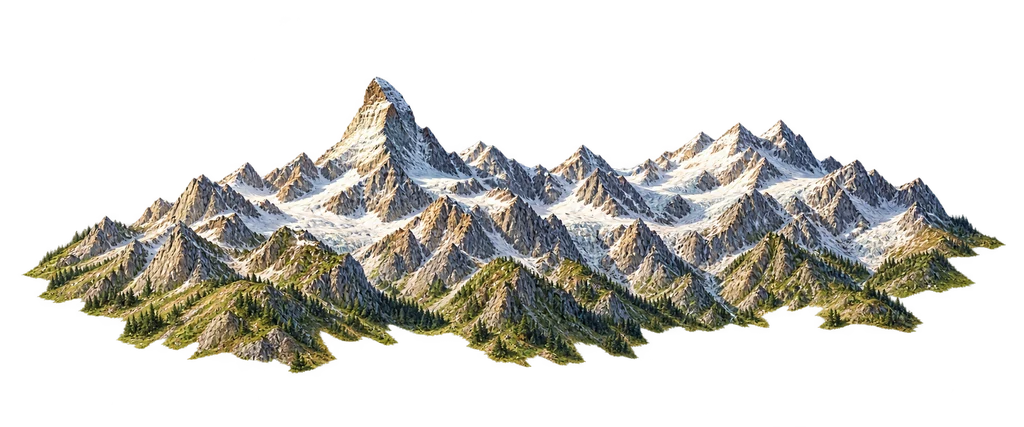
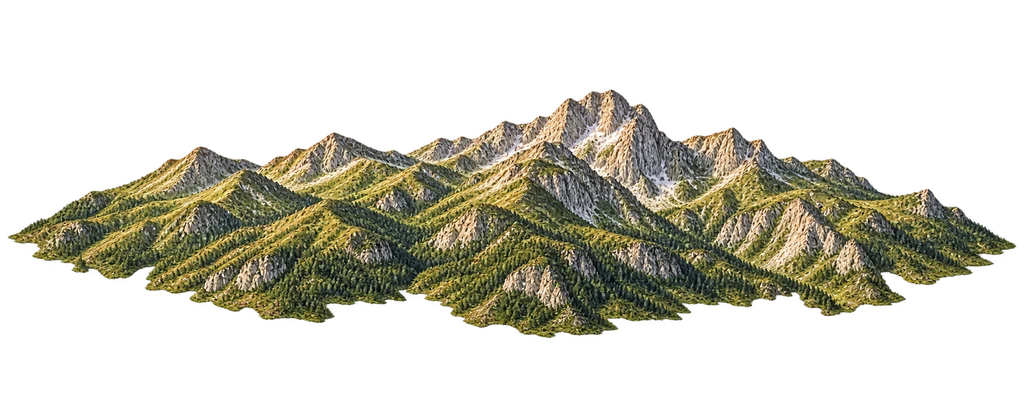
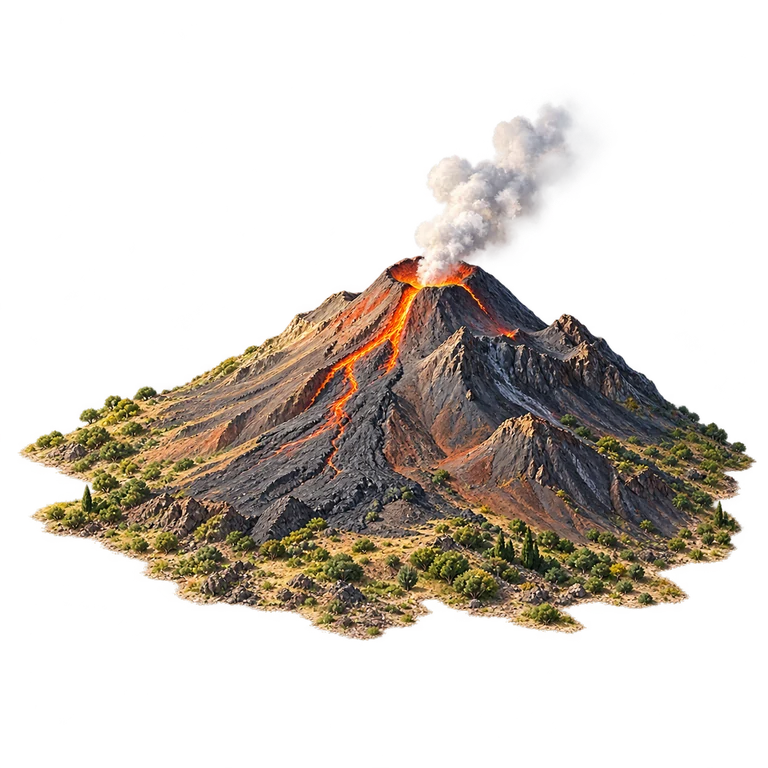
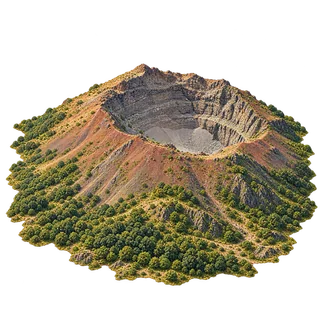
Somma–Vesuvius is a volcanic system with two distinct forms: an older Somma caldera and the younger Vesuvius cone. The Gran Cono crater belongs to the younger cone. Vesuvius last erupted in 1944 and has been in a quiescent interval since then, with continuing low-temperature degassing. The quiet rocky scene should not be read as proof that the volcano is extinct.