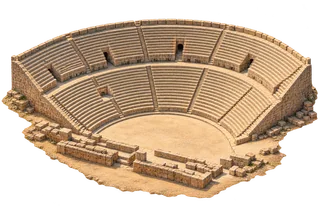
Caesarea’s Roman theatre stands at the southern end of the national park. Its semicircular seating makes the relationship between audience, orchestra and stage easy to follow. The restored theatre is still used for performances. Trace the stairways through the seats and the curved passage between the seating levels.
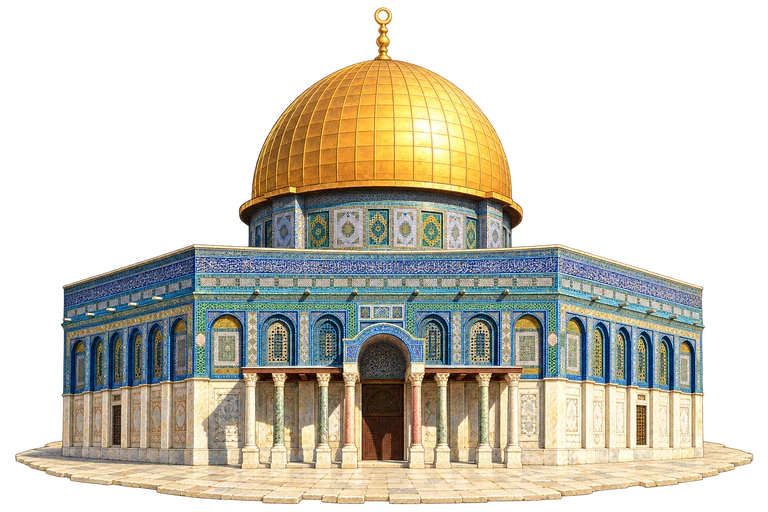
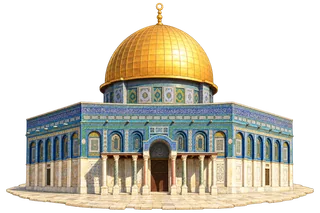
The Dome of the Rock is an Islamic shrine built in the seventh century. Its octagonal body, round drum and golden dome create a strongly layered outline. Geometric and floral decoration covers much of the exterior. Look from the pale lower panels to the blue tilework and then the broad dome above.
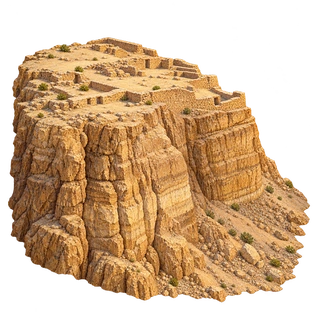
Herod the Great built a palace complex on Masada's elevated plateau. Around it survive Roman camps, fortifications and a siege ramp from the later conflict at the site. These remains allow archaeologists to study both monumental construction and military engineering within the same rugged desert landscape.
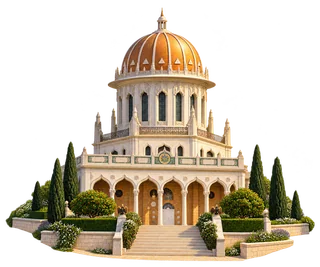
The Shrine of the Báb in Haifa contains the remains of the Báb, a central figure in Bahá’í history. The domed shrine and its terraced gardens are among the city’s best-known landmarks. Look at the tall windows of the drum, the pale arcaded veranda and the carefully shaped greenery around the entrance.
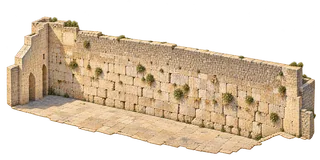
The Western Wall is a surviving section of the retaining wall of the elevated platform in Jerusalem’s Old City. It is a major place of Jewish prayer. Look closely at the enormous lower blocks and the smaller masonry above them, then the plants rooted in the joints. The contrast makes the wall’s long history visible in its surface.