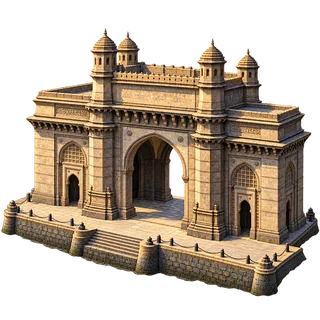
Stand by the waterfront and the Gateway of India frames a view towards the sea. Its broad central arch and small domed turrets give it a distinctive silhouette. Completed in 1924, it became one of Mumbai's best-known landmarks.
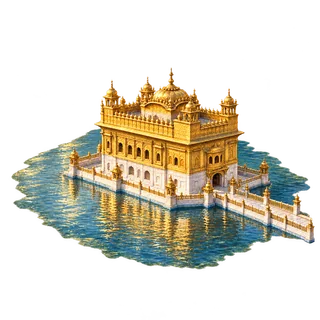
A narrow causeway leads towards Sri Harmandir Sahib, the Golden Temple. Its gold-covered upper structure and pale marble lower walls are reflected in the surrounding pool. This is a central Sikh place of worship in Amritsar.
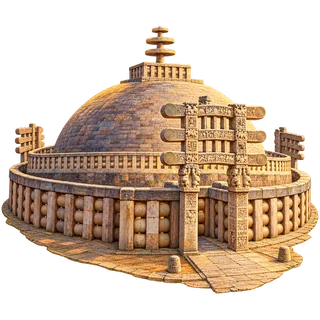
The Great Stupa invites a circular way of looking. Walkways and stone railings surround its broad dome, while carved torana gateways mark the approaches. Sanchi preserves a long history of Buddhist building and artistic work.
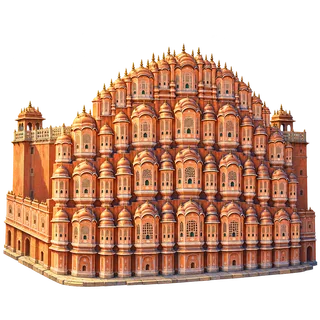
Hawa Mahal turns a palace facade into a pattern of tiny projecting windows. Its five storeys rise towards a delicate stepped crest. Built in 1799 for Sawai Pratap Singh, it is one of Jaipur's most recognisable sights.
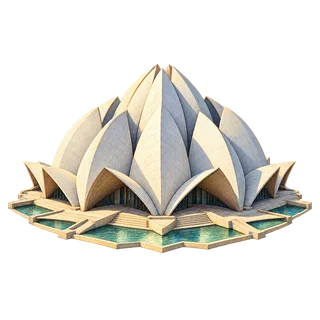
The Lotus Temple takes its form from a flower rather than a traditional tower or dome. Its marble-clad petals are arranged in groups that give the building nine sides. Designed by Fariborz Sahba, it is a Baha'i House of Worship.
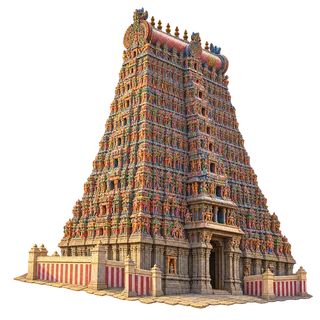
Meenakshi-Sundareswarar Temple is woven into Madurai's identity. Its gopurams rise in receding tiers crowded with painted sculptural detail. The illustration focuses on the south gateway tower, one exterior view of a much larger living temple.
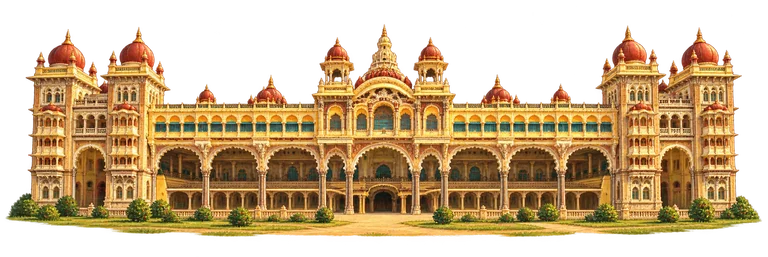
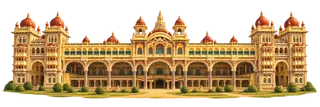
Start at the central entrance, then trace the repeated arches toward the tall end pavilions. Domes and layered towers lift the otherwise long, horizontal frontage. The present Mysore Palace, designed by Henry Irwin and built between 1897 and 1912, brings these elements together in an Indo-Saracenic composition. Its principal front rewards a slow look from one end to the other.
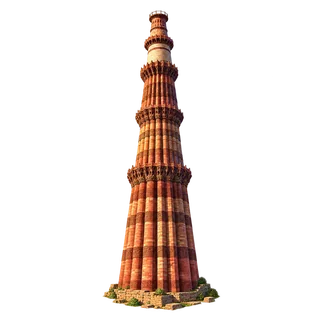
Look up the Qutb Minar and follow its projecting balconies. Red and buff sandstone, carved bands and changing flutes give the tall tower a rhythm of its own. It stands within an archaeological complex shaped by successive Delhi sultans.
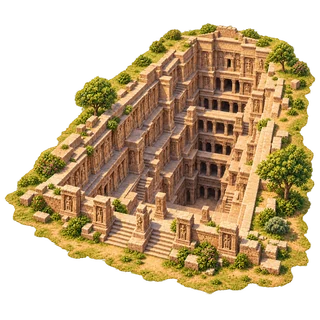
At Patan in Gujarat, Rani-ki-Vav turns a stepwell into an elaborate subterranean monument. Built in the eleventh century as a memorial, it combines water engineering with religious architecture. Seven levels of stairs and sculpted panels descend through a design conceived as an inverted temple, celebrating the sanctity of water.
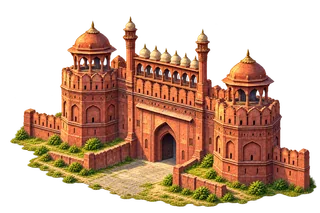
The Red Fort formed the palace-fortress of Shah Jahan's new capital, Shahjahanabad. Its red sandstone walls remain a powerful Delhi silhouette. The Lahori Gate offers a compact view of towers, arches and pale rooftop pavilions.
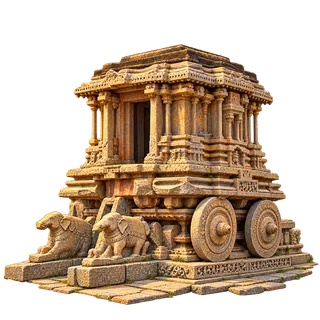
Look at the carved wheels beneath this stone shrine. Hampi's famous chariot stands within the Vitthala Temple complex, one part of the wider Vijayanagara heritage landscape. Its compact form makes stone seem almost ready to move.
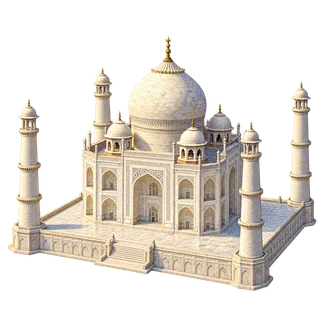
From a distance, the Taj Mahal seems almost weightless. Come closer and its balance of arches, domes and carved marble becomes the story. Shah Jahan commissioned the mausoleum in memory of Mumtaz Mahal, with the main tomb completed in 1648.