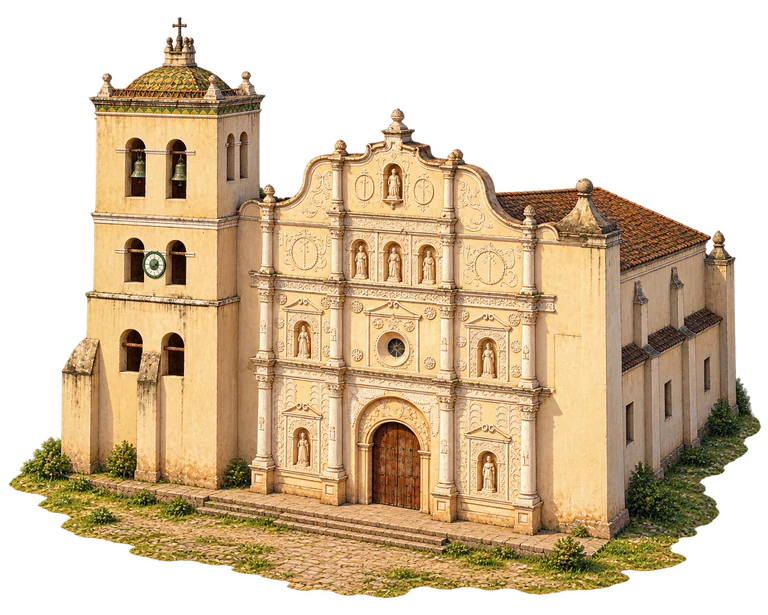
The Cathedral of the Immaculate Conception anchors the historic centre of Comayagua. Its facade is arranged in tiers of niches, relief and curved outlines, with a circular opening bringing light into the church. The adjoining bell tower houses a historic mechanical clock. Looking from tower to doorway reveals two different rhythms: the tower’s strong repeated openings and the facade’s intricate surface decoration.
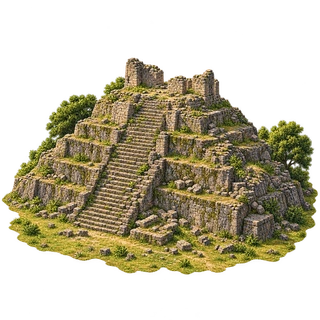
Temple 16 stands above earlier Maya buildings at Copán. Archaeological work beneath its outer pyramid revealed Rosalila, a much older temple protected inside later construction.
Near Tela, Lancetilla combines botanical collections with a protected tropical landscape. The garden is also a noted place for watching birds. Along its palm-lined paths, the planting itself shapes the experience: close trunks, overlapping fronds and changing light turn a short walk into a study of structure. The garden’s role in conservation and plant research gives these quiet avenues a wider purpose than decoration alone.
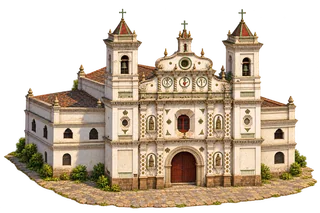
Los Dolores Church stands in Tegucigalpa’s historic urban landscape. Its white exterior rewards slow looking: paired towers rise above a richly decorated front, while niches and circular motifs break up the plaster surface. The Honduran Institute of Anthropology and History includes the church among the country’s built heritage. The contrast between plain wall areas and concentrated ornament makes this a distinctive stop within the capital.
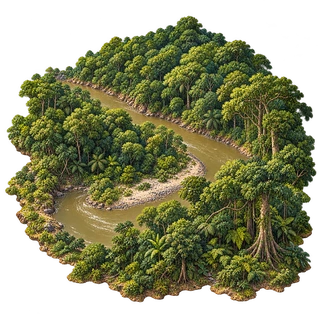
The Río Plátano reserve protects a varied tropical landscape in Honduras. Its watershed runs through mountainous rainforest towards the Caribbean, supporting diverse plants and animals. The region is also home to Indigenous communities, making it a lived landscape as well as a place of ecological importance.
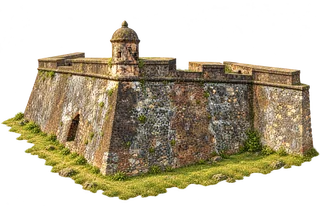
San Fernando de Omoa was built to defend a Spanish colonial port on Honduras’s Caribbean coast. Its unusually triangular plan departed from the familiar four-bastion fortress. Thick sloping walls and projecting defensive corners made the building an instrument of imperial control as well as military engineering. The surviving masonry invites a closer look at how stone, brick and lime were combined to resist attack and the coastal climate.