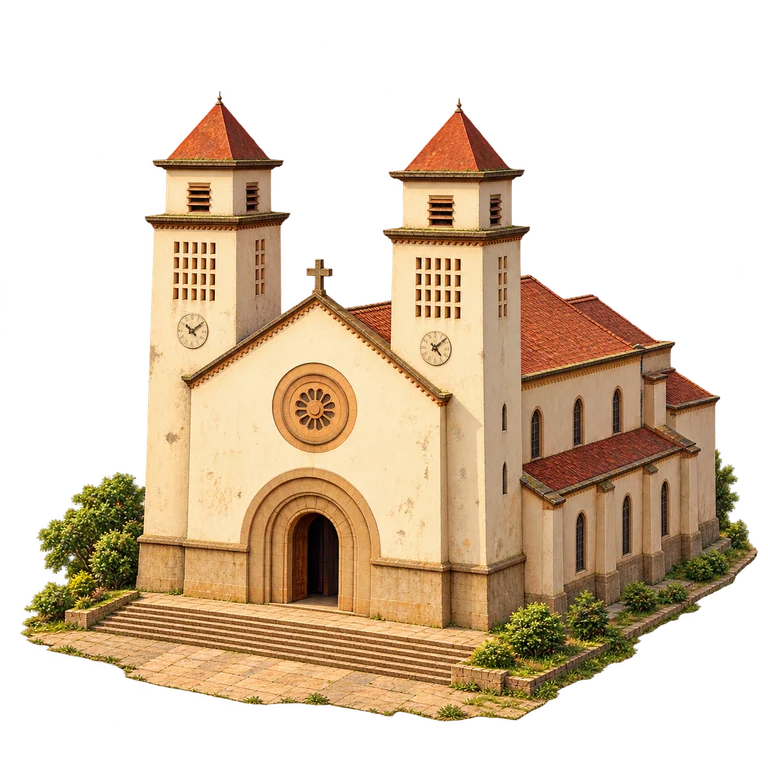
Bissau Cathedral is one of the landmarks along the capital’s historic central avenues. Its broad gable, round-arched doorway and paired clock towers give the frontage a clear, balanced outline. The European Union-supported heritage guide identifies it as a twentieth-century work associated with architect João Simões. Look for the contrast between the red roofs, pale plaster and dark openings in the bell towers.
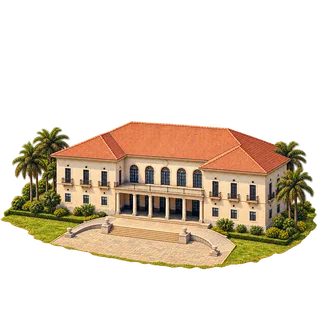
The Presidential Palace is a prominent civic building in Bissau. Its central balcony and portico stand between balanced side wings, beneath a broad red-tiled roof. The Presidency’s architectural account records severe damage during the 1998–1999 war and restoration completed in 2013. Its surviving form tells a story of the capital’s changing institutions and the work of rebuilding, without revealing anything about official life inside.
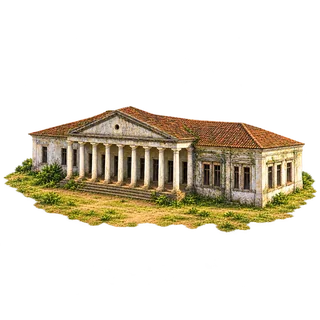
Bolama’s old Town Hall housed administrative services during the colonial period. Its long colonnade and triangular pediment give it a distinctive classical frontage. The heritage guide describes a building in need of conservation, and the worn plaster and empty windows in the reference preserve that sense of passing time. The town around it remains a living place, rather than simply a stage set for its older buildings.
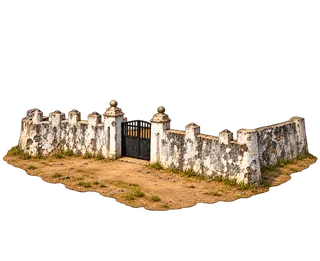
Cacheu Fort formed part of the colonial system controlling movement along the river. Its history belongs alongside the town’s wider history of coerced trade and enslavement. The surviving low masonry is a different place from the slavery memorial, and the two offer distinct ways of approaching that past. Here, look closely at the modest gateway and the weathering of the walls rather than imagining a grand castle.
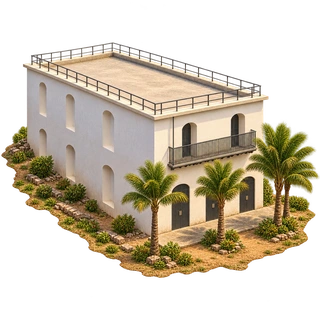
Cacheu's Slavery Memorial occupies a rehabilitated historic building. Alongside museum displays, the project includes research and conference functions. It links the city's material heritage with study, public discussion and local cultural activity, providing a setting in which the history of slave trading can be examined and remembered.