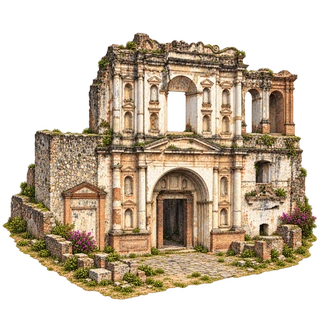
Antigua Guatemala developed on a planned grid in an earthquake-prone highland setting. The 1773 earthquake caused major destruction, and important monuments survive as ruins. Streets, surviving buildings and archaeological remains together preserve the form of the former colonial capital.
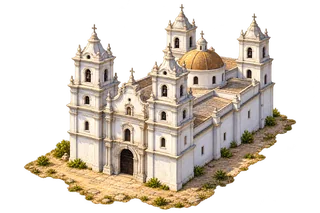
Esquipulas is an important pilgrimage destination in eastern Guatemala. Its white basilica has four bell towers and a central dome, creating a distinctive outline above the town. Visitors come to see both the church and the traditions associated with this religious centre.
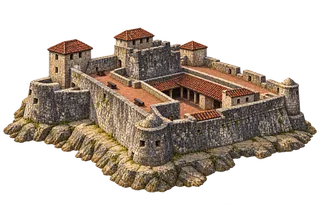
San Felipe de Lara guarded an important water route near Lake Izabal. Its compact stone walls, bastions and inner buildings give a glimpse of the region's colonial fortifications. Today the fort is a heritage attraction on the Rio Dulce.
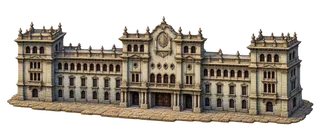
The National Palace of Culture is one of Guatemala City's best-known civic landmarks. Its long symmetrical facade is filled with arches, windows and ornate details. The building is protected as cultural heritage and connects the capital's public spaces with its artistic and historical collections.
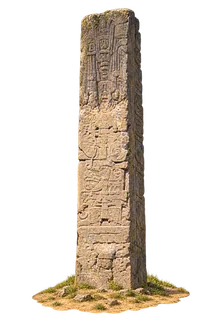
Quirigua is known for its remarkable carved Maya monuments. Stela E rises as a tall sandstone pillar covered in figures and inscriptions. Along with the other monuments at the site, it records a world of rulers, ceremonies and skilful stone carving.
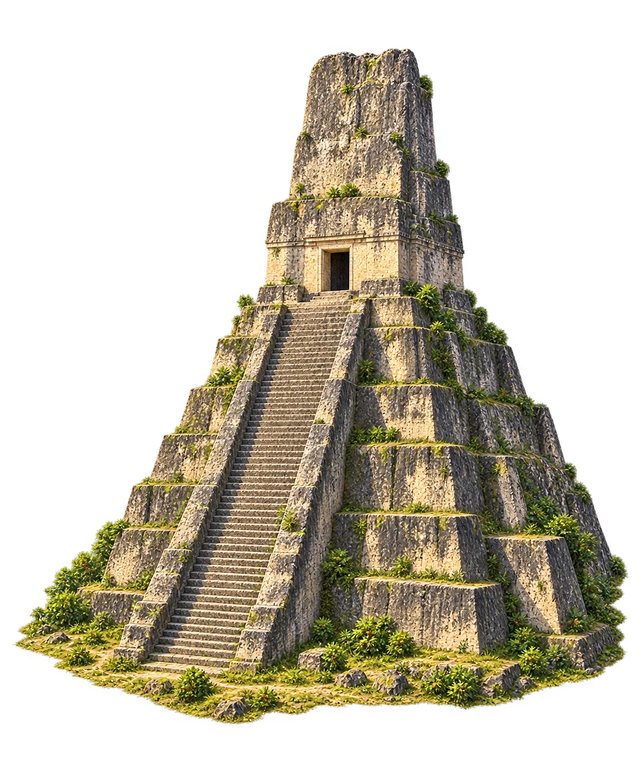
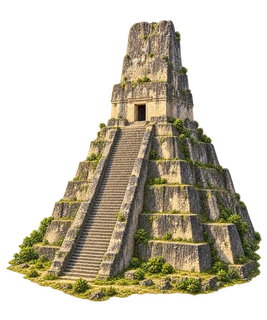
On the eastern side of Tikal’s Great Plaza, Temple I draws the eye upward through a steep sequence of stone terraces. Its summit sanctuary is crowned by a tall roof comb, a distinctive feature of Maya architecture. Guatemala’s Ministry of Culture describes the stepped pyramid as approximately 47 metres high and places it in the Late Classic period. Its ceremonial and funerary roles connect this monumental form with the people and beliefs of the ancient city. This scene concentrates on the single temple rather than the wider plaza or forest skyline.