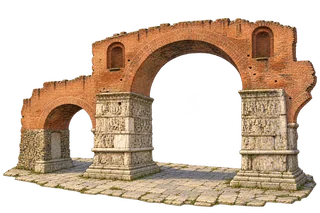
Known locally as Kamara, the Arch of Galerius once formed part of a much larger imperial complex. Look at the relief-covered piers beneath the brickwork: their carved figures turn the monument into a stone record of Roman power. The nearby Rotunda is a separate building.
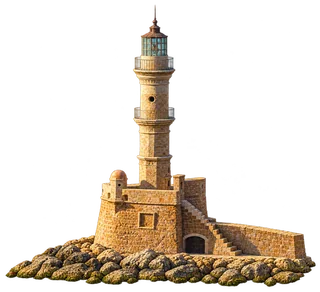
Follow the narrow breakwater to the tower’s heavy base, then look up through its changing tiers. Its distinctive form reflects rebuilding during the Egyptian period in the nineteenth century, set within the much older harbour of Chania.
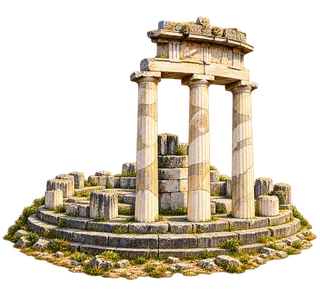
The tholos belongs to the sanctuary of Athena Pronaia at Delphi. This lower sanctuary lies apart from the better-known sanctuary of Apollo. Its circular plan and three re-erected columns make a small ruin unusually easy to recognise.
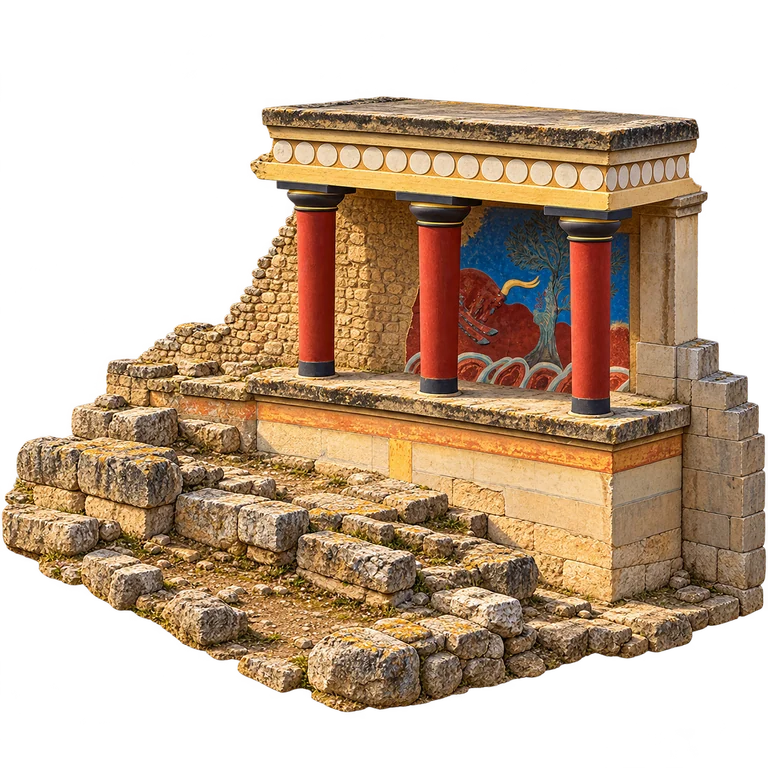
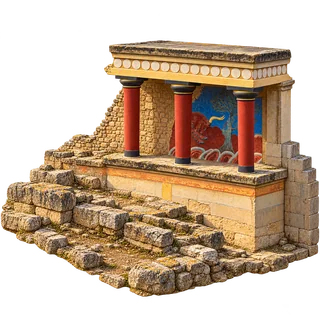
Ancient remains and modern reconstruction meet at this famous part of Knossos. Arthur Evans reconstructed the west bastion of the north entrance, adding a copy of a restored bull relief. Look for the red columns, black capitals and brightly coloured panel behind them. The scene offers a vivid impression of the palace while also showing how later interpretation shapes what visitors see.
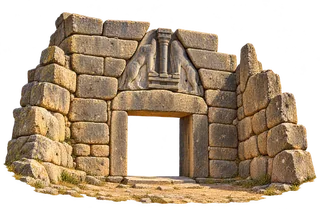
The Lion Gate formed the principal entrance to the Bronze Age citadel of Mycenae. Two heavy posts carry a huge lintel, with a triangular relief above it. Look closely at the two lion bodies flanking a central column; their heads no longer survive. The enormous stones of the surrounding wall explain why this masonry came to be called Cyclopean.
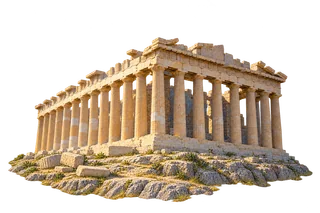
Work on the Parthenon began in 447 BCE as a temple for Athena Parthenos. Its architects, Iktinos and Kallikrates, combined a long Doric exterior with a richly planned interior. The surviving ruin and continuing restoration reveal how much of the monument’s story is carried by individual blocks.
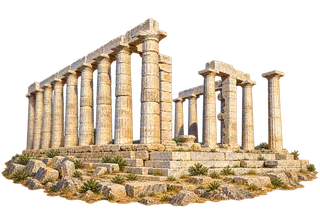
The mid-fifth-century BCE temple at Cape Sounion was dedicated to Poseidon. It occupies the highest part of the cape’s sanctuary, overlooking sea routes towards Athens. The remaining Doric columns retain a powerful silhouette without an intact roof.
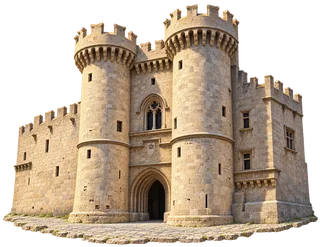
The Grand Master’s Palace was an administrative centre of the Knights of Saint John. Its monumental entrance places a pointed gateway between two cylindrical towers. Much of the palace’s present appearance follows a major restoration during the Italian occupation in the 1930s. Look for the corbelled battlements and the delicate window above the gate.
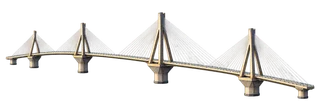
Trace the deck as it runs beneath four pairs of cable fans. Opened in 2004, the Charilaos Trikoupis Bridge links the Peloponnese with mainland Greece. Its long crossing changed a journey once made by ferry into a continuous road connection.
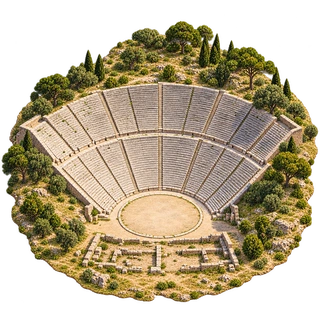
At Epidaurus, a sanctuary dedicated to Asklepios developed from earlier worship associated with Apollo. Its principal fourth-century BCE monuments include a temple, a circular Tholos and a theatre. Religious and hospital buildings preserve evidence of ancient Greek and Roman healing cults within a broader ceremonial landscape.
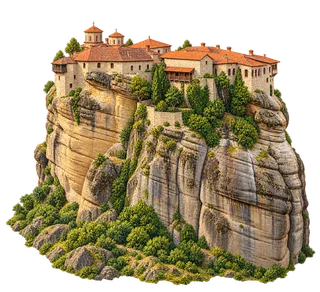
Varlaam Monastery is dedicated to All Saints. Its main church dates from 1541, while the monastery’s name remembers an earlier hermit. The community’s stone buildings and the conglomerate pillar beneath them form one striking vertical landscape.
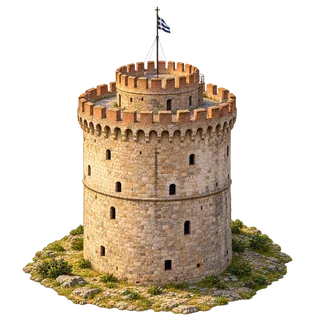
The White Tower was built in the Ottoman period and has served as a fortification and a prison. Today it houses a museum about Thessaloniki’s history. Its broad cylindrical body supports a smaller upper turret. Look for the projecting stone supports beneath the battlements, and the flag above the two circles of crenellations.