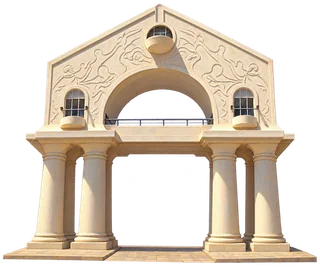
Arch 22 is one of Banjul's recognisable modern landmarks. A large round opening cuts through its central wall, with balconies extending to either side. The monument is also associated with a museum and the country's political history.
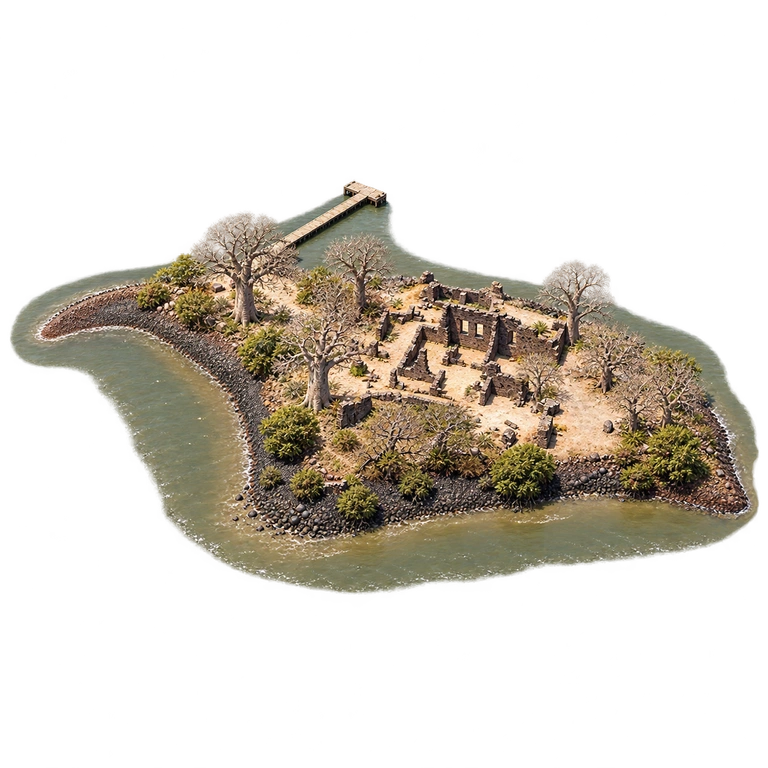
Kunta Kinteh Island lies in the River Gambia. Its fort remains belong to a group of sites documenting changing relations between African and European societies. The island is particularly associated with the slave trade; other sites in the wider group also record efforts to end that trade. The surviving places require careful remembrance.
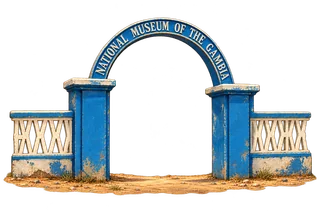
The National Museum is part of The Gambia's cultural heritage institutions. Its entrance is marked by a bright blue arch carrying the museum's name above an open gateway. White patterned fence panels extend from the two square piers.
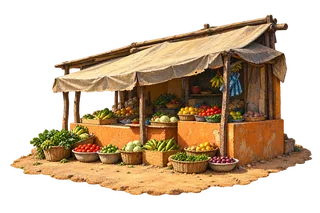
Albert Market is one of Banjul's best-known shopping places. Its busy lanes bring together stalls selling food, fabrics and everyday goods. This small produce-stall scene picks out woven baskets, timber supports and the warm colours of the market's walls.
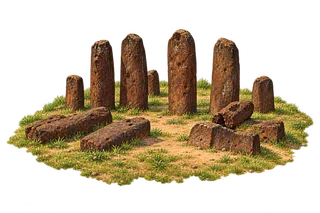
Wassu is one of the stone-circle sites of Senegambia recognised by UNESCO. Upright laterite pillars and nearby fallen stones preserve evidence of a long megalithic tradition. The rough surfaces and rounded tops make the stones feel very different from a neatly dressed modern monument.