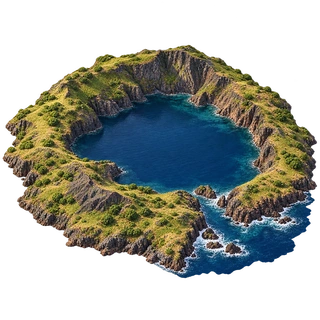
Île Saint-Paul is formed around a volcanic crater partly open to the ocean. Natural rocky barriers narrow the entrance, while seawater fills much of the crater basin. The island's shape records changes in a volcanic landform, creating a striking enclosed marine space within the southern Indian Ocean.
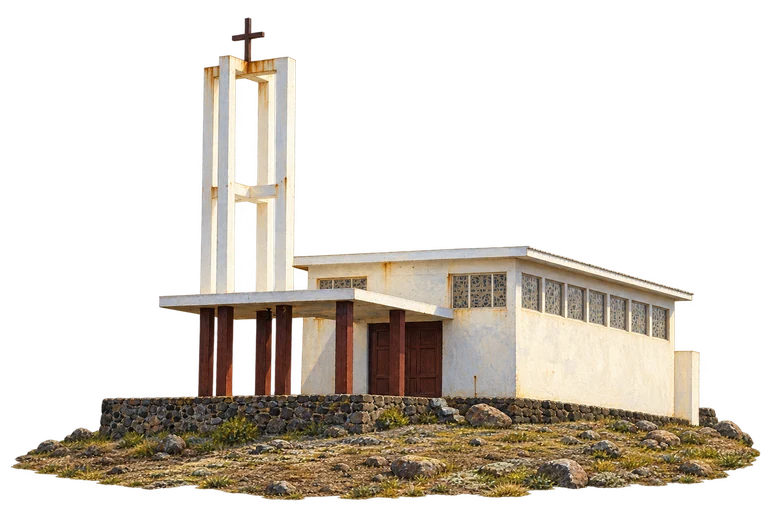
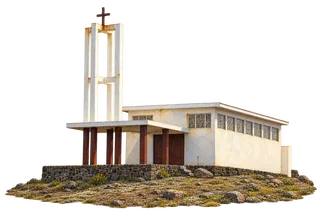
Notre-Dame-du-Vent stands at Port-aux-Français in the Kerguelen Islands. Volunteers from the station's missions helped build the chapel between the late 1950s and early 1960s. Its spare white walls, patterned upper windows and open bell frame make it unlike a traditional steepled church. The building was constructed around a basalt altar stone found locally. The official district history records its intended dedication to use by all faiths, linking a small building to the community that made it.
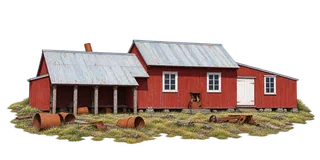
Port-Jeanne-d'Arc was established in the early twentieth century as a shore-based whaling station in the Kerguelen Islands. Norwegian builders and workers were central to its creation. After the industry declined, buildings and machinery remained exposed to the southern climate. Archaeological and restoration work in 2000 and 2001 helped preserve parts of the site, including a workshop. The surviving structures tell a story of difficult labour and the exploitation of marine mammals, rather than a working factory today.